
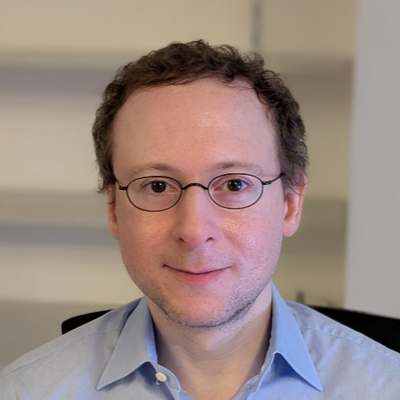
By Tony O’Reilly-
Academics have revealed that months before Nathan Cofnas publicly accused the late Cambridge professor Jason Arday of plagiarism, they had already raised serious concerns about Cofnas’s own academic credentials and the circumstances surrounding his appointment to a research post at Ghent University.
Documents reported on 27 August show that Ghent University’s Department of Philosophy and Moral Sciences formally challenged Cofnas’s appointment only weeks after he took up a postdoctoral position examining the future of liberalism. The department questioned whether he possessed the expertise required for the role, adding that it was “improbable” that he had been the strongest candidate among 14 applicants.

AD: Capeesh Restaurant
The concerns were not limited to a small group of dissenting academics. In March, a letter expressing “astonishment and indignation” over Cofnas’s appointment was reportedly signed by 48 members of the department, 73 students and 367 academics from Ghent and other universities.
The department later argued that Cofnas had only “very limited expertise” in political philosophy, liberalism and demography — subjects central to the position he had been hired to undertake
Academics also questioned the transparency of the appointment process, with a large majority reportedly suspecting that the decision had been made in advance for ideological reasons. The department further disputed Cofnas’s expertise in intelligence research, saying that he had not himself conducted research in the area and arguing that some of the views he promoted were not grounded in sound research.

AD: Oysterian Sea Food Restaurant And Bar
Those warnings now carry added significance because Cofnas became the public figure at the centre of the controversy surrounding Arday only months later. In July, he published allegations accusing Arday of plagiarism and broader academic misconduct. The claims triggered intense scrutiny of Arday’s doctoral thesis, professional history and personal accounts, while Cambridge itself eventually announced that it would investigate the matter.
The allegations against Arday were never formally proven in an academic misconduct finding before his death, but investigating journalists found a number of unanswered questions when they began examining some of the former Cambridge lecturer’s remarkable claims.
Arday, 41, resigned from Cambridge on 5 August, writing that he had reached the limits of what any person should reasonably be expected to endure. Nine days later, he was found unresponsive at his home in Battersea, south London.
Police have said the death was unexpected but not suspicious, while a coroner has opened an inquest into the circumstances surrounding his death. There is no established finding that the allegations or the subsequent media scrutiny caused his death, and it would be wrong to present such a connection as proven.
The sequence of events has nevertheless raised an important and difficult question for Cambridge and the wider academic establishment. ow should universities scrutinise claims made by academics whose own credentials, methods or ideological commitments have previously been challenged?
Cofnas is no stranger to controversy within Cambridge. He previously held a research fellowship at Emmanuel College but lost his position in 2024 after publishing a blog post arguing that Black people have lower average intelligence than white people, and that there would be “close to zero” Black professors at Harvard in a meritocracy.
His subsequent appointment at Ghent prompted an unusually broad academic backlash. Yet despite the warnings surrounding his appointment, Cofnas went on to publish the allegations against Arday, helping ignite a controversy that rapidly expanded from questions about passages in a doctoral thesis into an examination of Arday’s entire professional and personal history.
The timing has left universities facing uncomfortable questions about institutional responsibility. Academic freedom requires scholars to be able to challenge the work of powerful institutions and individuals, and allegations of plagiarism should not be dismissed merely because the person making them is controversial. At the same time, serious accusations require rigorous verification, transparent procedures and careful distinction between an allegation and an established finding.
That distinction became increasingly important as the Arday controversy intensified. Cambridge had begun its own investigation before Arday resigned, while outside reporting continued to examine the accusations. The university has also faced criticism over its handling of the affair, with its chancellor, Chris Smith, describing aspects of the public reaction as a “racist feeding frenzy.”
Cofnas himself was suspended by Ghent University last week, with the university launching a preliminary disciplinary investigation. Ghent said the suspension was a precautionary measure and stressed that it supports academic freedom and open debate, while also maintaining that such freedom comes with responsibility and may be restricted to protect the rights of others.
The development has produced a striking reversal in the institutional story. The academic whose accusations helped place Arday under extraordinary scrutiny is now himself the subject of a university investigation, while documents show that questions about his suitability for his Ghent position had been raised months before the Arday controversy erupted.
None of this, by itself, establishes whether Cofnas’s allegations against Arday were true or false. Nor does it establish that Cambridge should have anticipated the events that followed. But it does expose a broader institutional question of whether universities are sufficiently rigorous when appointing academics who subsequently become influential voices in major disputes, particularly when warnings about their expertise, methods or ideological motivations have already been formally raised.
Arday’s death has made that question impossible to separate from the human consequences of the controversy. His family has said they were devastated and has spoken of the misinformation and harassment surrounding him, while tributes have poured in for a professor remembered for his work on education, inequality and race. An inquest is now under way
The emerging record therefore points to two separate issues that must not be collapsed into one. Allegations of academic misconduct deserve proper investigation, regardless of who makes them. But so too do the processes by which universities appoint, empower and respond to academics whose public interventions can have profound consequences.
The most uncomfortable question is no longer simply what happened to Arday’s academic record. It is whether the institutions around this controversy did enough,at every stage, to test the evidence, scrutinise the people making the claims and protect due process before an allegation became a public verdict.

AD: Heritage And Restaurant Lounge Bar