
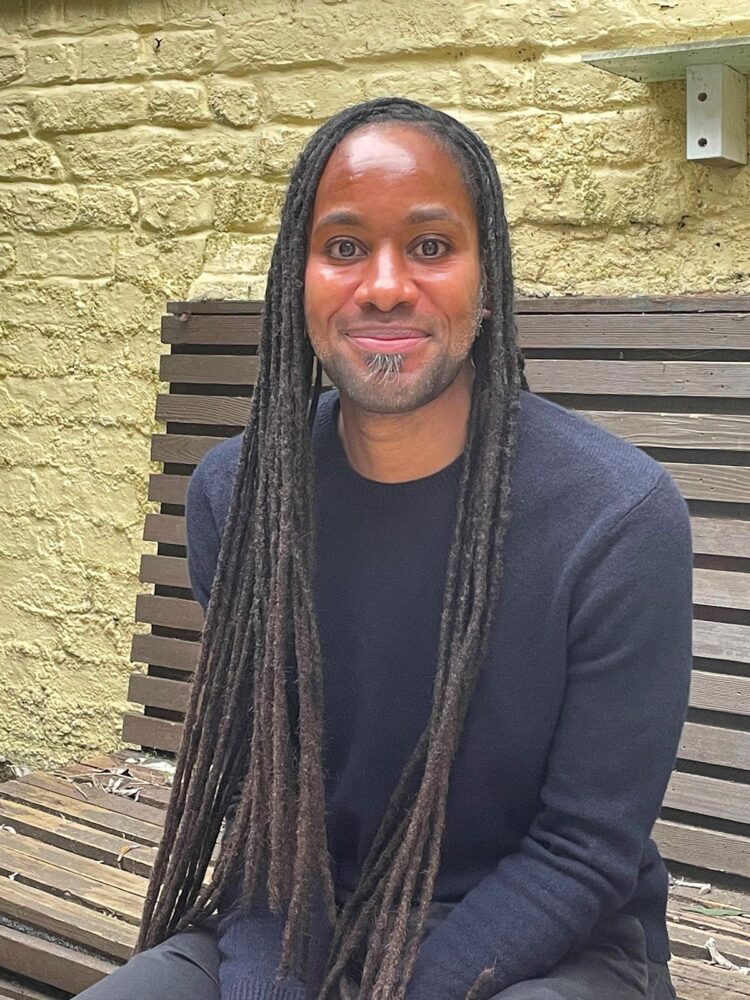
By Gavin Mackintosh-
An inquest has opened into the death of former Cambridge University professor Jason Arday, with a senior coroner saying he had reason to suspect that the 41-year-old died an unnatural death.
Arday, who made history in 2023 when he became Cambridge’s youngest Black professor, was found unresponsive by family members at his home in Battersea, south London, earlier this month. The circumstances surrounding his death were examined at a short hearing at London Inner South Coroner’s Court on Wednesday, August 26.

AD: Capeesh Restaurant
Senior coroner Dr Julian Morris told the hearing that reports relating to Arday’s death had led him to suspect that the professor had died an unnatural death 12 days earlier.
“The various reports have given me reason to suspect that Professor Arday died an unnatural death 12 days ago,” Dr Morris said. “It therefore follows that I must open an investigation.”
The coroner said further directions would be given to the coroner’s officer as the investigation proceeds. The opening of an inquest does not itself establish the cause or circumstances of Arday’s death, and no finding of unlawful killing or other cause has been made.

AD: Oysterian Sea Food Restaurant And Bar
Police said following his death that it was being treated as unexpected but not suspicious. The coroner’s decision to investigate therefore represents the formal beginning of a process intended to establish, as far as possible, what happened.
Arday’s death came only days after he resigned from his position as professor of sociology of education at Cambridge following intense public scrutiny of his academic credentials and a series of allegations concerning claims he had made about his professional and personal achievements.
He resigned on August 5, saying that the “relentless accusations, speculation and public commentary” had taken a profound toll on him and those close to him. He said his decision to step down should not be interpreted as an acceptance of the allegations surrounding him, describing it instead as the decision of someone who had reached the limits of what a person could reasonably be expected to endure.
The controversy began publicly last month when Nathan Cofnas, a former Cambridge philosophy researcher, raised questions about Arday’s academic record. Cofnas subsequently faced scrutiny himself and was suspended from his post at Ghent University in Belgium, where a preliminary disciplinary investigation was launched.
The allegations against Arday quickly broadened. Reports examined his 2015 PhD thesis and alleged that more than 100 passages were identical or near-identical to material in earlier research by another academic. Arday denied plagiarism, although he acknowledged that mistakes had been made during his doctoral work.
Crucially, Liverpool John Moores University, which awarded Arday his PhD, investigated the plagiarism allegations and concluded that he had not plagiarised. That finding meant that Arday had not been formally established to have committed plagiarism before his death, despite the intensity of the public controversy.
The scrutiny also extended beyond his academic work. Questions were raised about claims he had made concerning his achievements, including statements that he had helped raise £5.5 million for charity through endurance challenges involving running 30 marathons in 35 days and hundreds of miles over a six-day period. Some of those claims were subsequently revised.
There was also public debate over Arday’s account of his childhood. He had described being diagnosed with autism at a young age, being non-verbal until he was 11 and being unable to read or write until he was 18. Those claims formed an important part of the remarkable story of his rise from childhood developmental difficulties to a professorship at one of the world’s most prestigious universities.
The allegations and scrutiny had placed Arday under extraordinary pressure in the final weeks of his life. His family and supporters have strongly criticised what they described as a campaign of misinformation and called for privacy following his death.
His death prompted a significant public response. A fundraising campaign established to support his family raised nearly £225,000 from around 7,900 donors before it was closed at the family’s request. The money is intended to provide financial and practical assistance to his relatives and meet funeral, memorial and associated expenses.
A large vigil was also held in his memory in London, reflecting the impact Arday had made beyond academia. Supporters remembered him not only for his Cambridge appointment but for his wider work on race, education and social inequality.
The circumstances of his death are now to be examined separately from the allegations that dominated the final weeks of his professional life. The purpose of the coroner’s investigation is to establish the facts surrounding the death rather than to determine whether the allegations concerning his academic career were true.
The timing of the inquest is particularly significant because it opens just one day before the publication of Arday’s memoir, Great and Unfortunate Things. The book is due to be published in the UK by Simon & Schuster on Thursday, August 27, following its US publication earlier this month.
The memoir was written before his death and is intended to tell Arday’s own story, including his childhood, his experience of autism and developmental difficulties, and his eventual rise to become Cambridge’s youngest Black professor. Simon & Schuster describes it as the story of an autistic boy who was non-verbal as a child and illiterate until his late teens before becoming a leading academic.
Arday’s family has said he was clear that he wanted the memoir published and that its release should go ahead in accordance with his wishes. They have said they will allow the book to “speak for itself” and have asked the media to give them space to grieve.
The publication will inevitably bring renewed attention to the account Arday gave of his life, particularly because some elements of that account had become contested before his death. However, the memoir itself is separate from the coronial investigation, which will focus on the circumstances surrounding his death.
For now, the central question before the coroner is what happened to Arday in the final hours of his life.
The hearing heard that he was found unresponsive by family members at his Battersea home. Police have not treated the death as suspicious, while the coroner has determined that the circumstances require a formal investigation because he has reason to suspect an unnatural death.
Dr Morris also issued a warning about the way the case should be reported, urging the press to be mindful of Arday’s immediate and wider family as well as the wider public.
The inquest has now been adjourned, with further directions to follow as inquiries continue.
Arday’s death has already generated grief, controversy and intense public debate. The coronial investigation will now seek to move beyond speculation and establish the evidence surrounding his death. With his memoir appearing in bookshops just a day after the inquest opened, attention is likely to remain firmly fixed on a professor whose extraordinary rise, turbulent final weeks and sudden death have left a series of questions that have yet to be fully answered.

AD: Heritage And Restaurant Lounge Bar