
By Segun Ade-
More than 60 worshippers were abducted from a mosque in Nigeria’s north-central Niger State during Friday prayers after armed men attacked several communities in a coordinated assault, according to police and local residents.
The gunmen stormed Kpenya Mosque in the Borgu local government area at about 2pm on Friday, following attacks on the nearby villages of Gidan-Zana and Kpenya. Police said no deaths were recorded, but residents reported that several people were wounded by gunfire as they attempted to escape. Local officials put the number abducted at at least 60, while other residents estimated that as many as 80 people were taken.

AD: Capeesh Restaurant
The attackers surrounded the mosque while worshippers were praying and forced them away, according to Borgu council chairman Abdullahi Mohammed Nasir. A local youth leader told the Associated Press that his 85-year-old father was among those abducted. Nigerian security forces have been deployed to the area as a search for the missing worshippers continues. No group has claimed responsibility for the attack.
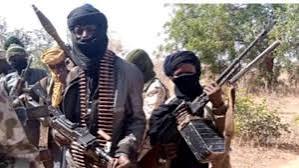
The assault highlights the increasingly complex nature of Nigeria’s security crisis, where Islamist insurgents, criminal kidnapping gangs and other armed groups operate across large parts of the country. Mass abductions for ransom have become particularly common in north-western and north-central Nigeria, with armed gangs frequently targeting villages, schools, roads and other locations where civilians can be seized in large numbers. Reuters reported that residents believed the latest attack was part of a coordinated assault on several communities in the area.
The fact that the victims were Muslim worshippers also underlines why the perpetrators should not automatically be assumed to be Islamist extremists. Nigeria has a long-running jihadist insurgency involving groups including Boko Haram and Islamic State West Africa Province, but it also faces extensive banditry and criminal kidnapping that is not necessarily driven by religion. Nigerian authorities have not identified the attackers or established a motive in the Kpenya incident.

AD: Oysterian Sea Food Restaurant And Bar
Islamist militants have, however, repeatedly killed and abducted Muslims as well as Christians. Boko Haram and ISWAP have operated predominantly in north-eastern Nigeria, where the overwhelming majority of the population is Muslim, and analysts and rights groups have noted that Muslims have made up a substantial share of the victims of jihadist violence.
Nigeria’s Muslim communities are also far from ideologically uniform. The country’s Islamic landscape includes different schools, movements and communities, while jihadist organisations have developed their own radical interpretations of Islam. Extremist groups have at times branded Muslims who reject their ideology, cooperate with the state or oppose their campaign as enemies. That means an attack on Muslims does not, by itself, rule out an Islamist motive—but neither does it establish one.
There is no reliable single national statistic that can definitively state that a particular ratio of Christians to Muslims are killed in Nigeria’s violence. The country’s conflicts overlap religion, ethnicity, land disputes, criminality and political tensions, making it difficult to classify every death according to religious identity. The US State Department has previously noted that many incidents cannot be categorised as being solely or primarily religious, while criminal groups have targeted both churches and mosques.
One major research project, however, provides an indication of the scale of the violence affecting both communities. The Observatory of Religious Freedom in Africa reported in its 2026 fact sheet that, in the period it examined, Christian civilians accounted for a larger number of recorded deaths than Muslim civilians, while a significant number of civilian deaths could not be assigned a religious identity.
Its data also show that Boko Haram and ISWAP were responsible for deaths among both Christian and Muslim civilians, with the two groups accounting for a larger share of Muslim civilian deaths than Christian civilian deaths in its dataset.
Other research reaches different conclusions depending on what is being measured. ACLED has repeatedly warned against reducing Nigeria’s wider violence to a straightforward Christian-versus-Muslim conflict, pointing to the role of banditry, political violence, communal disputes and competition over land and resources. Its analysis has also found that attacks explicitly targeting Christians because of their religion represent only a portion of the violence against civilians.
The latest mosque attack therefore adds another grim episode to Nigeria’s worsening kidnapping crisis rather than providing an immediate answer about who was behind it. For the families of those taken, however, the distinction between criminal bandits and ideological extremists offers little comfort. Dozens of people were seized while attending Friday prayers, and their whereabouts remained unknown as security forces began searching the surrounding area.
Until the attackers are identified and their motive established, authorities face the more immediate task of finding the abducted worshippers and bringing them home safely.

AD: Heritage And Restaurant Lounge Bar