
By Lucy Caulkett-
A primary school where Roman soldiers march through classrooms, children relive wartime evacuations and pupils are encouraged to imagine the careers of tomorrow has been praised by Ofsted for delivering a rich and engaging curriculum that consistently brings learning to life.
Inspectors described Worle Village Primary School, on the outskirts of Weston-super-Mare, as a “close and caring community” where pupils thrive academically and personally, awarding the school a ‘strong standard’ in six of the seven inspection areas, with the remaining category—early years provision—meeting the expected standard.

AD: Capeesh Restaurant
Far from focusing solely on examination results, inspectors found a school that combines academic ambition with memorable learning experiences designed to deepen understanding, spark curiosity and develop confident, well-rounded children. Their report paints the picture of a school where education extends well beyond textbooks.
“Here, pupils enjoy a close and caring community,” inspectors wrote. “Staff know and understand them as individuals. The school buzzes with life.”
That sense of vitality is evident throughout the curriculum, which Ofsted identified as one of the school’s greatest strengths. Rather than relying exclusively on traditional classroom teaching, staff immerse pupils in carefully planned experiences that enable them to connect emotionally and intellectually with the subjects they study. History lessons, for example, are transformed into immersive events.

AD: Oysterian Sea Food Restaurant And Bar
Children do not simply read about the Romans; they take part in Roman Day workshops where historical concepts are brought vividly to life. Likewise, World War Two is explored through evacuation days, allowing pupils to step into the shoes of children living during one of the most significant periods in British history.
These experiential learning opportunities are more than entertaining activities. Educational research has consistently shown that immersive teaching strengthens long-term memory, improves engagement and enables pupils to understand historical events from multiple perspectives rather than simply memorising facts.
Inspectors recognised that these approaches make learning meaningful by encouraging pupils to actively participate in their education instead of passively receiving information.
The curriculum’s richness extends well beyond history. Music, sport, dance, outdoor education and creative arts are woven throughout school life, ensuring pupils develop socially, emotionally and physically alongside their academic studies.
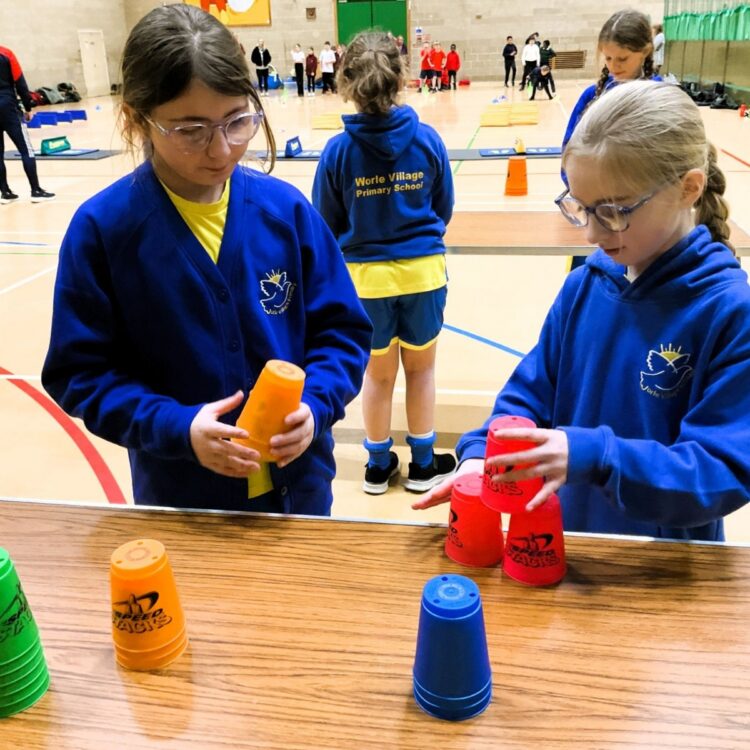
Inspectors observed pupils enthusiastically playing football, learning musical instruments and practising dance routines for the school’s popular “Worle’s Got Talent” event. Elsewhere, children challenged themselves by competing in running races and practising handstands beside the school’s historic Victorian walls.
Such activities demonstrate a curriculum that values personal development as much as academic achievement. Rather than treating enrichment as an optional extra, Worle Village Primary has embedded it within everyday school life. Educational visits further enhance classroom learning.
Pupils participate in theatre visits, explore art galleries and experience residential camping trips alongside adventurous activities such as kayaking and climbing. These opportunities expose children to experiences many may not otherwise encounter, broadening cultural awareness while helping them develop resilience, teamwork and independence.
Inspectors also praised the school’s commitment to helping children understand how education connects to future aspirations. Through initiatives such as the “Future Me” careers fair, pupils are introduced to a wide variety of professions from an early age, encouraging them to think ambitiously about their future while recognising the relevance of their classroom learning.
Ofsted noted that these experiences “make learning more meaningful and help pupils understand their pathways better.”The inspection highlights several teaching techniques that contribute to the curriculum’s success.
Teachers consistently use practical, hands-on learning to reinforce knowledge, enabling pupils to experience concepts rather than simply read about them. Lessons are designed to encourage participation, discussion and collaboration, allowing children to develop confidence while strengthening their understanding.
Learning is also carefully sequenced so that new knowledge builds progressively upon what pupils have already mastered, enabling children to make secure and sustained progress across different subjects. Inspectors found that staff possess strong subject knowledge and present lessons in ways that capture pupils’ imagination while maintaining high academic expectations.
That balance between creativity and rigour is reflected in the school’s performance.Pupils achieve well in national assessments, with results frequently exceeding the national average, including among disadvantaged pupils—a measure inspectors regarded as particularly significant because it demonstrates the school’s ability to narrow educational inequalities rather than allowing them to widen. Strong outcomes are accompanied by equally impressive attendance.
Inspectors attributed this to a culture in which children genuinely enjoy coming to school.
“The positive culture that leaders have embedded and the clear sense of belonging for pupils mean that pupils enjoy school and want to attend,” the report states. Attendance is not left to chance.
School leaders closely monitor attendance patterns, identify barriers affecting individual families and intervene with targeted support wherever necessary. Rather than relying solely on enforcement, they work collaboratively with parents to improve attendance, an approach inspectors said has led to notable improvements for individual pupils.
The report also commends the school’s inclusive ethos.
Staff were found to know pupils exceptionally well as individuals, enabling them to respond effectively to differing needs while creating an environment in which children feel valued, supported and confident to participate fully in school life.
That strong pastoral foundation complements the school’s academic provision, reinforcing the idea that children learn best when they feel safe, respected and connected to their community. The inspection reflects Ofsted’s modern emphasis on evaluating the quality of education rather than relying solely on examination performance.
Schools are now assessed across multiple areas, including curriculum and teaching, leadership and governance, behaviour and attendance, personal development and wellbeing, inclusion and achievement.
Worle Village Primary achieved a strong standard in six of those seven categories, underlining the consistency of its provision across virtually every aspect of school life.
Executive Headteacher Susan Elliott welcomed the findings, describing them as recognition of the collective efforts made by the entire school community. She said in a statement:
“We are delighted that the inspection recognises the dedication, care and hard work of our entire school community,” she said.
“This achievement belongs to our wonderful pupils, committed staff, supportive families, governors and trust colleagues who work together every day to make Worle Village Primary School such a special place to learn and grow.” Ofsted’s report suggests that the school’s success lies not in any single initiative but in the way every aspect of school life has been carefully connected.
Academic excellence is supported by immersive teaching. Strong attendance is underpinned by a genuine sense of belonging. Classroom learning is reinforced through practical experiences, educational visits and enrichment activities that help pupils understand why learning matters.The result is a curriculum that is not only broad and ambitious but genuinely rich—one that equips children with knowledge, nurtures curiosity, builds confidence and prepares them for the opportunities and challenges that lie beyond the school gates.
Education for pupils at Worle Village Primary School, education is clearly about much more than passing tests. According to Ofsted, it is about creating memorable learning experiences that inspire children to achieve, discover their potential and develop a lifelong enthusiasm for learning. The inspection concludes that this is a school where high standards are matched by high aspirations, and where a vibrant curriculum continues to transform everyday lessons into meaningful educational journey

AD: Heritage And Restaurant Lounge Bar