
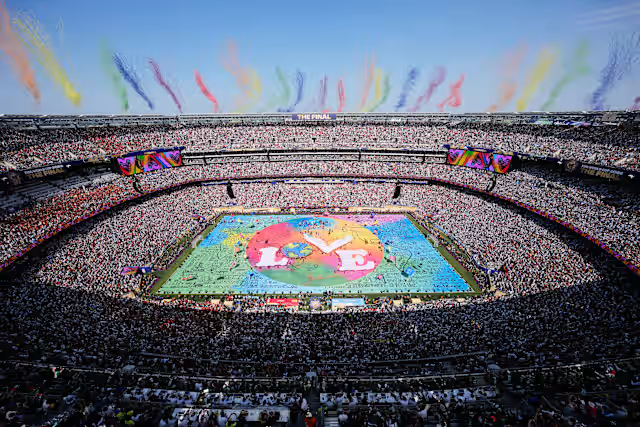
The FIFA World Cup final has always been a celebration of football’s greatest moments, but in 2026 the biggest stage in the sport expanded into something far beyond the pitch. Players prepared for the championship battle, the spotlight also turned toward a historic entertainment production featuring global icons BTS, Madonna, Shakira, Justin Bieber, Burna Boy and even the beloved Muppets.
The event marked the first-ever halftime show at a FIFA World Cup final, introducing a Super Bowl-style entertainment spectacle to football’s most watched match. Curated by Coldplay frontman Chris Martin and produced with Global Citizen, the performance aimed to combine music, sport and social impact while reaching a worldwide audience.
Inside the New York/New Jersey Stadium, the halftime stage became a meeting point of generations and cultures. Madonna, one of pop music’s most influential figures, brought decades of global stardom to the event, while BTS represented the international power of K-pop and its ability to connect millions of fans across continents.

AD: Capeesh Restaurant
The appearance of the Muppets added a completely different energy to the performance. Known for their humour, nostalgia and appeal across generations, the characters helped create a show designed not only for football fans but also for families watching around the world.Their involvement reflected the broader message behind the event, which focused on education and opportunities for young people through the FIFA Global Citizen Education Fund.
The combination of legendary performers and animated characters represented FIFA’s attempt to redefine what a World Cup final can be. Traditionally, the tournament has been built around the drama of the match itself, with ceremonies usually focused on cultural celebrations before kickoff. This time, organisers embraced a larger entertainment model designed to capture audiences beyond football supporters.
With BTS, the performance represented another milestone in a career that has transformed the global music industry. The South Korean group has become one of the world’s most recognisable acts, building a worldwide fan base that extends far beyond traditional pop markets. Their appearance placed K-pop directly alongside some of the biggest names in Western music history.

AD: Oysterian Sea Food Restaurant And Bar
Madonna’s involvement carried its own historical significance. With a career spanning more than four decades, she has repeatedly shaped popular culture through reinvention and global influence. Sharing the stage with younger international artists highlighted the evolution of pop music and the way different generations of performers now coexist on the same platform.
The production also featured performances from Shakira, Justin Bieber and Burna Boy, creating a lineup designed to represent different regions and musical styles. Organisers included artists from North America, South America, Africa and Asia, reflecting the international identity of the World Cup itself. Behind the spectacle was a larger purpose. The halftime show supported the FIFA Global Citizen Education Fund, an initiative aimed at expanding access to education and football opportunities for children around the world. The partnership connected the entertainment event with a humanitarian message, attempting to use the global attention of the World Cup for social impact.
A New Chapter In The World Cup’s Cultural Legacy
The decision to introduce a halftime show represented a significant shift in how FIFA approached its biggest event. While American sports have long used halftime performances as a central part of championship games, football has traditionally kept the focus on competition, atmosphere and national pride. The 2026 final challenged that tradition by blending football with the world of entertainment. The result was a production that looked less like a traditional sporting ceremony and more like a global festival, with music, technology and celebrity appearances becoming part of the championship experience.
The move also sparked debate among football supporters. Some welcomed the addition as a way to attract new audiences and create unforgettable memories, while others questioned whether the sport’s biggest moments should remain centered primarily on the players and the match. The discussion reflected a larger question facing modern sports: how to preserve tradition while adapting to changing audiences.
Younger fans especially, the halftime show represented the type of entertainment experience they have come to expect. Today’s audiences often consume sports alongside music, social media and celebrity culture, making events like the World Cup final increasingly competitive for global attention. The involvement of the Muppets demonstrated how organizers attempted to make the performance accessible across age groups. While BTS and Madonna appealed to massive music audiences, the Muppets connected the event with childhood memories and family entertainment.
Altoogether, the lineup created a bridge between generations, from longtime football supporters to children experiencing their first World Cup final. The performance also reinforced the idea that the World Cup is no longer only a sporting tournament. It has become a global cultural event where fashion, music, politics and entertainment intersect with football. The opening and closing ceremonies have increasingly become opportunities for host nations and organisers to showcase creativity and influence.
The 2026 tournament represented a particularly important moment because it was held across three countries the United States, Canada and Mexico bringing together different cultures and audiences. The entertainment choices reflected that international approach, attempting to create a shared experience for billions of viewers worldwide.
The final whistle approached and the celebrations continued, the performances became part of the tournament’s lasting memory. Fans would remember the goals, the dramatic matches and the team that lifted the trophy, but they would also remember the moment when some of the world’s biggest entertainers transformed the football final into a global concert.
BTS, Madonna and the Muppets represented three very different forms of entertainment: modern global music, legendary pop history and timeless family comedy. Together, they captured the unusual ambition of the 2026 World Cup a tournament determined to be remembered not only for who won, but for the experience created around the game.
The future of football’s biggest events may continue to balance between tradition and spectacle. Whether every future World Cup final follows this entertainment-driven model remains uncertain, but the 2026 halftime show established a new possibility: that the world’s most important football match can also become one of the world’s biggest cultural moments.

AD: Heritage And Restaurant Lounge Bar