
By Theodore Brown-
The quiet of Peru’s Andean highlands was shattered late Saturday night when a powerful earthquake sent residents rushing into the darkness, leaving behind collapsed homes, damaged landmarks and a growing humanitarian emergency.
A magnitude 5.5 earthquake struck the region, killing at least six people, injuring more than 30 others and forcing around 300 residents from their homes, according to authorities. The earthquake struck at approximately 9:24 p.m. local time, with the epicenter located near the city of Sicaya in Huancayo province, according to the United States Geological Survey. The quake was recorded at a depth of about 10 kilometers, making the shaking especially damaging for communities living in vulnerable structures.

AD: Capeesh Restaurant
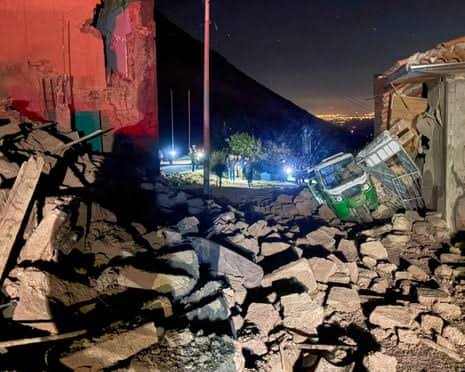
Across the mountainous landscape of central Peru, families fled homes as walls cracked and buildings collapsed. In the agricultural area of Chongo Bajo, one of the hardest-hit communities, residents were seen gathering outdoors under blankets while surrounded by debris from damaged houses. Some families searched through the remains of their homes for belongings as emergency teams worked to assess the destruction.
The disaster struck a region where traditional adobe construction remains widespread. Local civil defense officials said the use of rustic adobe materials contributed to the severity of the destruction, with several buildings collapsing or suffering major structural damage, including a local church and convent.
For many residents, the earthquake was not only a sudden natural disaster but also a devastating interruption to daily life. Livestock, household possessions and sources of income were left buried beneath rubble as emergency responders searched damaged areas for survivors and assessed whether more victims could be trapped. Peru’s National Civil Defense Institute continued coordinating the emergency response as authorities monitored the affected areas following the earthquake.

AD: Oysterian Sea Food Restaurant And Bar
Through its disaster response system, INDECI works with specialised organisations, including firefighters, police, health services and other government agencies, to protect affected communities and provide humanitarian assistance during emergencies. Response teams continued evaluating the impact of the earthquake, assessing damage and identifying the needs of residents in remote Andean communities
.The earthquake serves as another reminder of Peru’s location along the Pacific Ring of Fire, one of the world’s most active seismic zones. The country regularly experiences earthquakes because of the movement of tectonic plates beneath the Pacific Ocean and the South American continent.
Although the magnitude of Saturday’s earthquake was far below some of Peru’s most destructive historical disasters, its shallow depth and impact on rural communities increased the damage. In mountainous areas where roads can be difficult to access and buildings are often constructed with traditional materials, even moderate earthquakes can create severe consequences.
The latest earthquake has revived memories of Peru’s devastating 2007 Pisco earthquake, when a powerful magnitude 8.0 tremor struck the country’s southern coast, killing hundreds of people and leaving thousands more homeless. The disaster caused widespread destruction across Pisco and surrounding areas, with homes, churches and public buildings among the structures severely damaged. More than a decade later, the tragedy remains a reminder of Peru’s ongoing vulnerability to earthquakes and the challenges of protecting communities, particularly in areas where older construction methods remain common.
Survivors in the Andes, the hours after the earthquake have been marked by uncertainty. Families who once slept inside their homes now wait outside, fearing aftershocks and further collapses. Emergency shelters and temporary assistance have become essential as officials determine the full scale of the damage. The earthquake also highlights the vulnerability of communities built among the dramatic peaks and valleys of the Andes. These regions are known for their cultural heritage, farming traditions and remote beauty, but their geography can complicate rescue operations and slow the arrival of aid.
Peru begins the difficult process of recovery, attention is turning toward rebuilding homes, restoring damaged infrastructure and supporting families who lost loved ones. The final impact of the earthquake may take days or weeks to fully understand, but for the communities closest to the epicenter, the destruction is already deeply personal.
A single night of shaking transformed familiar streets into fields of rubble and forced hundreds of people to confront the unpredictability of life beneath the Andes. In communities scattered across Peru’s mountainous landscape, the earthquake turned ordinary moments into scenes of fear and uncertainty, as families rushed from their homes, searching for safety while the ground continued to tremble beneath them.
The damage was not measured only in broken walls and collapsed roofs, but also in the loss of places that represented stability and identity. Homes built over generations were damaged within seconds, leaving families to collect personal belongings from piles of debris and wonder how they would rebuild their lives. In rural Andean communities, where many people depend on farming and small local businesses, the destruction of a home can also threaten a family’s livelihood.
The earthquake revealed the fragile balance between human life and the powerful natural forces that shape Peru’s landscape. The Andes have provided communities with fertile land, cultural traditions and a strong connection to the environment for centuries, but they also place residents in one of the world’s most active seismic regions. Those living in remote areas, the challenge after an earthquake extends beyond surviving the initial shaking. Access to emergency services, transportation and rebuilding resources can determine how quickly communities recover.
In the hours following the disaster, the streets that once carried daily routines became pathways for emergency workers searching for damage and assisting those in need. Firefighters, rescue teams and local authorities moved through affected areas, checking damaged buildings and helping families find temporary shelter. The response highlighted the importance of coordination during moments when communities are at their most vulnerable.
Yet recovery after an earthquake is not only about repairing physical structures. It is also about restoring a sense of security. Many residents who experienced the disaster will continue to live with memories of the shaking, the sound of collapsing buildings and the uncertainty that followed. Aftershocks and fears of further damage can make returning home a difficult decision, even after authorities declare areas safe.
The earthquake also renewed conversations about the importance of stronger construction standards and disaster preparation in vulnerable regions. Traditional adobe homes remain an important part of Peru’s architectural heritage, but their vulnerability during earthquakes has long been recognised. Improving housing safety while preserving cultural traditions remains a challenge for communities across the Andes.

AD: Heritage And Restaurant Lounge Bar