
By Tim Parsons-
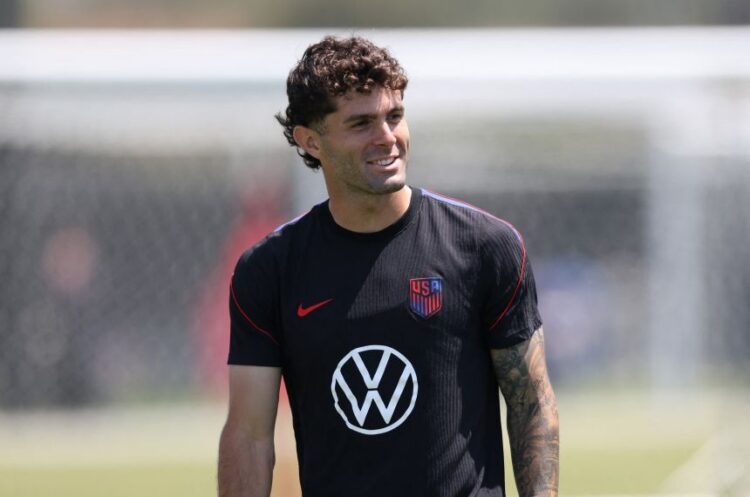
Christian Pulisic has offered a significant boost to the United States men’s national team ahead of their decisive World Cup group-stage fixture against Turkey, stating that he is “feeling great” as he works through the final stages of recovery from a recent knock.
The timing of his progress could hardly be more important. With qualification for the knockout rounds still on the line, the United States are approaching what is effectively a must-perform match, and Pulisic’s potential availability has quickly become one of the central talking points inside the camp.

AD: Capeesh Restaurant
While the forward did not confirm he is fully cleared for selection, his tone suggested growing confidence. He described his condition as “much improved,” and indicated that his recovery has responded well to treatment and reduced training load.
That optimism has been echoed cautiously by staff, who continue to monitor his response to high-intensity movement and contact drills before making any final decision.
Official updates from the governing body remain measured, with the focus placed on daily assessment rather than early declarations. The United States Soccer Federation has followed a consistent approach throughout the tournament, avoiding premature confirmation of player availability until medical clearance is fully secured.

AD: Oysterian Sea Food Restaurant And Bar
Within the squad, Pulisic’s presence is viewed as both a tactical and psychological lift. Even when not at full fitness, his ability to operate between defensive lines, carry the ball under pressure, and force defensive reshaping remains central to the USMNT attacking identity.His influence extends beyond direct goal contributions, often drawing extra defensive attention that opens space for teammates in wide and central areas.
Training sessions leading into the match have reflected that uncertainty. Coaches have reportedly prepared multiple attacking structures depending on whether Pulisic is able to start, come off the bench, or miss out entirely. That flexibility has become a necessity in a tightly compressed tournament schedule where recovery windows are limited and squad rotation plays a critical role.
The broader context of the tournament also amplifies the stakes. With group standings finely balanced, the match against Turkey is being treated internally as a knockout-level contest. A positive result would secure progression, while any dropped points could leave the United States dependent on other outcomes.
FIFA’s official tournament coverage outlines the structure and progression rules for the competition, as well as scheduling and group-stage implications. That broader framework underscores why player availability especially that of a key attacker like Pulisic carries amplified importance at this stage.
Despite the pressure, recent reports describes the USMNT camp as operating within a structured, cohesion-focused environment under Mauricio Pochettino, where emphasis is placed on tactical clarity, collective standards, and controlled preparation rather than visible anxiety, even during the intensity of a World Cup group stage.
Within that setting, the squad’s performances have increasingly reflected shared responsibility, with different players stepping into decisive roles across matches as the team adapts to rotation and squad depth demands.
Still, there is little debate that Christian Pulisic remains the side’s most influential attacking figure, with analysis consistently highlighting his ability to elevate the USMNT’s attacking threat and significantly raise their offensive ceiling when he is available and fully fit.
The coaching staff now faces a familiar tournament dilemma: whether to prioritize immediate impact in a must-not-lose match or protect a key player for potential knockout-stage participation. That decision is complicated by the physical demands of international tournaments, where even minor injuries can escalate under repeated match stress and travel fatigue.
Situation with Pulisic is particularly delicate given his history of managing muscular and impact-related injuries during high-intensity competition. The medical team’s approach has therefore been conservative, focusing on gradual reintegration rather than accelerated return timelines.
His participation in final training sessions is expected to be the decisive indicator of whether he can start or be used in a controlled substitute role.
Tactical Calculations Intensify Before Turkey Showdown
Tactical implications of Pulisic’s possible return are being closely analysed. Turkey’s defensive structure is expected to present a compact and disciplined block, forcing the United States to rely on quick combination play and individual creativity in tight spaces areas where Pulisic typically excels.
When fully fit, he offers the USMNT a direct threat in one-on-one situations, often forcing opposing full-backs into deeper positioning and creating space for overlapping runs from wide defenders. This dynamic has become a recurring feature of the team’s attacking approach in recent international fixtures.
Even in partial fitness scenarios, his presence on the pitch can alter defensive behaviour. Opponents often adjust their pressing triggers and defensive lines to account for his acceleration and ability to transition quickly from midfield to attack. That tactical gravity is one of the reasons the coaching staff are reluctant to make a rushed decision either way.
Inside training sessions, alternative attacking combinations have been tested to ensure readiness for all outcomes. These include more fluid front-line rotations and increased emphasis on midfield runners arriving into advanced positions. The goal has been to ensure that the team remains unpredictable regardless of whether Pulisic starts or is held back.
The United States are aware that tournament progression is often shaped by fine margins, where small tactical details and moments of execution can determine outcomes in tightly balanced matches rather than sustained dominance.
Analysis highlights how Christian Pulisic’s influence extends beyond end product, with his dribbling, pressing intensity, and ability to break defensive structures making him a key tactical reference point for the USMNT’s attacking system.
In that context, a fully fit Pulisic has the capacity to tilt a match through transition play and one-on-one creation, while a compromised version risks reducing the team’s pressing sharpness and attacking speed in key phases of play.
This creates a clear selection dilemma for the coaching staff, balancing the immediate demands of a decisive group-stage fixture with the longer-term necessity of managing player fitness across a compressed tournament schedule.
Supporters and analysts alike have been tracking updates closely, with attention shifting between training reports and official medical updates. While no final decision has been publicly confirmed, the general tone around camp remains cautiously positive, reflecting belief that recovery is on track.
Pulisic himself has maintained a measured public stance. His comments have avoided definitive promises, instead emphasizing how his body responds day by day. That restraint reflects both personal experience and an awareness of how quickly tournament situations can change.
If he does feature against Turkey, his role may be carefully managed rather than unrestricted. Even a limited appearance could provide a decisive edge in a match expected to be decided by fine margins. If he does not start, he remains a likely candidate for a second-half introduction depending on game state and tactical need.
Ultimately, the United States enter the fixture with multiple scenarios under consideration. One includes their primary attacking leader returning to the starting lineup, offering a familiar focal point in the final third. The other requires a collective approach, relying on structured pressing, midfield control, and shared attacking responsibility to compensate for his absence.
Either way, the stakes are clear. The match against Turkey represents a defining moment in the group stage, with progression to the knockout rounds hanging in the balance. Pulisic’s condition simply adds another layer of significance to an already high-pressure encounter.

AD: Heritage And Restaurant Lounge Bar