
By Theodore Brown-
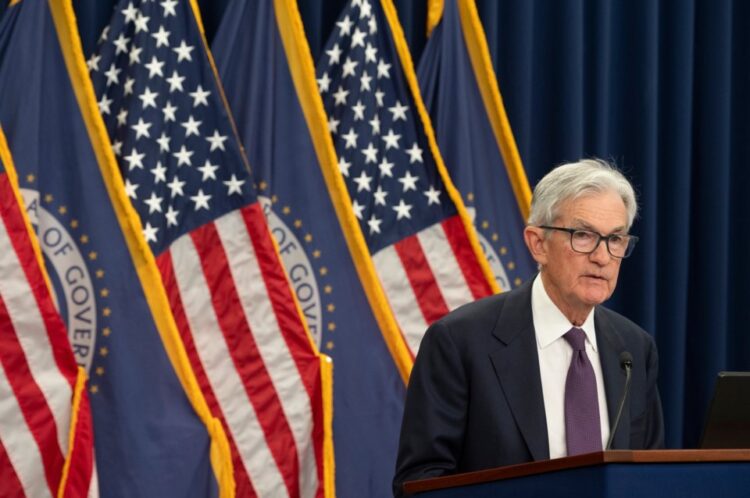
Federal Reserve Chair Jerome Powell has announced that he plans to remain at the central bank even after his term as chair expires in May, a decision that underscores escalating tensions between the Fed and the current administration.
Speaking after a closely watched policy meeting, Powell said he intends to stay on as a member of the Board of Governors, citing concerns about ongoing legal actions and political pressure that he believes could threaten the institution’s independence.

AD: Capeesh Restaurant
Powell’s decision comes at a critical moment for the U.S. economy and for the Federal Reserve itself. His tenure as chair, set to end on May 15, will conclude amid lingering inflation concerns, internal divisions within the Fed, and a contentious political climate.
While it is customary for outgoing chairs to step away entirely, Powell’s choice to remain reflects what he described as an unusual set of circumstances, including legal scrutiny tied to the central bank’s operations and broader challenges to its autonomy.
The move also has immediate implications for presidential authority over the central bank. Staying on the board, Powell effectively prevents the administration from quickly filling his seat with a new appointee, even as its preferred successor moves through the confirmation process. That dynamic is likely to shape both monetary policy discussions and political debate in the months ahead.

AD: Oysterian Sea Food Restaurant And Bar
Legal pressure and Institutional Independence
At the heart of Powell’s decision is a growing concern about what he and other officials have described as legal and political pressures on the Federal Reserve.
In recent months, the administration has pursued investigations related to a costly renovation project at the Fed’s headquarters, a probe that Powell and his allies have characterised as politically motivated. Although the Justice Department has since dropped its criminal investigation, other forms of oversight and scrutiny remain ongoing.
Powell has made clear that his decision to stay is tied to ensuring what he called “finality and transparency” around those legal matters. He has also framed the issue more broadly, warning that legal actions targeting the Fed risk undermining the central bank’s independence, a principle widely regarded as essential to maintaining economic stability.
The Federal Reserve has long operated with a degree of insulation from political influence, allowing it to set interest rates and manage monetary policy based on economic conditions rather than electoral considerations. Powell emphasized that preserving this independence is critical not only for the credibility of the institution but also for the health of the broader economy.
The tensions between the White House and the Fed are not new, but they have intensified in recent months. The administration has repeatedly criticized the central bank’s refusal to cut interest rates more aggressively, arguing that looser monetary policy would boost growth. Powell, however, has resisted those calls, pointing to persistent inflation and global economic uncertainty as reasons for caution.
Legal experts note that the dispute represents an unusual clash between political authority and central bank governance. While presidents appoint members of the Federal Reserve Board, they cannot easily remove them, a safeguard designed to protect the institution from political interference. Powell’s decision to remain on the board reinforces that boundary, even as it risks prolonging the current standoff.
Economic Stakes and Political fall Out
The timing of Powell’s announcement adds another layer of complexity to an already uncertain economic landscape. The Federal Reserve recently voted to hold interest rates steady for the third consecutive meeting, reflecting a divided outlook among policymakers.
Some officials have pushed for rate cuts to support growth, while others remain concerned about inflation, which continues to hover above the Fed’s long-term target.
Powell’s continued presence at the Fed could influence how those debates unfold, even as he has pledged to take a lower-profile role once a new chair is confirmed. He has said he does not intend to act as a “shadow chair,” emphasising that he will support his successor and respect the transition of leadership.
His decision is likely to carry political ramifications. The administration’s nominee to replace him is expected to take a different approach to monetary policy, potentially favoring lower interest rates and a more accommodative stance. Powell’s continued role on the board could serve as a counterweight, at least in the short term, to any sharp shifts in policy direction.
The situation has sparked broader debate about the role of independent institutions in American governance. Critics of the administration argue that its legal actions against the central bank represent an attempt to exert undue influence over monetary policy. Supporters, on the other hand, contend that oversight is necessary to ensure accountability, particularly in light of concerns about spending and transparency.
The episode also highlights the delicate balance between economic management and political priorities. Central banks around the world are often insulated from direct political control precisely because their decisions can have far-reaching consequences, from inflation and employment to financial stability. When that independence is called into question, markets can react with uncertainty, and public confidence may be affected.
With Powell, the decision to stay appears to be as much about signalling as it is about governance. Reports indicates that Powell has tied his decision directly to concerns over legal and political pressure on the Federal Reserve, warning that such attacks risk undermining the institution’s independence and credibility.
He has emphasised the importance of maintaining a central bank free from political influence, reinforcing the idea that institutional independence is essential to economic stability. This suggests his continued presence at the Fed helps preserve leadership continuity during a period of political tension and prevents an immediate reshaping of the central bank’s governing board.
However, analysts and reporting alike note that the broader consequences remain uncertain, as the move could either reinforce confidence in the Fed’s independence or further intensify conflict with political actors challenging the institution.
The Federal Reserve will continue to navigate a complex set of challenges, including inflationary pressures, geopolitical risks, and a shifting economic outlook. Powell’s presence on the board ensures that he will remain part of those discussions, even as he steps back from the central role he has held for nearly a decade.
In the longer term, the implications of this moment may extend well beyond the current leadership change. The clash between the Fed and the administration could shape how future policymakers approach the question of central bank independence, potentially redefining the boundaries between economic expertise and political authority.
Powell’s decision stands as a rare and consequential move, one that underscores the stakes of the current moment. While legal questions linger and political tensions persist, the Federal Reserve finds itself not only managing the economy but also defending the principles that have long guided its role in the American system.

AD: Heritage And Restaurant Lounge Bar