
By Theodore Brown-
Iran’s top diplomat has returned to Pakistan amid renewed diplomatic uncertainty after planned US-Iran talks were abruptly cancelled, deepening questions over whether mediated negotiations can still stabilise one of the world’s most volatile geopolitical crises.
Foreign Minister Abbas Araghchi arrived back in Islamabad after a short departure, according to regional officials and multiple reports, as Pakistan continues its role as an intermediary between Tehran and Washington.

AD: Capeesh Restaurant
His return follows a sudden decision by the United States to cancel a planned delegation visit, citing a lack of progress in negotiations and disagreements over key security conditions. The diplomatic setback comes at a sensitive moment, with both sides still technically engaged in a fragile and indirect peace process hosted by Pakistan.
The cancellation of US participation effectively froze what had been seen as a tentative attempt to restart structured dialogue after weeks of tension and intermittent ceasefire arrangements.
Washington had been preparing to send senior envoys, but the plan was scrapped shortly after signals emerged that Tehran was not ready to engage on American terms, particularly over nuclear-related conditions and regional security guarantees.

AD: Oysterian Sea Food Restaurant And Bar
Pakistan, which has positioned itself as a neutral facilitator, now finds itself once again at the centre of high-stakes diplomacy, attempting to prevent a total collapse of communication between the two adversaries. Officials in Islamabad have been shuttling messages between delegations, hoping to preserve what remains of the negotiation framework that was tentatively built earlier this month.
The latest developments underscore how unstable the entire negotiation process remains. Talks held in Pakistan in recent weeks were already described by observers as highly fragile, with major disagreements persisting over Iran’s nuclear programme, sanctions relief, and maritime security in the Strait of Hormuz, a vital global oil route. Earlier rounds of discussion ended without agreement, despite extended sessions and mediation efforts led by Pakistani officials.
One of the central sticking points remains the question of sequencing whether sanctions relief should come before or after verifiable limits on Iran’s nuclear enrichment activities.
The United States has insisted on strict compliance mechanisms, while Iran has demanded guarantees that economic pressure will be lifted early in any deal. These competing demands have repeatedly stalled progress, even as both sides publicly express a willingness to avoid further escalation.
Complicating matters further is the broader regional security environment. Maritime tensions in the Gulf, intermittent military exchanges involving allied groups, and ongoing concerns about oil shipping lanes have all increased pressure on negotiators. Analysts note that even minor diplomatic missteps now carry the risk of wider disruption across energy markets and regional alliances.
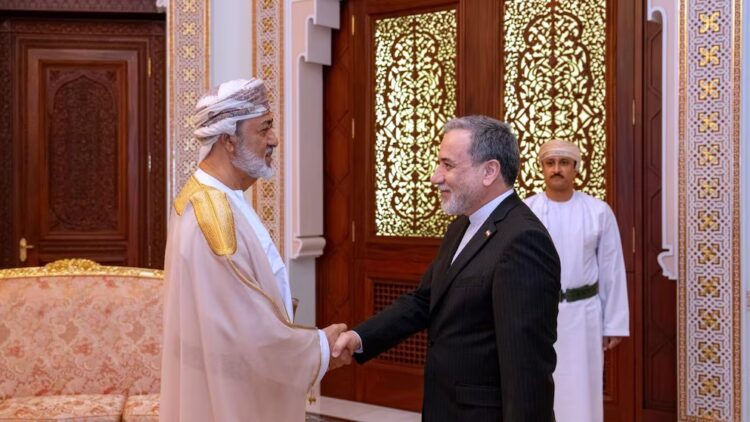
Despite the cancellation of US participation, Iranian officials have not fully withdrawn from the diplomatic track. Araghchi’s continued presence in Pakistan suggests that Tehran still sees value in indirect engagement, particularly through third-party mediators such as Pakistan and Oman. Diplomatic sources indicate that shuttle diplomacy is likely to continue, even if face-to-face negotiations remain suspended for now.
Pakistan’s balancing act and uncertain next steps
Pakistan’s role has become increasingly delicate as it attempts to maintain neutrality while hosting successive rounds of high-level discussions. Islamabad has repeatedly stressed that it is not a party to the conflict but seeks to prevent further regional instability. However, its position as host has placed it at the centre of intense diplomatic pressure from both sides.
The cancellation of the US delegation’s visit has also raised concerns about whether the current framework for talks can survive without direct engagement. While backchannel communication remains active, the absence of structured meetings risks slowing momentum at a critical juncture.
According to diplomatic reporting, even senior Pakistani officials acknowledge that timelines for the next formal round of talks are now uncertain.
Washington has maintained that it remains open to dialogue under specific conditions, while Iran continues to insist that negotiations must occur without coercion or military pressure. This fundamental disagreement over the terms of engagement has repeatedly undermined attempts to build trust between the two sides.
International reactions have reflected growing concern that the pause in talks could harden positions further. Energy markets remain sensitive to developments in the Strait of Hormuz, while regional governments are watching closely for any sign of escalation or renewed breakdown in ceasefire arrangements.
Recent reporting suggests that global powers, including Russia and Gulf states, are also quietly engaged in parallel consultations to prevent diplomatic collapse.
With the return of Iran’s top diplomat to Pakistan signals not resolution, but continuation an acknowledgment that despite the cancellation of US talks, diplomatic channels have not fully closed. Whether those channels can still produce a breakthrough remains uncertain, as both sides appear entrenched in their core demands.
What is clear is that Pakistan’s role as mediator is likely to intensify rather than diminish in the coming weeks. With one of the few countries maintaining open lines with both Washington and Tehran, Islamabad remains central to any future attempt to revive negotiations.
Yet without direct US engagement, the path forward remains narrow, fragile, and highly unpredictable, with diplomacy once again hanging in the balance. Pakistani officials are expected to continue intensive shuttle diplomacy, relaying proposals, clarifications and counteroffers between the two sides in an effort to prevent a complete diplomatic breakdown.
This indirect format has inherent limitations, as progress tends to slow when messages are filtered through intermediaries rather than negotiated face-to-face, increasing the risk of misunderstandings and hardened positions.
There is also growing concern in diplomatic circles that time may not be on the side of the current process. Domestic political pressures in both Washington and Tehran are shaping the room for compromise, with each government facing constituencies that are sceptical of concessions.
In the United States, any perceived softening on sanctions or nuclear restrictions is likely to face scrutiny, while in Iran, economic hardship and political sensitivities constrain how far negotiators can publicly accommodate Western demands.
This narrowing political space makes Pakistan’s mediating role even more complex, as it must navigate not only bilateral mistrust but also internal constraints within both negotiating capitals.
At the regional level, other actors are closely monitoring developments, wary that stalled diplomacy could increase instability across already tense geopolitical fault lines. Gulf states, in particular, remain alert to any escalation risks affecting maritime security and energy exports.
In this environment, Pakistan’s ability to maintain credibility as a neutral facilitator will be tested, especially if talks remain suspended for an extended period. While Islamabad may remain the key conduit for communication, the success or failure of the process will still depend on whether Washington and Tehran are willing to move beyond entrenched positions and re-engage directly before the diplomatic window closes further.

AD: Heritage And Restaurant Lounge Bar