
By Aaron Miller-
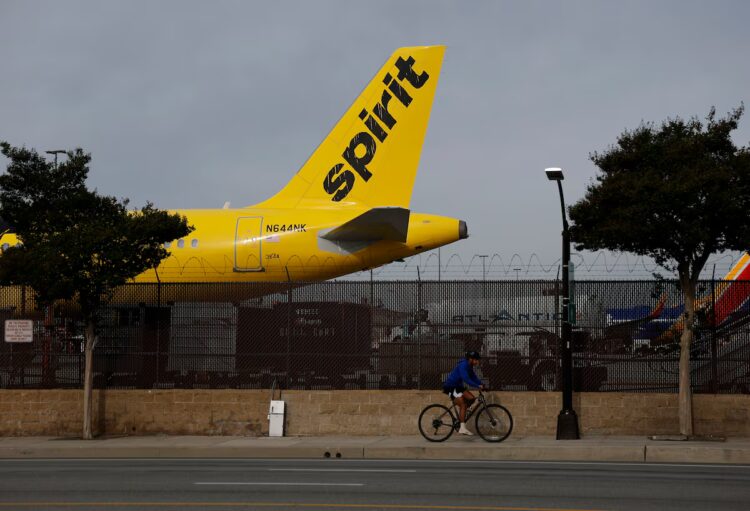
Spirit Airlines is in advanced discussions with the U.S. government over potential financial support as the struggling budget carrier tries to avoid collapse during its ongoing bankruptcy proceedings, marking one of the most significant possible federal interventions in the airline sector since the pandemic-era bailouts.
The airline, which has been battling rising fuel costs, mounting debt, and repeated restructuring failures, is now seeking a lifeline that could include a government-backed loan of up to $500 million in exchange for an equity stake.

AD: Capeesh Restaurant
According to legal representatives involved in the case, talks with federal officials have moved into a more advanced stage, with both sides exploring mechanisms that could keep the airline operating while protecting taxpayer exposure.
The development comes at a critical moment for Spirit, which has already filed for Chapter 11 bankruptcy twice in less than two years. Once known as a leading ultra-low-cost carrier in the United States, the airline has been forced into a series of restructuring efforts after failed merger attempts and sustained financial losses that predate its current fuel-cost crisis.
President Donald Trump has publicly signalled openness to some form of government involvement, saying he would prefer to see the airline saved and potentially acquired rather than liquidated, citing the risk of thousands of job losses.

AD: Oysterian Sea Food Restaurant And Bar
Administration officials have been weighing whether a bailout aligns with broader economic policy, with some questioning whether Spirit’s business model can be made viable even with federal assistance. Spirit’s negotiations with Washington have escalated as the airline’s financial position has deteriorated sharply in recent months.
The carrier has warned that rising jet fuel costs exacerbated by global supply shocks and geopolitical tensions have added hundreds of millions of dollars in unexpected expenses, undermining its already fragile restructuring plan. Without fresh capital, executives have warned that liquidation remains a realistic outcome.
The proposed federal support would represent a highly unusual intervention in the commercial aviation sector, particularly for a single carrier. While the U.S. government has previously stepped in to support airlines during crises such as 9/11 and the COVID-19 pandemic, those interventions were broad industry-wide programmes rather than targeted rescues of individual companies.
Under the current discussions, the government would not simply provide cash assistance but could instead receive warrants or equity-linked instruments, giving taxpayers a potential stake in any future recovery. This structure is designed to reduce political backlash by ensuring that public funds could be recouped if Spirit stabilises or is sold at a higher valuation in the future.
However, the deal remains far from final. Officials within the Transportation Department have reportedly expressed concerns about whether further investment would effectively sustain a fundamentally unprofitable business model. Labour unions and airline workers have warned that failure to intervene could result in mass layoffs and reduced competition in the low-cost travel market.
The prospect of a taxpayer-backed rescue has already triggered sharp political debate in Washington, where lawmakers are divided over whether Spirit deserves public support. Repeated financial failures, failed mergers, and operational instability suggest deeper structural issues that government intervention cannot fix.
Fears have also been expressed that rescuing Spirit could distort competition within the airline industry, potentially giving it an unfair advantage over more stable carriers such as Delta, United, and American Airlines. Some argue that allowing the airline to fail could reduce competition in the low-cost travel segment, ultimately driving up fares for consumers.
Those in favour of the intervention, however, say the stakes are broader than one company’s balance sheet. They point to the potential loss of more than 14,000 jobs and the reduction in affordable air travel options for millions of passengers who rely on ultra-low-cost carriers. In their view, a controlled rescue with government oversight may be preferable to abrupt liquidation.
The debate is also being shaped by recent history. Spirit’s attempted merger with JetBlue was blocked on antitrust grounds, a decision some now argue contributed to its financial vulnerability by limiting consolidation options. With private-sector rescue routes exhausted, the company’s only remaining path may be some form of federal assistance.
Negotiations continue, Spirit Airlines remains under court supervision as part of its bankruptcy process, with a hearing expected in the coming weeks that could determine whether a government-backed rescue moves forward or collapses under legal and political scrutiny.
The airline’s future remains uncertain, but the outcome of these talks could set a precedent for how far the U.S. government is willing to go in intervening in struggling private carriers at a time of rising costs and increasing pressure on the aviation industry.
Any agreement involving federal support for Spirit Airlines would not only determine the fate of one carrier but could also redefine expectations across the sector about when public money is justified to prevent corporate collapse.
Historically, government intervention in the U.S. airline industry has been reserved for moments of systemic crisis rather than company-specific distress. After the September 11 attacks, for instance, the federal government provided broad financial assistance to stabilise aviation infrastructure as a whole.
More recently, during the COVID-19 pandemic, airlines received extensive support through the CARES Act to prevent mass layoffs and maintain essential connectivity. What makes the current situation distinct is that Spirit Airlines’ challenges are largely structural and company-specific, rather than the result of a sector-wide shutdown or external shock affecting all carriers equally.
This distinction is likely to play a central role in political and regulatory debates over any potential rescue package. Lawmakers and economists will be closely watching whether intervention in Spirit’s case signals a shift toward more targeted bailouts, or whether it remains an exception driven by fears of job losses and reduced competition in the budget travel market.
There are also wider implications for market behaviour. If investors and corporate leaders perceive that government support may be available to individual firms in distress, it could influence risk-taking and long-term strategic planning across the industry.
Some analysts warn this could create moral hazard, while others argue that preserving competition and preventing disorderly collapse may justify limited intervention under strict conditions.
The stakes are immediate and severe. for spirit airlines itself. Without external support or a successful restructuring, the company faces the possibility of liquidation, which would not only eliminate thousands of jobs but also remove one of the most prominent low-cost carriers in the United States aviation market.
That outcome would likely have ripple effects on fares, route availability, and competition, particularly in price-sensitive domestic travel segments. The broader aviation industry is left assessing the potential long-term consequences. as negotiations continue behind doors.

AD: Heritage And Restaurant Lounge Bar