
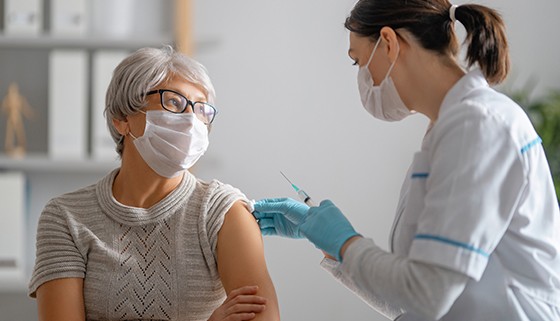
Chaired by Heather Hallett, the inquiry emphasised that the success of the vaccination campaign was not accidental. Instead, it was the result of coordination across government, science, and healthcare systems, combined with the willingness of the public to come forward in large numbers. The programme reached into every community, overcoming logistical, cultural, and informational barriers to achieve one of the highest vaccination uptakes in Europe.
The scale of the operation was unprecedented in peacetime. Within months, temporary vaccination hubs were established in sports arenas, conference centres, and even places of worship.
Retired clinicians returned to service, volunteers assisted with administration and patient flow, and digital booking systems were developed almost overnight. The inquiry notes that this collective effort exemplified the capacity of public institutions to respond decisively in times of crisis.

AD: Capeesh Restaurant
Central to the inquiry’s conclusions is the recognition that the rapid development of Covid-19 vaccines was made possible not by improvisation, but by decades of prior research. Advances in mRNA technology, viral vector platforms, and global collaboration meant that scientists were not starting from scratch when the novel coronavirus emerged.
The report highlights how these scientific foundations compressed what would normally be a 10- to 20-year process into less than a year. Regulatory bodies acted with unusual speed, but without abandoning safety protocols, allowing vaccines to be authorised in record time.

AD: Oysterian Sea Food Restaurant And Bar
The UK was among the first countries in the world to begin administering Covid-19 vaccines, a move that would prove decisive in reducing mortality.
Within a year of the first confirmed Covid-19 case in the UK, the country had not only contributed to the development of the Oxford-AstraZeneca vaccine but had also authorised additional vaccines, creating a diversified and resilient supply. This rapid progress is credited with saving an estimated 475,000 lives—an outcome the inquiry describes as “profoundly significant.”
In her assessment, Heather Hallett did not hesitate to identify vaccines and therapeutics as “two of the success stories of the pandemic.” At a time when many aspects of the response—from procurement of protective equipment to the timing of lockdowns—have been subject to criticism, the vaccination programme stands out as a rare example of effective planning and execution.
Therapeutics also played a key role, with treatments evolving alongside vaccination efforts to reduce the severity of illness among those infected. Together, vaccines and treatments shifted Covid-19 from a disease associated with high mortality to one that could increasingly be managed, particularly among vaccinated populations.
The inquiry underscores that this success was not solely a scientific triumph but also a human one. Public trust, built through clear messaging and the visible commitment of healthcare workers, ensured high levels of participation. Communities that were initially hesitant were engaged through targeted outreach, helping to close gaps in vaccine coverage.
Harm
Despite its overall positive assessment, the inquiry does not shy away from the programme’s more difficult truths. It acknowledges that a “small minority” of individuals experienced serious adverse reactions to Covid-19 vaccines, with life-altering consequences in some cases. For these individuals and their families, the narrative of success is more complicated.
Health authorities such as the Medicines and Healthcare products Regulatory Agency and the World Health Organization have identified a small number of rare side effects that, in exceptional cases, can be fatal.
The main ones include Vaccine-induced immune thrombocytopenia and thrombosis (VITT)
A rare condition linked mainly to the Oxford-AstraZeneca vaccine, where the immune system mistakenly triggers dangerous blood clots along with low platelets. This could lead to stroke or organ failure in severe cases.
Myocarditis and pericarditis
Inflammation of the heart or its lining, seen rarely—mostly in younger males—after mRNA vaccines. Most cases are mild, but very rarely complications can be serious.Severe allergic reactions (anaphylaxis)These happen quickly after vaccination and are why people are monitored for a short time afterwards. Fatal outcomes are extremely uncommon.
Vaccines work by activating the immune system, and experts say that for very rare individuals, that response can become misdirected or exaggerated, leading to unintended effects like clotting or inflammation. This isn’t unique to Covid vaccines—it’s a known, though uncommon, feature of many vaccines and medicines.
Some analysts say that because millions of people die every year from unrelated causes, when vaccinating tens of millions, some deaths will happen coincidentally soon after vaccination.
Careful investigations (death certificates, medical records, autopsies) are used to determine whether the vaccine actually caused the death.
The conclusion from the UK Covid-19 Public Inquiry and global studies is consistent. Covid vaccines saved hundreds of thousands of lives in the UK alone. The risk of serious harm from Covid infection was far higher than the risk from vaccination
The report calls on the government to increase compensation payments for those affected, arguing that existing schemes do not adequately reflect the severity of harm suffered. It suggests that the principle of collective benefit—where the vast majority gain protection from vaccination—must be balanced by a fair and compassionate response to those who bear the risks.
This recommendation reflects a broader theme within the inquiry: that public trust depends not only on success but on fairness. Ensuring that those adversely affected are properly supported is seen as essential to maintaining confidence in future vaccination programmes and public health interventions.
Lessons for the future
The report goes beyond its initial findings and sets out lessons for future pandemic preparedness. Chief among them is the importance of sustained investment in scientific research. The breakthroughs that enabled rapid vaccine development were the product of years of funding and international collaboration, underscoring the need to maintain this momentum even in non-crisis periods.
The inquiry also highlights the value of flexible healthcare systems capable of scaling up quickly. The ability to redeploy staff, establish new infrastructure, and adapt to changing circumstances was critical to the success of the rollout. Future planning, it suggests, should formalise these capabilities to ensure even greater resilience.
Another key lesson is the importance of clear communication. Public understanding of vaccines—their benefits, risks, and availability—played a crucial role in uptake. The inquiry notes that consistent messaging, delivered by trusted figures, helped counter misinformation and build confidence at a time of widespread uncertainty.
The vaccination programme will likely be remembered as a defining chapter in the UK’s response to Covid-19. It demonstrated what can be achieved when science, policy, and public cooperation align toward a common goal. At the same time, it revealed the ethical complexities inherent in large-scale public health interventions.
The findings of the UK Covid-19 Public Inquiry serve as both recognition and reminder: recognition of the extraordinary efforts of health and care staff who worked tirelessly to protect the population, and a reminder that even the most successful programmes must address their shortcomings.
The legacy of its vaccination campaign will be measured not only in lives saved but also in how it responds to those who were left behind. Balancing these realities will shape public trust and preparedness for years to come, ensuring that the lessons of Covid-19 are not only learned but acted upon.

AD: Heritage And Restaurant Lounge Bar
-
Share On
- Categories
- Date