
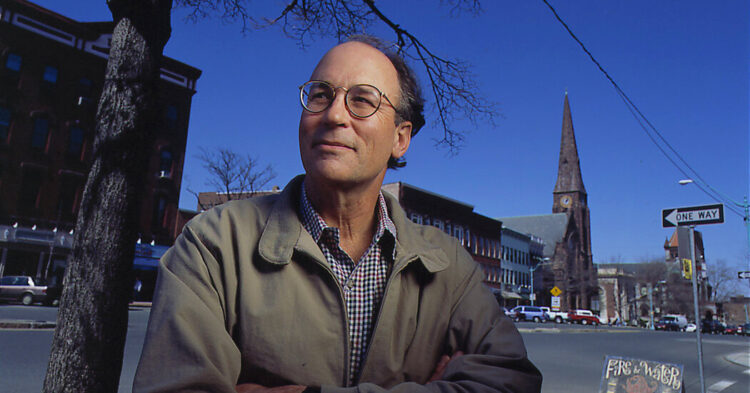
By Lucy Caulkett-
The literary world is mourning the loss of one of narrative nonfiction’s most inventive voices. Tracy Kidder, the Pulitzer Prize–winning author best known for turning unexpected subjects like computer engineering, schoolrooms, and global health crusades into compelling bestsellers, died Tuesday at his daughter’s home in Boston at the age of 80. Kidder’s wife confirmed that he succumbed to lung cancer after a brief illness, leaving behind a legacy that redefined how nonfiction could read like literature while illuminating the texture of ordinary lives with extraordinary depth. Born in New York City in November 1945 and raised on Long Island, Kidder graduated from Harvard University before serving as a first lieutenant in the U.S. Army during the Vietnam War.

AD: Capeesh Restaurant
Across five decades of writing, Kidder demonstrated an unwavering belief that true stories, told with empathy and precision, could connect worlds as disparate as Pentagon‑era computing labs and inner‑city classrooms. In 1981, Kidder hit the national stage with The Soul of a New Machine, a riveting account of engineers racing to build a next‑generation computer under intense pressure.
The book, praised for its human insight into technological ambition, won the Pulitzer Prize for General Nonfiction and a National Book Award, placing Kidder among the most respected nonfiction writers of his generation. His later works and their subjects ran the gamut from the challenges of building a house in rural America to the joys and heartbreaks of childhood education, demonstrating his rare ability to make readers care deeply about the worlds he entered.
Kidder’s gift was not merely to report but to inhabit his material with a storyteller’s curiosity and respect. In Among Schoolchildren, published in 1989, he spent a full academic year in a fifth‑grade classroom in Holyoke, Massachusetts, capturing the rhythms and revelations of urban public education and earning praise from educators and critics alike.

AD: Oysterian Sea Food Restaurant And Bar
A few years later, his poignant portrayal of aging and friendship in Old Friends revealed the quiet narratives that unfold in the twilight years of life. His 2003 biography Mountains Beyond Mountains followed the tireless work of physician and global health advocate Paul Farmer, exploring complex issues of poverty, medicine, and hope with both urgency and compassion.
Friends and fellow writers remember Kidder as a consummate storyteller who approached subjects with patience and an almost anthropological attention to detail. “He didn’t just observe people,” one longtime colleague said, “he entered their lives and brought back stories that felt alive not because they were dramatic, but because they were real.”
His influence extended beyond his books: aspiring nonfiction writers often cited his work as a model of how to blend literary craft with rigorous reporting, helping to broaden the scope and popularity of narrative nonfiction as a genre.
Kidder was equally comfortable writing about Silicon Valley era engineers as he was navigating the moral and social complexities of global health, education, or housing.
His works ranged from The Soul of a New Machine, which explored the high-pressure world of computer engineering, to Among Schoolchildren, which chronicled a year in an urban classroom, and Mountains Beyond Mountains, a portrait of physician and humanitarian Paul Farmer tackling global health challenges.
His unassuming style often masked a sophisticated understanding of narrative structure, pacing, and character tools he wielded to make subjects as varied as computer programmers, teachers, and doctors gripping to readers who might never have encountered those worlds otherwise.
Critics and readers often noted that Kidder had a rare ability to make the “humdrum” feel essential, encouraging deep reflection on human experience in all its forms, whether in the corridors of a tech company, a crowded classroom, or a rural clinic abroad.
Despite his renown, Kidder remained humble about his craft. He resisted being labeled merely a “literary journalist,” preferring the broader identity of storyteller whose first obligation was to the truth of the people he portrayed.
He insisted on rigorous reporting and close observation, believing that proximity and empathy were key to understanding the human complexities behind every subject. Throughout his career, this commitment earned him respect among academics, journalists, and general readers alike.
Legacy of a Relentless Observer
Kidder’s death prompted an outpouring of tributes from readers and writers around the world who pointed to his books as more than nonfiction: they were bridges to unfamiliar lives and thoughtful reflections on what it means to be human.
In recent years, while living in Williamsburg, Massachusetts, and spending summers in South Bristol, Maine, he remained an active presence in local literary communities, often giving readings and engaging deeply with neighbours about his work and theirs.
Generations of students, technologists, educators, and healthcare professionals will remember Kidder’s writing not just for the subjects he chose, but for the way he brought readers into their worlds with curiosity, respect, and an uncanny sense of narrative rhythm. His work stands as a testament to the power of nonfiction to reveal both complexity and humanity in places often hidden from view.
His passing leaves a literary void, but his books, read widely now and in the future, ensure his voice will remain a guiding presence in the craft of narrative nonfiction.
Kidder is survived by his wife, Frances, their two children, and four grandchildren. In announcing his death, his family asked that readers remember him not simply as a writer but as someone who devoted his life to listening a rare gift in any era, and one that made his stories endure.
Those who knew him personally, whether family, friends, or colleagues, describe a man whose curiosity was boundless, yet tempered by an extraordinary empathy. He was the kind of listener who didn’t just hear words but absorbed the nuances of people’s experiences, the rhythms of their lives, and the subtle details that often go unnoticed.
That attentiveness, they say, is what allowed him to translate ordinary moments into compelling narratives that resonate across time and place.
Friends recall that Kidder’s home was often a gathering place for writers, editors, and thinkers who wanted to explore ideas, but it was his quiet patience in conversation that left the deepest impression.
He would ask questions that invited reflection, not performance, and he treated the perspectives of those around him whether a student, a teacher, an engineer, or a doctor with the same respect he brought to his books. This commitment to listening extended beyond his work; it was a defining feature of his character, and it left an indelible mark on everyone who crossed his path.
Even in public life, Kidder’s legacy was one of attentiveness. Readers, educators, and colleagues often commented on his ability to make complex or technical subjects accessible without diminishing their depth, a skill rooted in his capacity to observe and understand.
His family emphasised that remembering Tracy Kidder is not only about celebrating his literary achievements but also about honouring a life dedicated to empathy, attentiveness, and the belief that every person has a story worth telling. It is this devotion to listening rare, deliberate, and profound that ensured his work will endure far beyond his lifetime.

AD: Heritage And Restaurant Lounge Bar