
By Aaron Miller-
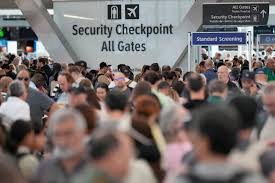
With the U.S. government’s partial shutdown now stretching into its sixth week, the Transportation Security Administration has issued stark warnings about record‑length airport security wait times and deteriorating operational capacity that are leaving travelers stranded and workers strained. At a House Homeland Security Committee hearing on March 25, Acting TSA Administrator Ha Nguyen McNeill described a situation that airport veterans say they’ve never seen before: sprawling security lines, surging absenteeism among screeners, and an agency struggling to maintain basic travel services even as it keeps working without pay.
The testimony, part of increased scrutiny from lawmakers on both sides of the aisle, underscored just how deeply the shutdown triggered by a political impasse over Department of Homeland Security funding has disrupted U.S. aviation infrastructure.

AD: Capeesh Restaurant
In major travel hubs like Hartsfield‑Jackson Atlanta, John F. Kennedy International, and George Bush Intercontinental Airport in Houston, some passengers have reported waiting up to four hours in security lines, with significant bottlenecks reported especially during peak morning and spring break travel times.
Those delays reflect skyrocketing callout rates many TSA officers, facing missed paychecks and growing financial hardship, are staying home or resigning altogether. Some airports have seen absentee rates of more than 40%, and over 450 officers have quit since the shutdown began.
Airlines, airports, and TSA officials have scrambled to cope. ICE agents have been deployed to help with basic screening tasks, though they lack TSA-specific training and have had limited impact on wait times.

AD: Oysterian Sea Food Restaurant And Bar
In response to service pressures, carriers like Delta Air Lines have even suspended certain travel perks for members of Congress, blaming the shutdown for the reduced resources available to ensure smooth airport operations.
The challenges at security checkpoints show how far the shutdown’s impact has penetrated daily life across the country. While the Department of Homeland Security shutdown only directly affects portions of the federal government, TSA workers designated “essential” under federal law are required to continue reporting for duty even as funding lapses and paychecks disappear.
Amid this stalemate, many TSA personnel are facing real financial consequences: some are tapping food banks, selling plasma, or even sleeping in their vehicles to save on living expenses while continuing their duties.
McNeill’s testimony to lawmakers painted a vivid picture of the strain. She detailed how service disruptions have been compounded by the spring travel surge, pushing an already stretched workforce to its limits. In addition to increased callouts, assaults on TSA officers have spiked dramatically, adding a safety concern to an agency already fighting for morale.
If the shutdown continues unresolved, the repercussions are likely to intensify. Some lawmakers on the committee were so alarmed that they pressed for immediate funding measures, arguing that airport security is a national safety priority that should not be held hostage by prolonged budget negotiations.
Others contended that legislation to disentangle contentious immigration policy disputes from essential security funding could provide a path to ending the stalemate and restoring airline operations to normal. Despite these pressures, no bipartisan solution had been finalized by the close of the hearing.
Industry analysts warn that the crisis may have lingering effects even after the shutdown ends. Airports and airlines that have cut flights or scaled back staffing due to prolonged uncertainty could take weeks to rebuild full schedules and processing capacity.
Historical shutdowns show that travel systems don’t instantly snap back once appropriations are restored even short lapses can erode passenger confidence and disrupt network operations.
To passengers traveling this week, the message from TSA has been sobering: arrive at the airport well in advance of your flight, expect potentially hours of queueing at security checkpoints, and be prepared for unpredictable fluctuations throughout the day.
Some major hubs have even temporarily stopped publishing real‑time wait times, acknowledging that their systems can’t keep up with rapidly changing staffing and passenger patterns.
Travel advisory services and apps like MyTSA are encouraging passengers to check current conditions, but officials caution that the information may not fully reflect real‑time conditions due to the shutdown’s effects on data reporting.
Many travellers have taken to social media to share their own experiences of long lines some humorous, others outright frustrated highlighting the diversity of delays across the country.
Shutdown Politics And The Path Ahead
The root cause of the disruptions is political stemming from a deepening standoff in Congress over how to fund DHS and whether to tie Homeland Security appropriations to other legislative priorities.
The shutdown began on 14 February 2026, after negotiations over immigration enforcement and budget allocations collapsed. Ever since, TSA and other DHS agencies have operated without full appropriations, forcing essential workers to continue without pay.
Democrats and Republicans remain far apart in their demands. Democrats have insisted on immigration reform measures as part of any DHS funding agreement, while many Republicans have balked at linking security funding to those reforms.
The inability to reach a compromise has left front‑line workers and travellers caught in the middle, with delays and operational constraints growing each day the budget impasse persists.
Some lawmakers are already warning that if funding isn’t restored soon, smaller regional airports might face closure as TSA becomes unable to maintain minimum staffing levels across the board. Calls for using National Guard troops or other contingency measures are being floated but face logistical and legal hurdles.
Meanwhile, the impending 2026 FIFA World Cup, set to draw millions of international visitors, looms over the crisis as a potential flashpoint.
McNeill and other officials cautioned that ongoing staffing shortages could complicate preparations and security plans for the global event raising alarms about whether the United States can adequately manage both routine travel and heightened international arrivals if the shutdown persists.
With the system is teetering between crisis and catastrophic failure. TSA officials have framed their warnings in stark terms: without an end to the funding lapse, airport wait times could worsen, worker attrition will continue, and essential security operations may face crippling constraints.
The stakes go beyond mere inconvenience this is a test of how robust the nation’s transportation security apparatus can remain in the face of political gridlock and fiscal instability.
While lawmakers return from recess and negotiations resume or stutter forward the future of air travel may hinge on whether Congress can agree to fund critical services like TSA before the next wave of spring and summer travel demands reach their peak.

AD: Heritage And Restaurant Lounge Bar