
By Theodore Brown-
A hesitant approval to vehement opposition, former US president Donald Trump’s position on the United Kingdom’s controversial sovereignty deal over the Chagos Islands has zig‑zagged dramatically, reflecting both geopolitical calculations and domestic political posturing. (Latest developments report Trump’s shifting rhetoric and criticism today, even after earlier apparent support).
The Chagos deal an agreement under which the UK would cede sovereignty of the British Indian Ocean Territory (BIOT) to Mauritius while securing a long‑term lease of the strategically vital military base on Diego Garcia has become a flashpoint in UK, US and Indian Ocean geopolitics.

AD: Capeesh Restaurant
The idea of returning the Chagos Islands to Mauritius was revived after years of pressure from international courts and United Nations advisory opinions calling on the UK to relinquish control. (Mauritius has long contested British control dating back to post‑World War II colonial arrangements. )
In late 2024 and early 2025, as governments in London and Port Louis neared agreement on terms, attention turned to Washington because the Chagos deal also implicated the future of the joint US‑UK military base on Diego Garcia.
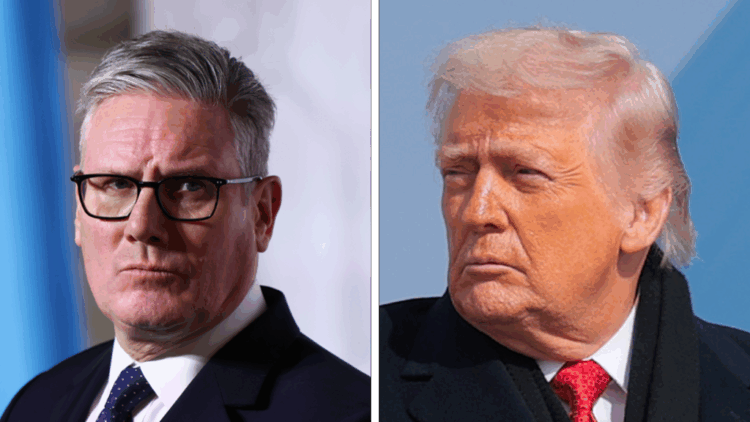
During a February 2025 meeting in the Oval Office, Trump appeared to endorse the deal, telling reporters he was “inclined to go along with your country” when Prime Minister Keir Starmer raised the issue.

AD: Oysterian Sea Food Restaurant And Bar
(At the time, Trump said he believed the lease arrangement was “a very long‑term, powerful lease” beneficial to both countries. ) His comments suggested that the US would accept the sovereignty transfer while maintaining military access a key UK objective.
However, even in that period of apparent backing, critics noted ambiguity. Some UK officials publicly suggested that if Trump opposed the deal, it would not go forward effectively granting him a de facto veto due to the joint use of the base. (Commentators interpreted UK foreign office remarks as signaling Trump’s leverage. )
British ministers also delayed formal ratification of the agreement until after Trump’s inauguration, partly out of diplomatic caution. (Downing Street officials made clear the US administration needed time to “consider the detail.” )
Once the sovereignty treaty was signed and moved toward ratification, Trump’s tone began to shift. In early 2026, he was openly criticising the UK’s arrangement, calling the deal “a big mistake” and warning Prime Minister Starmer not to “give away Diego Garcia.” (Trump’s remarks included claims that the UK risked strategic disadvantage by relinquishing control, even under a lease. )
Trump also described the Chagos deal as “stupid” at one point, charging that it was “an act of total weakness” that could undermine regional security comments that diverged sharply from previous indications of support.
(His rhetoric invoked broader concerns about security competition with China and Russia. ) In statements on social media and during public remarks, he framed opposition to the treaty as necessary to maintain US and British strategic interests in the Indian Ocean.
At times Trump’s comments have even contradicted official US policy signals: just one day before a particularly sharp critique, the US State Department publicly backed the Chagos deal, underscoring the base’s importance and the longstanding bilateral partnership.
(That contradiction highlighted internal US diplomatic dissonance. ) Such mixed messaging has intensified uncertainty in London and Port Louis about the future implementation of the treaty.
Critics of Trump’s recent stance argue his opposition is tied not only to defence concerns but also to domestic political calculus framing resistance to the deal as part of broader narratives about sovereignty and national strength that resonate with his political base. (Analysts note the intertwining of foreign and domestic messaging in his remarks. )
The Chagos deal itself is contentious beyond US politics. Many Chagossians the island’s displaced indigenous community oppose the handover, fearing their own rights and ability to return home will be overlooked. (A group of Chagossians recently landed on an atoll to protest the transfer, underlining ongoing tensions. )
Meanwhile, in the UK Parliament, opposition parties and critics from across the spectrum have challenged the treaty as undermining sovereignty and taxpayers’ interests.
With the UK government, securing the long‑term lease of Diego Garcia is a core justification for the sovereignty transfer, ensuring continued Western military presence in a region of rising geopolitical competition. (Downing Street insists the deal protects strategic interests despite Trump’s criticisms. )
But Trump’s erratic signals have complicated diplomatic messaging, prompting London to engage closely with Washington to confirm official US commitment to the agreed terms. (UK leaders seek clarity on whether Trump’s rhetoric reflects actual policy shifts. )
Whether Washington ultimately honours the initial backing that helped greenlight the deal or if domestic US politics will influence strategic defence arrangements remains an open question.
Trump’s shifting position on the Chagos deal from tentative support to sharp denunciation underscores the challenges of navigating geopolitics where strategic alliances and domestic political narratives intersect.
In a saga marked by diplomatic nuance, strategic imperatives and political theatrics, one thing is clear: the story of the Chagos Islands deal and Trump’s meandering stance will continue to be watched closely not just in London and Washington, but across geopolitical landscapes from the Indian Ocean to global security forums. (Current developments show continued uncertainty and debate around the implementation of the deal.)
The deal is not merely a bilateral matter between the United Kingdom and Mauritius; it has far-reaching implications for regional stability, international law, and the credibility of diplomatic agreements.
Analysts argue that how the United States responds particularly in light of Trump’s contradictory statements could either bolster or undermine the long-term security arrangements in the Indian Ocean, a region increasingly central to global trade and military strategy.
The Diego Garcia military base, which is central to US and UK operations in the Indian Ocean, remains the linchpin of the agreement. While the UK government insists the long-term lease ensures continued military access, uncertainty about US support could complicate operational planning. Military strategists have warned that even temporary ambiguity can affect force deployment, joint exercises, and intelligence operations.
The stakes are particularly high given rising competition from China in maritime trade routes and Russia’s expanding influence in the region. A consistent US stance is therefore considered essential not only for the practical use of Diego Garcia but also for sending a clear signal to regional actors about Western commitment and strategic reliability.
At the same time, the domestic political dimension in both the United States and the United Kingdom adds another layer of complexity. Trump’s oscillating position appears to be influenced in part by domestic messaging aimed at his political base, emphasising themes of national strength and territorial control.
The optics of negotiating a sensitive sovereignty issue while navigating American domestic politics presents challenges in communicating the strategic rationale to the public and to parliamentary critics.
Mauritius, too, faces internal pressure from its citizens and the displaced Chagossian community, whose rights and claims have long been overlooked in discussions about sovereignty and military strategy.
International law experts have highlighted that the Chagos case is emblematic of broader post-colonial disputes. The International Court of Justice and United Nations resolutions have repeatedly urged the UK to return sovereignty to Mauritius, and how the US positions itself whether aligning with Trump’s rhetoric or the broader executive and diplomatic consensus will signal how seriously Western powers take these international legal norms.
Ultimately, the Chagos Islands deal sits at the intersection of diplomacy, military strategy, domestic politics, and international law. The agreement moves closer to full implementation, every statement, delay, or perceived contradiction could have cascading effects, shaping not only the future of the islands themselves but also setting precedents for how strategic territories are negotiated in an increasingly multipolar world.
Observers from global security think tanks to regional governments will continue monitoring developments, understanding that the interplay between domestic political theatrics and international imperatives can have real-world consequences far beyond the shores of the Indian Ocean.

AD: Heritage And Restaurant Lounge Bar