
By Lucy Caulkett–
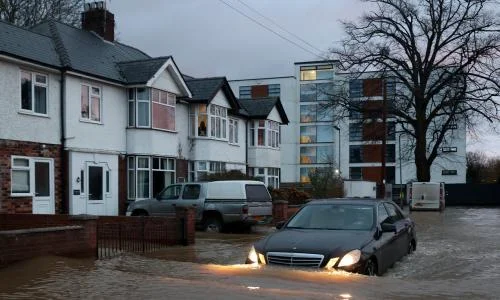
A startling new analysis has found that one in nine homes built in England between 2022 and 2024 was constructed in an area now classified as at risk of flooding a significant increase from previous years and a growing concern for planners, insurers and residents alike.
According to data analysed by insurers and flood risk experts, 43,937 of the 396,602 new homes built in that period are in medium or high flood-risk zones, and more than a quarter are in areas with some measurable flood risk.

AD: Capeesh Restaurant
The figures, drawn from a detailed review of recent housing developments and the latest Environment Agency risk maps, reflect how climate change and policy decisions are reshaping the landscape of new housing in England. With climate models projecting that nearly 30% of these homes could face flood threats by 2050, questions are mounting about whether current planning and development approaches are fit for a warming world.
Experts warn that a combination of intensified rainfall, rising river levels and coastal surges all linked to the climate crisis are likely to amplify flood hazards in the coming decades. This backdrop has prompted sharp criticism of planning decisions that, critics say, risk locking in exposure to predictable climate impacts.
Data Reveals Pattern of Risky Development
The latest findings come from an analysis led by the insurance company Aviva and cross-checked against the Environment Agency’s flood risk classifications. It shows that 11% of newly built homes over the past two years are in locations with medium or high risk of river, surface water or coastal flooding up from about 8% in the preceding decade.

AD: Oysterian Sea Food Restaurant And Bar
The flood-risk trend is not geographically uniform. Around 32% of areas with the highest concentration of new homes in risk zones are in Greater London or Essex, according to the analysis. These regions face a combination of surface water flood hazards where heavy rain overwhelms drainage and fluvial risk from rivers that can burst their banks in extreme conditions.
Adding to the concern is the expectation that the risk to properties will grow as weather patterns become more extreme. By 2050, analysts estimate that 15% of the homes built between 2022 and 2024 could be in medium or high risk categories, with nearly a third at elevated flood risk overall.
Proponents of accelerated housebuilding point to the urgent need to tackle England’s housing shortage. But critics say this must not come at the cost of long-term safety and affordability.
The government has pledged to boost housing supply with ambitious targets including plans to build 1.5 million new homes and insists that flood risk is taken into account during planning decisions. Officials also highlight a multi-billion-pound programme to strengthen flood defences across the country.
However, homes built after 2009 are excluded from the UK’s government-backed Flood Re insurance scheme, designed to make flood cover affordable. This exclusion means many new properties in risk zones may struggle to secure insurance or face much higher premiums a key concern highlighted by insurers.
Insurance industry figures have warned that as flood payouts continue to climb with claims rising sharply in recent years risk pricing may push cover out of reach for many homeowners unless planning and building standards adapt.
Environmental campaigners and ex-government officials have been vocal about the dangers of building in flood-prone areas. A former chair of the Environment Agency described the trend as “a future scandal waiting to happen,” arguing for stricter protections in national planning policies.
Climate scientists and policy analysts say that current mapping and modelling suggest millions more homes are in flood-risk zones nationally.
A separate Environment Agency assessment from late 2024 found that 6.3 million properties across England including homes and businesses are in areas at risk of flooding from rivers, the sea or surface water, and this could grow to around 8 million by mid-century as climate impacts intensify.
Critics argue that while local planning authorities do consider flood risk, national policy frameworks have been watered down in recent years, reducing the force of protective measures and enabling more development on land vulnerable to extreme weather.
Proposals from climate and planning experts include greater use of nature-based flood management solutions, more robust urban drainage systems, and strategic shifts towards building on lower-risk brownfield sites rather than greenfield land with established environmental vulnerabilities.
Indeed, recent housing research has identified potentially large brownfield capacities that could accommodate new homes without encroaching on sensitive and flood-prone landscapes.
There are also calls for a national review of building standards to ensure that new homes in borderline risk zones incorporate resilient construction methods, such as raised foundations and flood-resistant materials. Some insurance providers and climate advocates say such measures need to be mandated, not voluntary, to make a meaningful difference.
England’s housing crisis marked by shortages, high prices and uneven regional growth shows no signs of abating. But the latest flood-risk analysis underscores a critical dilemma: how to increase housing supply while protecting people and property from foreseeable climate hazards.
Planning decisions made today will shape communities for decades. As climate change accelerates and extreme weather becomes more common, the debate over where and how to build is intensifying. Whether policymakers, developers and insurers can find a balance between growth and resilience may prove to be one of the defining public policy challenges of the decade.
Planning decisions made today will shape communities for decades. As climate change accelerates and extreme weather becomes more common, the debate over where and how to build is intensifying. Whether policymakers, developers and insurers can find a balance between growth and resilience may prove to be one of the defining public policy challenges of the decade.
Across England, local authorities are under sustained pressure to meet ambitious housing delivery targets set by central government, while also complying with environmental safeguards designed to protect people and property.
The tension between those goals is becoming harder to ignore. In flood-prone regions, councillors must weigh immediate economic benefits construction jobs, council tax revenue and increased housing supply against long-term exposure to climate-related risk.
Advisers at the Environment Agency have repeatedly warned that mitigation measures can reduce, but not eliminate, flood danger. Designing homes with raised foundations or improved drainage may lower the probability of damage, yet such interventions depend on maintenance, enforcement and accurate modelling of future rainfall patterns. While projections grow more uncertain, so too does confidence in traditional risk assessments.
The insurance sector is also watching closely. Schemes such as Flood Re have helped stabilise the market for high-risk properties, but industry analysts caution that rising claims linked to more frequent storms could alter underwriting practices in the years ahead. If premiums climb sharply or coverage becomes harder to secure, the financial burden may shift to homeowners and, ultimately, the state.
Some planners argue that a more strategic, national approach is needed one that integrates climate adaptation into housing policy rather than treating it as a constraint. That could mean prioritising regeneration in lower-risk urban areas, investing more heavily in natural flood management, or rethinking how land is allocated altogether.
What is clear is that the consequences of today’s approvals will echo well beyond a single electoral cycle. The homes built now will stand as a testament or a warning of how seriously climate risk was taken when it mattered most.

AD: Heritage And Restaurant Lounge Bar