
By Ben Kerrigan-
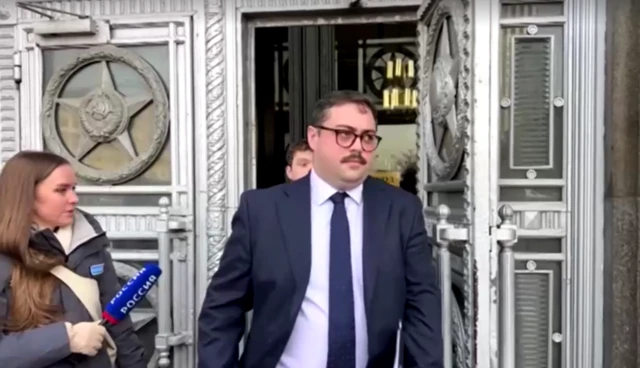
In the latest diplomatic rupture between London and Moscow, Russian authorities have expelled a British diplomat, accusing the envoy of acting as an undeclared intelligence agent for the United Kingdom’s secret services.

AD: Capeesh Restaurant
On Thursday, Russia’s Federal Security Service (FSB) informed Britain’s chargé d’affaires, Danae Dholakia, that one of the staff at the British Embassy in Moscow had been “identified” as an operative allegedly working for British intelligence. The diplomat’s accreditation was revoked, and he was ordered to leave the country within two weeks.
Moscow’s foreign ministry said it would “not tolerate the activities of undeclared British intelligence officers in Russia” and warned that any further escalation from London would be met with a “decisive” response.
This latest expulsion echoes earlier moves in the ongoing tit‑for‑tat between the two capitals. Since Russia’s full‑scale invasion of Ukraine in 2022, diplomatic relations have sunk to their lowest point since the end of the Cold War, with multiple rounds of expulsions on both sides.

AD: Oysterian Sea Food Restaurant And Bar
In March 2025, Russia ordered two British diplomats out of the country on similar spying charges, a claim London dismissed as unfounded.
The incident underscores the deep mistrust between the UK and Russia at a moment when geopolitical tensions remain at a high pitch. Russia’s repeated assertions unaccompanied by publicly disclosed evidence that British diplomats are covert spies reflect a long‑standing narrative within Moscow about Western interference on its soil.
In Thursday’s announcement, the Russian foreign ministry made clear that Moscow views any undeclared intelligence activity as a direct threat to its national security.
In previous instances, the UK has responded to expulsions by Russia with similar measures revoking the credentials of Russian diplomats in London though it generally refrains from escalating such incidents into broader diplomatic crises.
Analysts note that Russia’s warning of a mirror response underscores the risk of further diplomatic measures if London responds sharply, while a muted initial public reaction from the UK may signal cautious diplomacy in the early hours of the crisis.
In a similar case in March 2025, two British diplomats were expelled on spying charges that the UK dismissed as baseless, showing how London has critiqued such accusations in the past.
The Spy Game and Broader Geopolitics
Espionage allegations between Moscow and London are not new. Historical episodes such as the expulsion of Anatoly Zotov in 1982, a Soviet naval attaché accused of setting up agent networks in the UK illustrate how spy scandals have repeatedly tested bilateral ties.
But in the contemporary context, allegations of spying carry added weight against the backdrop of the war in Ukraine and Russia’s fraught relationship with NATO and the West.
Since the Ukraine conflict began, diplomatic expulsions have been part of a broader strategy by both sides to signal disapproval, exert pressure, or retaliate for foreign policy disagreements. In some cases, expulsion announcements are also used domestically within Russia to rally nationalist sentiment or warn foreign powers against perceived encroachments.
In each case, however, the lack of publicly disclosed evidence makes independent verification of espionage allegations extremely difficult.
Some analysts argue that such expulsions serve multiple purposes: they are both symbolic gestures and practical moves in the intelligence playbook.
Even as diplomats are formally persona non grata, intelligence services have long used diplomatic cover to establish networks abroad, blurring the line between formal diplomacy and covert operations. Yet in today’s hyper‑connected world, public accusations of espionage carry heavy political implications that go well beyond the immediate individuals involved.
Russian officials have stressed that any perceived escalation by the UK including reciprocal expulsions would result in “mirror actions”.
That phrasing hints at the possibility of more tit‑for‑tat expulsions or even broader diplomatic retaliation. Meanwhile, UK policymakers must balance the need to defend their diplomatic corps and national interests without inadvertently amplifying tensions that could spill over into other areas of international cooperation or conflict.
Observers are now watching for how London will respond. A measured response could take the form of summoning the Russian ambassador in London for an explanation or issuing a formal protest steps that underline displeasure without immediately destabilising diplomatic channels.
Alternatively, the UK could announce its own expulsions of Russian diplomats, in line with past practice following similar accusations.
The unfolding situation also feeds into broader questions about Western alliances and their stance toward Moscow. With the UK still deeply engaged in supporting Ukraine and navigating complex security dynamics across Europe, this latest incident is likely to resonate beyond bilateral relations.
It comes at a time when Western capitals are continuously reassessing their diplomatic presence in Moscow and considering the broader implications of intelligence and security cooperation.
In the short term, the expelled British diplomat’s departure within the next fortnight will be closely watched as a barometer of the current state of UK‑Russia relations.
But in the longer view, this episode reinforces a sobering reality: even as the Cold War recedes further into history, the spectre of espionage and diplomatic brinkmanship remains deeply woven into the fabric of Eurasian geopolitics.

AD: Heritage And Restaurant Lounge Bar