
By Ben Kerrigan-
Ugandans are casting their ballots on 15 January 2026 in a high-stakes general election that is widely expected to extend President Yoweri Museveni’s nearly 40-year rule, in a poll marked by political repression, an internet blackout and deep concerns about democratic norms.
At 81 years old, Museveni one of Africa’s longest-serving leaders is seeking a seventh term, a prospect that has both energised his supporters and alarmed critics at home and abroad.

AD: Capeesh Restaurant
The vote, which also includes contests for thousands of parliamentary seats, comes amid intense scrutiny of the electoral environment, with opposition rallies disrupted, independent rights groups suspended and online communications curtailed by authorities.
The mood in Uganda is both charged and anxious: younger citizens are clamouring for change, while others cite stability and continuity as reasons to back the incumbent. Observers warn that how the election unfolds and how any post-vote tensions are managed could shape the country’s political trajectory for years to come.
The run-up to voting has been one of the most repressive in recent Ugandan history, according to human rights groups and UN officials. Authorities ordered a nationwide internet shutdown days before polls opened, blocking access to social platforms and vital online information.

AD: Oysterian Sea Food Restaurant And Bar
The government body responsible for communications defended the blackout as a necessary measure to curb misinformation and “electoral fraud,” but critics dismissed it as an attempt to stifle dissent and obscure irregularities.
Officials also moved to suspend prominent civil society organisations, including human rights groups that had been monitoring the election, citing national security concerns. These actions, coupled with reports of arrests and intimidation of opposition supporters, have raised significant alarms about the credibility of the process.
When voting began Thursday, logistical difficulties emerged at polling stations across the country. In some areas, biometric voter verification machines malfunctioned, causing long delays and frustration among voters particularly in urban centres where support for the opposition is strongest.
Some voters waited hours in line amid uncertainty over whether the hardware issues were related to the ongoing internet disruption.
Security forces have also been a visible presence nationwide. Armoured trucks and soldiers patrol the capital, Kampala, and other urban centres, a deployment authorities say is necessary to prevent violence but which critics view as an intimidation tactic.
The spectre of unrest both during and after the polls lingers, as sections of the population fear that tensions may escalate if results are perceived as unfair.
Amid these pressures, millions of Ugandans with roughly 21.6 million registered voters are navigating a difficult and uncertain voting day. Many citizens express frustration that basic information and communications tools have been restricted. With some, the shutdown has disrupted not just politics but daily commerce and community life.
In rural areas, however, where the ruling National Resistance Movement (NRM) historically retains strong support, voting proceeded with less visible conflict, though delays and confusion were still reported. The parliamentary elections held concurrently may well determine the shape of governance in the country regardless of the presidential outcome.
President Museveni first came to power in 1986 after a protracted civil war and has since overseen successive constitutional amendments, including the removal of age and term limits that have allowed him to continue running for president.
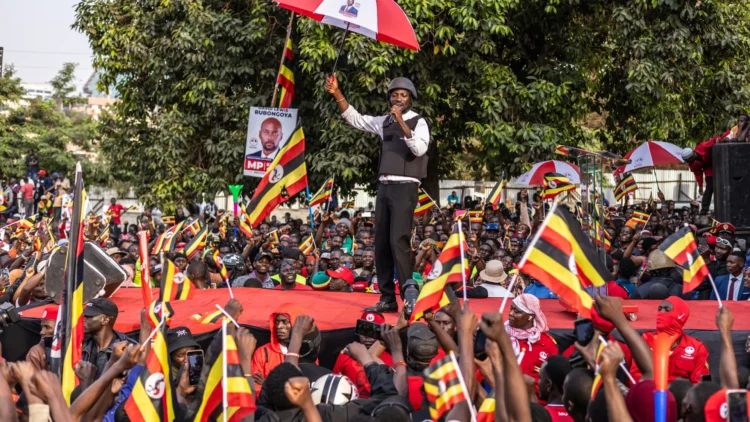
His main challenger, Robert Kyagulanyi Ssentamu popularly known as Bobi Wine is a 43-year-old musician turned politician who has emerged as the most prominent opposition figure.
With a strong base among young Ugandans a cohort that comprises the majority of the country’s population Wine has campaigned on a platform of anti-corruption, human rights, and generational change. His supporters often refer to him as the “ghetto president,” emphasising his roots in Kampala’s poorest neighbourhoods.
Wine’s campaign rallies, however, have repeatedly been disrupted by security forces, and his team has alleged widespread intimidation, including arrests of his supporters and closure of campaign events. Wine himself has warned of mass protests should the election be rigged, though he has urged his followers to channel their frustrations through non-violent means.
The contrast between Museveni’s grip on state institutions and Wine’s grassroots momentum highlights a deep generational and ideological divide in Uganda.
Older voters, particularly in rural districts, often credit Museveni with maintaining peace and fostering development, while younger voters feel their economic prospects are dim and that political opportunities have been stifled.
Political analysts note that while Wine’s challenge energises opposition support, structural advantages enjoyed by Museveni control over the security apparatus, media influence, and institutional power make a genuine upset difficult. Many observers describe Museveni’s anticipated victory as more about maintaining the status quo than a true reflection of the electorate’s mood.
International reactions to the election have been mixed. Western governments and human rights organisations have voiced concern about the conditions under which Ugandans are voting, urging restraint and transparency. Meanwhile, regional partners have mostly adopted a cautious stance, calling for peaceful conduct and respect for the rule of law.
Despite these pressures, the day’s voting has provided glimpses of civic engagement as lines formed early and voters showed determination to participate despite uncertainties. In some polling stations supporters of both Museveni and Wine queued side-by-side, underscoring that regardless of outcome, Ugandans broadly see the election as a critical moment for the nation’s future.
Should Museveni secure victory as most regional and international analysts expect he will continue to preside over Uganda into a fifth decade.
That outcome is likely to intensify debates about democratic governance, succession planning and the role of the military in politics, especially given the rising influence of Museveni’s son, Gen. Muhoozi Kainerugaba, who holds significant military power and is viewed by some as a potential successor.
If the election results are contested whether through legal challenges or street demonstrations the government’s response will be closely watched. Civil society and opposition leaders have made clear they will not accept a result they perceive as illegitimate, raising fears of post-poll unrest.

AD: Heritage And Restaurant Lounge Bar