
By Kenneth Williams-
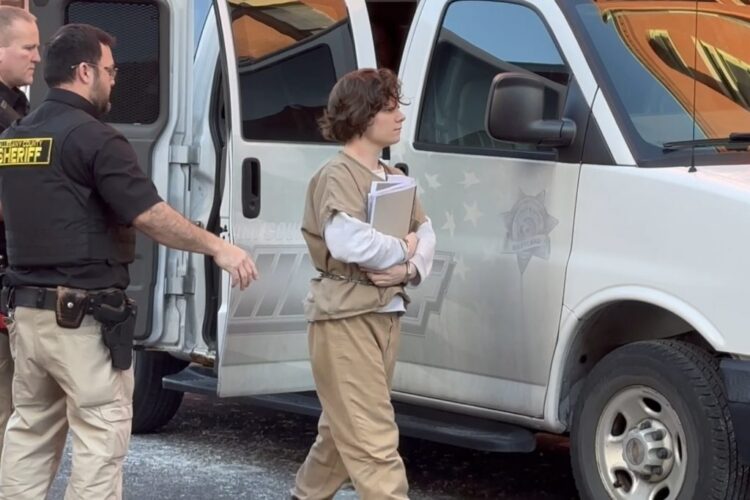
Nearly four years later, prosecutors have charged Michelle Zajko, with first-degree murder, burglary, and conspiracy in connection with the death of her parents-Richard and Rita Zajko- a development that has pulled one of the most unsettling cases in recent U.S. criminal investigations back into the national spotlight. Prosecutors described the crime scene as ”carefully orchestrated’.
Authorities say the case is not just about a family tragedy. It is also entangled with a loose and controversial network known as the “Zizians,” a group described by law enforcement and reporting as a cultlike, ideologically driven collective with ties to multiple violent incidents across several states.

AD: Capeesh Restaurant
Zajko, who has denied involvement in her parents’ deaths, is currently jailed in Maryland on unrelated charges. Prosecutors in Delaware County, Pennsylvania, announced the new indictment this week, arguing that evidence including digital records, surveillance footage, and ballistic links connects her to the killings, even if she may not have been the one who pulled the trigger.
The indictment reframes a case long marked by uncertainty, shifting it from an unresolved double homicide into what prosecutors now call part of a broader pattern of coordinated violence.
The name “Zizians” has circulated through court filings and investigative reports for years, often attached to descriptions that are as fragmented as they are alarming. Authorities say the group emerged from online rationalist and tech-adjacent subcultures, coalescing around extreme interpretations of philosophy, identity, and artificial intelligence, mixed with a rejection of mainstream social norms.

AD: Oysterian Sea Food Restaurant And Bar
What makes the group particularly difficult for investigators to define is its structure or lack of it. Officials describe it less as a traditional organisation and more as a shifting network of individuals connected by ideology, online communication, and overlapping personal relationships.
Prosecutors argue the consequences have been concrete. Reporting and court documents link individuals associated with the Zizians to at least six deaths since 2022, spanning Pennsylvania, California, and Vermont, including the killings of a landlord in California and a violent confrontation in Vermont that left a U.S. border patrol agent dead.
Among those arrested in connection with the broader investigation are figures described by authorities as key participants in the network, including Jack “Ziz” LaSota, often identified in court filings as a central ideological figure. The group has denied acting as a coordinated criminal organisation, with some members insisting media portrayals distort a more complex reality of philosophical disagreement and personal autonomy.
In a 20-page handwritten statement previously submitted by Zajko’s legal team, she rejected allegations against her and criticized what she described as misrepresentations of her beliefs and relationships.
Her denial now sits directly against the weight of a new indictment, one that prosecutors say is supported by physical evidence and communications recovered during the investigation.At the heart of the case is a contradiction that investigators have not fully resolved: whether Michelle Zajko was the architect of her parents’ deaths, a participant, or wrongly implicated in a wider conspiracy.
According to prosecutors, forensic and digital evidence places her in proximity to critical elements of the crime. Doorbell camera footage and cellphone data are among the materials cited in court documents as linking individuals associated with the Zizians to the scene. Authorities also allege the crime involved coordination beyond a single actor, suggesting planning and shared intent.
But the defense narrative pushes sharply in the opposite direction. Zajko has previously suggested in filings that her father may have been responsible for a murder-suicide scenario, a claim investigators reject outright based on ballistic analysis and scene reconstruction.
The tension between these accounts has turned the case into something larger than a single prosecution. It has become a test of how courts handle cases embedded in opaque, ideologically charged networks where motive is disputed and affiliations blur traditional legal boundaries.
Complicating matters further is the group’s alleged connection to other violent incidents under investigation in multiple states. Law enforcement officials have publicly stated that they are examining possible overlaps between different crime scenes and individuals linked through the Zizians network, though many of those connections remain unproven in court.
What makes the Zizians particularly difficult to categorise is the way they defy familiar labels. They are not easily placed within traditional political extremism, nor do they align with a single ideology. Instead, reporting suggests a patchwork of beliefs involving technology, identity, ethics, and apocalyptic thinking about artificial intelligence and human survival.
That ambiguity has complicated both public understanding and law enforcement response. Some critics caution against overstating cohesion in what may be a loosely connected set of individuals. Others argue that dismissing the pattern risks ignoring a real and growing form of digitally enabled radicalisation.
The case against Michelle Zajko has been built over years of investigative work involving both digital and forensic evidence, including cellphone records, ballistic analysis, and other materials used to reconstruct the events of New Year’s Eve 2022.
Prosecutors say this evidence places Zajko among unidentified individuals who entered her parents’ Chester Heights home and carried out the killings, with investigators also referencing suspicious activities in the weeks surrounding the deaths, such as firearm purchases and the movement of cash that helped establish a broader timeline of preparation and activity.
Authorities further stated that the totality of the evidence indicates coordination among multiple people rather than a single actor, forming the basis for charges that include conspiracy alongside first-degree murder. With the families involved, the ideological backdrop offers little comfort or clarity.

AD: Heritage And Restaurant Lounge Bar