
By Chima Phillips-
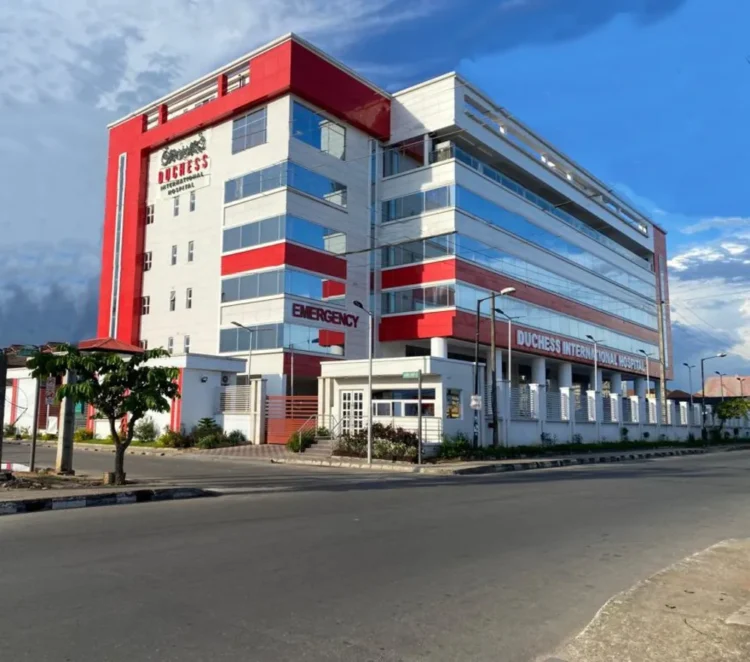
When British boxing champion Anthony Joshua survived a terrifying car crash on the Lagos‑Ibadan Expressway, many have asked why he was immediately taken to Duchess International Hospital, widely regarded as one of Nigeria’s premier private medical facilities.
Joshua is reportedly in a stable condition, but it remains unclear exactly what the extent of his injuries are. For two consecutive years, Duchess has been honoured as the Private Tertiary Healthcare Facility of the Year at the Nigerian Healthcare Excellence Awards (NHEA), reflecting its high standards in trauma care, specialist services, and rapid emergency response.

AD: Capeesh Restaurant
Experts say that the choice of hospital was far from incidental. Trauma specialists highlight that severe road accidents can lead to life-threatening internal injuries, multiple fractures, and neurological complications. Access to a fully equipped private hospital with world-class emergency facilities can drastically improve survival odds a fact underscored in Joshua’s case.
State-of-the-Art Facilities and Specialist Care
Duchess International Hospital, located in Ikeja GRA, Lagos, is a 100‑bed multi-specialist hospital designed for critical care, emergency medicine, and complex surgical interventions. Its infrastructure includes five fully equipped operating theatres, advanced imaging services, intensive care units, and specialist departments across multiple disciplines.
In Joshua’s crash, the Lexus SUV collided violently with a stationary truck. The left side of the car, where Joshua was seated, absorbed less force, but even minor internal injuries from such high-speed accidents can deteriorate rapidly without prompt and specialised care.

AD: Oysterian Sea Food Restaurant And Bar
In a standard hospital lacking multi-disciplinary emergency teams and state-of-the-art monitoring, delayed detection of complications such as internal bleeding could have resulted in a significantly worse outcome.
Duchess International Hospital has won consecutive NHEA awards in 2024 and 2025, recognised for clinical excellence, operational efficiency, and patient-focused care. The awards consider hospitals’ ability to handle emergencies, adopt international best practices, and maintain high standards of patient safety.
While many private hospitals in Lagos provide excellent care, not all are equipped to manage severe trauma cases in-house. Smaller clinics or non-specialist hospitals might require transfers to other facilities, delaying crucial interventions.
Another distinguishing factor is the Duchess’s patient-centred approach. Trauma units are staffed with teams trained to manage not just physical injuries but also the psychological stress associated with life-threatening accidents. Nurses and specialists are available 24/7, ensuring continuous monitoring.
Joshua had minor but potentially dangerous injuries, and being in such a facility allowed for the prompt detection and treatment of internal bleeding, fractures, or head injuries, advantages that a typical public hospital in Nigeria might find difficult to provide due to a shortage of ICU beds, fewer specialists on duty, or a shortage of advanced imaging.
Duchess’ proximity to Murtala Muhammed International Airport ensures that international patients and high-profile individuals can access care without unnecessary delays. In emergencies, the combination of strategic location, rapid triage, and fully equipped trauma units offers a level of efficiency often unmatched in public healthcare facilities.
Had Joshua been admitted to a standard hospital with limited trauma capabilities, the delay in comprehensive diagnosis and intervention could have compounded his injuries, potentially turning a survivable accident into a life-threatening situation.
Reducing Risk Through Excellence
Duchess International Hospital’s philosophy is not just about luxury but about reducing medical risk through excellence in infrastructure and care.
The hospital maintains state-of-the-art monitoring systems, fully equipped ICUs, rapid-response surgical teams, and international-standard sterilisation procedures. All of these factors contributed to the effective management of Joshua’s injuries.
Healthcare analysts note that the hospital represents the best-case scenario for trauma care in Lagos: immediate access to specialists, continuous monitoring, advanced diagnostic tools, and high-quality intensive care. In situations where a second, third, or fourth complication can arise within minutes, these advantages are critical.
Anthony Joshua’s survival after the Lagos car crash highlights more than luck. It underscores the significance of having immediate access to the highest standard of private care in a city where public healthcare may not meet all critical care requirements.
Duchess International Hospital’s recognition as Private Tertiary Healthcare Facility of the Year for two consecutive years reflects its capability to provide rapid, comprehensive, and specialist-led care, making it a vital resource for high-profile patients and trauma victims alike.
In addition to receiving professional care for his immediate injuries, Joshua’s “best of the best” private care also meant a lower chance of complications that may have been fatal in a regular hospital.
The tragic deaths of his teammates who did not receive the same fast, professional attention serve as a reminder of how infrastructure, specialised knowledge, and operational efficiency may change survival odds in emergency medicine.
In Nigeria’s evolving healthcare landscape, Duchess International Hospital stands as a symbol of what private medical institutions can achieve, particularly in situations where every minute and every specialist counts.

AD: Heritage And Restaurant Lounge Bar