
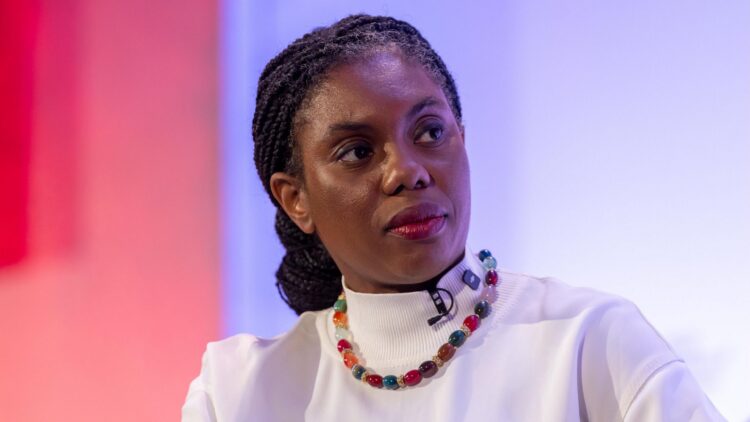
By Ben Kerrigan And Segun Ade
Tory leader, Kemi Badenoch’s latest criticism of Nigeria has once again placed her relationship with the West African nation under scrutiny, raising questions about whether her comments could undermine her appeal among one of Britain’s most successful and politically engaged diaspora communities.
The NIgerian diaspora in the UK comprises just 3% of the overall population, but their potential influence on the wider majority of the population come election time is an unknown factor.

AD: Capeesh Restaurant
The Conservative leader sparked fresh controversy during an interview with The Spectator last week in which she argued that Nigeria’s vast natural oil resources had failed to deliver prosperity because of poor governance. her comments have sparked a debate at a Nigerian setting in East London where researchers were conducting a survey about the political situation and rampant kidnapping in many parts of their native country.
Interestingly enough, discussion someone moved towards the Tory leader’s disposition to her native country, as conversations where settling on the country’s political leadership, and some of the criticisms levied against them.
Reflecting on her upbringing in the West African nation, Badenoch told The Spectator that Nigeria was “an oil-producing country” that had “never had electricity”, attributing the country’s struggles to what she described as “stupid public policy”.

AD: Oysterian Sea Food Restaurant And Bar
”My belief that we need to drill our oil and gas comes from growing up in a country… Nigeria is an oil-producing country that has never had electricity,” she said.
“It is very easy to have resources under the ground, but stupid public policy means that you can’t use them,” she added.
The remarks were made as part of a broader argument in favour of oil and gas development in Britain and a criticism of Labour’s energy policies. But it was her characterisation of Nigeria that quickly attracted attention, not least because it continues a pattern of comments that her critics say portray the country primarily through the lens of failure. Her comments last week came to the fore after attendees noticed a recent article about the Tory leader in relation to oil on this page last Friday
The controversy for many of Badenoch’s strong critics is not about whether Nigeria faces serious governance challenges. Few would dispute that Africa’s largest oil producer has struggled for decades with unreliable electricity supply, corruption, infrastructure deficits and economic mismanagement. The issue is whether Badenoch’s repeated references to Nigeria risk appearing dismissive of a country that remains an important source of identity and pride for millions of people around the world.
Energy experts have long noted that Nigeria’s electricity crisis is rooted in a web of interconnected problems. While government policy has undoubtedly played a role, analysts point to chronic underinvestment in transmission infrastructure, ageing power networks, regulatory uncertainty, corruption, electricity theft, fuel supply constraints and entrenched interests that have benefited from the country’s reliance on private generators and alternative energy markets.
Her critics argue that reducing these complexities to “stupid public policy” oversimplifies a problem that has developed over generations.
More politically significant, however, may be the reaction among Britain’s large Nigerian diaspora. Badenoch occupies a unique position in British politics. As the first leader of a major British political party with Nigerian heritage, she represents a historic milestone for many members of the community, regardless of party affiliation.
However, that same prominence means her comments about Nigeria often receive greater scrutiny than any similar remarks made about any other country by other politicians. Some British Nigerians have welcomed her willingness to speak candidly about corruption and governance failures.
They argue that honest criticism should not be regarded as disloyalty and that Badenoch is entitled to draw upon her own experiences growing up in Lagos. These supporters consider her comments to reflect a realistic assessment of the problems that have hindered Nigeria’s development for decades.
Olu Adeoye, a 33 year old data analyst from Peckham , told The Eye Of Media.Com: ” I don’t see the problem with what Kemi said. She hit the nail on the head and said things exactly as they are, so there should be no issue there. The natural resources of Nigeria have been mismanaged for decades, and Kemi is just highlighting this fact. This criticism you are making is not solid”
Others see matters differently. Lucas Phillips, an IT Consultant from Leytonstone, East London said: ” I think Kemi Badenoch lacks both wisdom and common sense to speak like that about her own native country. Every time she opens her mouth to talk about Nigeria, it is only negative stuff that comes out. She acts like she is the first ethnic minority to lead a political party.
‘When Rishi Sunak was prime minister, you never heard him speak negatively about India, despite the many issues with the country. The worst thing is that she doesn’t have her facts right about electricity issues in Nigeria, which is more to do with exploitative networks and more complex issues that have nothing to do with public policy. does she even know what public policy means? You would expect her to be aware of what public policy is, but I am not sure she is”.
Within sections of the diaspora, there is a growing perception that Badenoch too often references Nigeria as an example of dysfunction while rarely acknowledging its achievements, entrepreneurial success, cultural influence or economic potential. Her attackers argue that her comments risk reinforcing negative stereotypes at a time when many Nigerians in Britain are working to challenge outdated perceptions of the country.
That perception could carry political consequences. While the Nigerian diaspora is far from politically uniform, it represents one of the most educated, economically active, and civically engaged ethnic minority communities in the United Kingdom.
Many of the country’s graduates were brought up under a rigorous education system that is curricula intensive right from primary school, and which places much value on quality information and accurate thought thinking processes. Nigerian-British voters have become increasingly visible across public life, from business and academia to healthcare, law and politics.
Their influence extends beyond simple electoral numbers, particularly in London and other urban areas where political parties compete intensely for support among diverse communities.
Political strategists note that elections are often shaped by broader impressions of a candidate’s character and values rather than individual policy disagreements. Repeated controversies involving comments about Nigeria may therefore contribute to a perception problem for Badenoch among some diaspora voters, particularly younger generations who place a strong emphasis on identity, representation and cultural respect.
For a politician who has often emphasised personal responsibility and meritocracy, the risk is not necessarily that large numbers of Nigerian-British voters abandon the Conservatives solely because of a single interview.
Rather, critics argue that cumulative controversies can gradually erode goodwill. Each new remark adds to an existing narrative that Badenoch is more comfortable criticising Nigeria than celebrating its strengths.
London-based community organiser, Maria Okoye, familiar with Nigerian diaspora politics suggested that the issue is one of tone rather than substance. “Most Nigerians know the country has serious problems.
‘Nobody is denying that. The question many people ask is why every public reflection on Nigeria- the country of her parents- seems to focus on what is wrong rather than what is right. People notice that.
”Bademoch has no backbone to fight the corner of black people, only the other day she was advocating for more stop and search against black boys.
Similar concerns have been raised by commentators who argue that Badenoch’s language risks creating emotional distance between herself and a community that might otherwise view her as a source of pride. While many diaspora voters do not expect politicians to defend every aspect of their ancestral homeland, they often expect criticism to be balanced by recognition of progress, resilience and achievement.
One vocal view came from Stephen Oduntan, a freelance Los Angelis Reporter , who didn’t mince word during a phone call expressing his disdain for the Tory leader. “Two things can be true at the same time. Kemi Badenoch can be correct that Nigeria has suffered from decades of poor governance, corruption and policy failures, while also behaving like a political sellout.
”I use that term deliberately. Not because she criticises Nigeria—Nigerians criticise Nigeria every day—but because there seems to be a pattern in which her interventions consistently reinforce narratives that are celebrated by sections of the British right while showing little interest in the historical or structural factors behind the problems she discusses.
‘Take her recent comments on stop-and-search. Surely Kemi has access to the same body of research, data and scholarship that has documented longstanding racial disparities in policing. Yet she routinely dismisses or downplays those concerns and instead presents issues in a way that is warmly received by those who believe systemic racism is either exaggerated or non-existent.
”That is why many people view her as a sellout. The criticism is not that she is willing to challenge aspects of Nigerian culture or governance. The criticism is that she rarely appears willing to challenge power structures when doing so would place her at odds with the political constituency she is trying to court.
”What frustrates many in the Nigerian diaspora is that kemi seems far more comfortable highlighting the failures of Nigeria than celebrating its successes, and far more willing to scrutinise black communities than the institutions that shape many of the problems she claims to care about. That imbalance is what fuels the backlash.”
Referring to Badenoch as a political sell out sounds strong, but such are the feelings of upset in some diaspora circles.
Her critics believe the latest remarks may reinforce existing concerns about her ability to build coalitions beyond traditional Conservative voters. In an increasingly diverse Britain, successful national leaders are often expected to demonstrate not only conviction, but also an understanding of how their words resonate across different communities.
Supporters, meanwhile, argue that Badenoch should not be judged differently because of her Nigerian heritage. They contend that expecting her to soften criticism of Nigeria simply because she was born there would be both unfair and patronising. In their view, her willingness to speak frankly is evidence of independence rather than insensitivity.
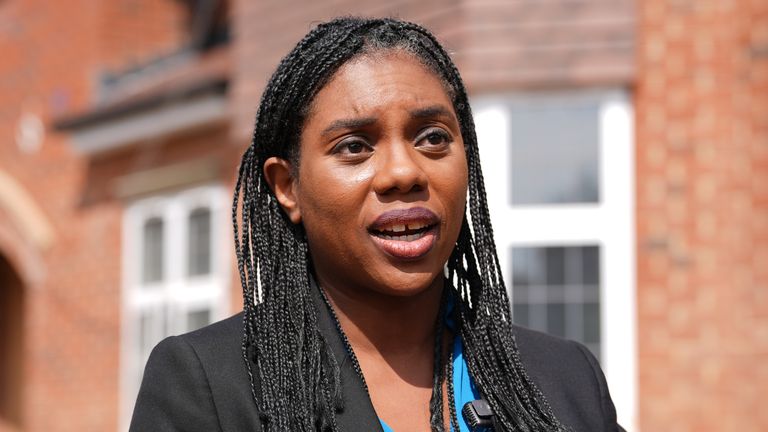
The natural resources of Nigeria have been mismanaged for decades, and Kemi is just highlighting this fact. This criticism being made is not solid”.Another British born Nigerian, Michael Atem said: ”Kemi should be allowed to say what she wants without getting bashed.
She is English, not really Nigerian, even though her parentsNevertheless, politics is often as much about perception as intention. Whether Badenoch intended her comments as a critique of governance or as a broader condemnation of Nigeria, is a matter of opinion.
Some members of the Nigerian diaspora consider the interview as reinforcing admiration for a politician willing to challenge uncomfortable truths. For others, it may deepen a feeling that she repeatedly presents their country of origin as little more than a cautionary tale.Since Badenoch seeks to establish herself as a future prime ministerial contender, those perceptions matter.
Repeated controversies surrounding her comments about Nigeria makes it more difficult for her to build enthusiasm among a community that might otherwise have been naturally receptive to her historic rise.
The irony is that Badenoch’s own story embodies many of the strengths associated with the Nigerian diaspora in Britain. Ambition, educational achievement, resilience and professional success. Each time debate focuses on the Tory leader’s criticism of Nigeria rather than her political agenda, she risks overshadowing that narrative.
In the long term, that may prove to be the more significant political challenge.

AD: Heritage And Restaurant Lounge Bar
Badenoch’s office was contacted for comment.