
By Lucy Caulkett-
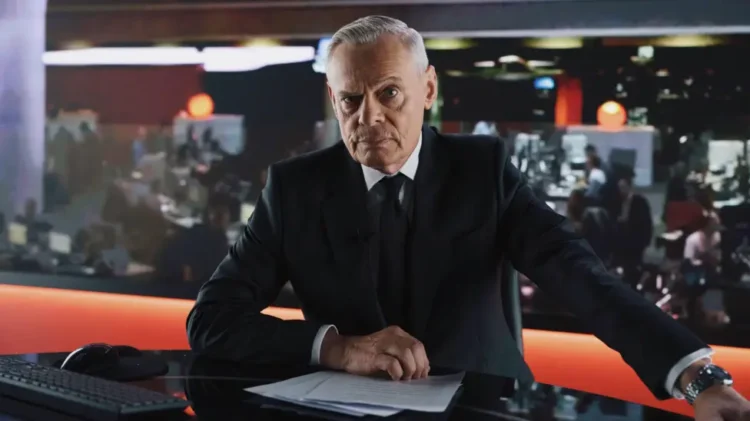
Channel 5 viewers were treated to a compelling and unsettling piece of television drama last night as Power: The Downfall of Huw Edwards aired on March 24, drawing widespread attention for both its subject matter and the strength of its performances. At the center of the production was Martin Clunes, whose portrayal of the disgraced news anchor proved to be one of the most talked-about aspects of the broadcast. Audiences and critics alike were quick to respond, with many praising the actor’s ability to capture the complexity, contradiction, and ultimate collapse of a man once regarded as a pillar of trust in British broadcasting.
The drama set out to chart a deeply uncomfortable narrative: the rise and fall of a public figure whose career had been defined by authority, credibility, and a sense of national familiarity. For decades, Huw Edwards had been a fixture in British homes, associated with major national moments and a steady, reassuring presence on screen. Translating such a figure into a dramatized retelling presents an inherent challenge, requiring not only sensitivity but also a willingness to confront difficult truths. In this regard, Power: The Downfall of Huw Edwards did not shy away from its subject. Instead, it leaned into the tension between public perception and private reality, exploring the fragile boundary between reputation and accountability.

AD: Capeesh Restaurant
Clunes’ performance was central to this effort. Known primarily for roles that balance gravitas with warmth, he approached the character with a restraint that allowed the drama to unfold gradually rather than sensationally. Viewers noted how effectively he captured the subtle shifts in demeanour that marked Edwards’ trajectory—from composed and authoritative to increasingly strained and isolated. Rather than relying on overt dramatics, Clunes employed a measured approach, letting small gestures, pauses, and expressions convey the weight of the unfolding crisis.
This understated style proved particularly effective in scenes depicting the internal conflict of a man confronting the consequences of his actions. The script avoided caricature, opting instead for a layered portrayal that invited viewers to grapple with uncomfortable questions about complicity, denial, and the nature of public trust. Clunes’ interpretation emphasized these themes, presenting Edwards not as a one-dimensional villain but as a deeply flawed individual whose downfall was both shocking and, in hindsight, disturbingly inevitable.
The production itself was notable for its careful pacing and atmospheric tone. Director and writers appeared keenly aware of the sensitivities surrounding the story, choosing to frame events in a way that balanced dramatic tension with a degree of restraint. Scenes were constructed to build a sense of unease, often focusing on quiet, intimate moments rather than overt confrontations. This approach allowed the narrative to maintain a sense of realism, grounding the drama in the everyday environments that contrasted sharply with the gravity of the unfolding scandal.

AD: Oysterian Sea Food Restaurant And Bar
Channel 5’s decision to commission and air the drama also reflects a broader trend in contemporary television, where real-life controversies are increasingly explored through dramatized formats. Such productions walk a fine line between storytelling and ethical responsibility, particularly when dealing with recent events and individuals who remain prominent in public discourse. In this case, the network appears to have aimed for a thoughtful examination rather than a sensational retelling, a choice that was largely supported by audience reactions.
Social media quickly became a platform for viewers to share their impressions, with many expressing surprise at the depth and nuance of the drama. Clunes, in particular, was singled out for praise, with comments highlighting his ability to disappear into the role while still maintaining a sense of authenticity. Some viewers admitted initial scepticism about casting him in such a serious and potentially controversial part, given his previous work, but these doubts were largely dispelled by the strength of his performance.
Others pointed to the script’s willingness to engage with difficult themes without resorting to exploitation. The drama did not attempt to provide easy answers or moral absolution, instead presenting a narrative that encouraged reflection and discussion. This approach resonated with audiences who appreciated the opportunity to consider the broader implications of the story, including questions about media accountability, the pressures of public life, and the consequences of personal misconduct.
Critics have also begun to weigh in, with early reviews suggesting that Power: The Downfall of Huw Edwards may become one of the more significant television dramas of the year. While some have noted moments where the pacing could have been tightened, the overall consensus has been positive, particularly regarding the performances and the production’s tonal consistency. Clunes’ portrayal has been widely described as one of his most accomplished to date, marking a notable departure from his more familiar roles.
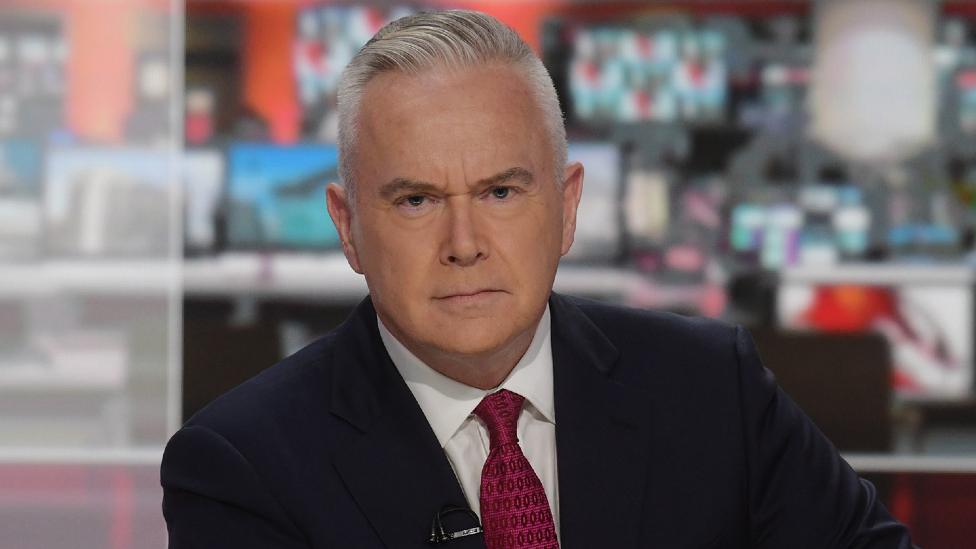
Former veteran news presenter Huw Edward had a remarkable fall for grace following a conviction for indecent images
Edwards, 64, admitted accessing 41 images, including one of a child aged between seven and nine, and received a six-month prison sentence, suspended for two years, in 2024.
He criticised the program and said Channel 5 made “no attempt to check with me the truth of any aspect of their narrative” in Power: The Downfall Of Huw Edwards, which focuses on how a vulnerable teenager came into contact with Edwards.
The drama’s impact is likely to extend beyond immediate viewership figures. By revisiting a story that remains fresh in the public consciousness, it contributes to an ongoing conversation about the responsibilities of those in positions of influence and the role of media in shaping public perception. It also raises important questions about how such stories should be told, and who gets to tell them, in an era where audiences are increasingly attuned to issues of representation and ethical storytelling.
For Channel 5, the success of the drama represents a significant achievement, demonstrating the network’s ability to produce content that is both engaging and thought-provoking. In an increasingly competitive television landscape, where streaming platforms and international productions often dominate attention, this kind of ambitious, topical programming can help to distinguish traditional broadcasters. The positive reception suggests that there is a strong appetite for dramas that tackle real-world issues with intelligence and sensitivity.
As discussions continue in the days following the broadcast, it is clear that Power: The Downfall of Huw Edwards has struck a chord with viewers. Whether praised for its performances, its writing, or its willingness to confront uncomfortable truths, the drama has succeeded in generating the kind of engagement that extends beyond the screen. It invites audiences not only to watch but also to think, to question, and to reflect on the complex interplay between public image and private reality.
Ultimately, the strength of the production lies in its refusal to reduce its subject to a simple narrative. By presenting a multifaceted portrayal and allowing space for ambiguity, it challenges viewers to grapple with the complexities of human behaviour and the consequences of actions that unfold under the scrutiny of public attention. Martin Clunes’ performance serves as the anchor for this exploration, providing a compelling and nuanced interpretation that elevates the drama and ensures its lasting impact.
The program stands as a powerful example of how television drama can engage with real-life events in a way that is both respectful and incisive. It demonstrates the potential of the medium to not only entertain but also to provoke meaningful conversation, leaving viewers with lingering questions and a deeper understanding of the fragile nature of trust in the public sphere.
Clunes Image: Broadcasting Limited / Paramount / Wonderhood Studios/ PA

AD: Heritage And Restaurant Lounge Bar