
By Theodore Brown-
A new video game could give scientists an unprecedented way of understanding how autistic people perceive and process the world, including those whose communication difficulties have too often excluded them from research.
Researchers at Boston University have developed a game that allows children and teenagers across the autism spectrum to take part in experiments without having to follow conventional verbal instructions, The Eye Of Media.Com has heard. The significance is considerable because much autism research has relied on observations and assessments provided by parents, carers or clinicians, particularly when participants have severe communication difficulties.

AD: Capeesh Restaurant
That can leave researchers trying to understand a person’s perception of the world without being able to obtain meaningful information directly from them. The new game, developed by a team led by Boston University psychological and brain sciences researcher Benjamin Scott, is designed to overcome that barrier.
One of the many ways the neurodevelopmental disorder alters perception of the world, the precise brain mechanisms involved remain obscure, says Boston University researcher Benjamin Scott. One reason: research often excludes people with more severe symptoms.
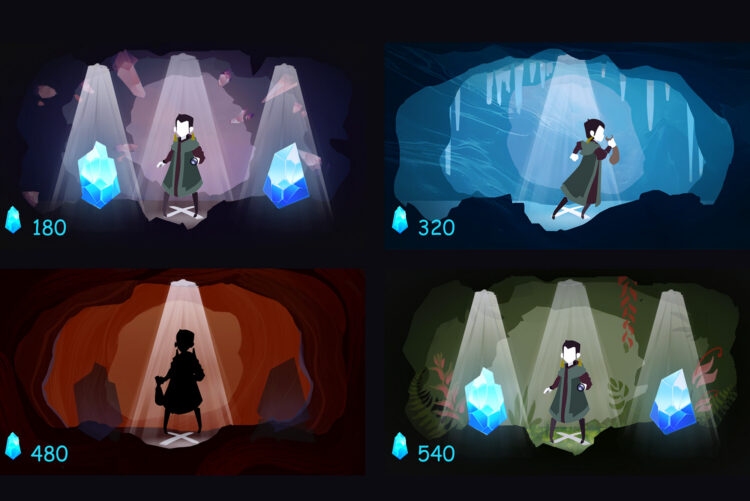
Called Geode — Gathering Evidence to Optimize Decisions — the game turns a scientific experiment into a treasure hunt. Players choose a character and follow a map in search of gems. Flashes appear around the edge of the screen, and players must work out which side contains the hidden treasure by judging the pattern and intensity of the lights.

AD: Oysterian Sea Food Restaurant And Bar
Behind the colourful game, researchers are measuring something far more complex: how the brain gathers sensory information, weighs competing evidence and gradually makes decisions.
“We can collect some very detailed information about how you’re making decisions, perceiving the world, and learning to play the game,” Scott says.
Scott told The Eye Of Media that ”the researchers believe that could open a new door into autism research. One of the most important features of Geode is its simplicity. There are no lengthy instructions to read or complicated verbal responses required. Players begin playing and learn the rules through the game itself.
”That means researchers can study participants who might struggle with conventional experimental tasks, including children with profound autism and people with known genetic syndromes associated with autism. In a trial involving more than 300 adolescents aged between 11 and 17, just over 200 had autism and the remainder were neurotypical siblings.
”The participants covered a wide range of autistic characteristics, and the game worked. Most players, including those with profound symptoms, were able to understand the basic mechanics and adapt as the difficulty increased.
”That achievement matters because families have often encountered a frustrating barrier when attempting to enrol children with significant communication difficulties in research studies.
The underlying causes of ASD range from psychological and environmental from a young age, like having a sibling suffering from the condition, having a fragile X syndrome tuberous sclerosis,or being born to parents of older age, that is high maternal pr parental age.
Helen Tager-Flusberg, director of Boston University’s Center for Autism Research Excellence and a professor emerita of psychological and brain sciences, said the ability to include a much wider range of autistic people could be particularly valuable.
“Understanding more about the kinds of difficulties autistic people have is always helpful,” she said. She described the game’s performance across the spectrum, including among people in the profound autism category and those with known genetic syndromes, as particularly significant.
The study also demonstrated that researchers could collect substantial experimental and survey data remotely, allowing participation from autistic people with widely differing backgrounds across the United States.
What the game revealed about perception
The experiment produced another important finding, which was that although autistic and neurotypical participants were generally able to learn the game, the researchers identified a significant difference in how they processed the sensory information needed to succeed. As the researchers altered the number, duration and timing of the flashes, autistic participants found it more difficult to combine all the available sensory evidence.
They generally took longer to learn the task and were less accurate than neurotypical participants. Scott believes the difference may lie in a process known as perceptual integration — the brain’s ability to accumulate pieces of information over time and combine them into a coherent understanding. That process is fundamental to ordinary life.
Understanding a conversation, for example, involves far more than hearing individual words. The brain must assemble those words into sentences, combine them with tone and facial expressions and use the resulting information to work out what another person means. If individual pieces of sensory information contain additional “noise”, the problem may become greater as more information has to be combined.
Scott describes this as “noisy evidence integration”, a potential explanation for some of the perceptual difficulties experienced by autistic people. The findings, published in Science Advances, may also provide support for a longstanding theory concerning the balance between excitatory and inhibitory activity in neural circuits in autism.
The researchers are not claiming to have solved the mystery of autistic perception. But they may have found a new way of measuring it. The game is not intended to diagnose autism. Scott is clear that Geode cannot distinguish autism from another neuropsychiatric condition, nor is it currently intended to determine the severity of an individual’s autism. Its more immediate promise may lie elsewhere.
Clinical trials are already investigating drugs and other interventions for autism and related neurodevelopmental conditions. Geode could potentially provide researchers with an objective behavioural measure that can be taken before and after an intervention.
A participant could play the game at the beginning of a clinical trial, establishing a baseline of perception and decision-making. They could then play it again after treatment. If their performance changed, researchers would have another measurable indication of whether the intervention had altered particular cognitive or perceptual processes.
“Clinical trials are underway for a variety of different drugs across autism and related neurodevelopmental disorders,” Scott says. “And this game could be an outcome measure.”
That possibility could prove particularly valuable in a field where measuring changes in behaviour and perception can be difficult.
Bridging the gap between humans and animals
There is another reason the research could have implications beyond autism.Geode grew partly from Scott’s work studying decision-making in animals. His laboratory has investigated how songbirds acquire new skills and how rats make decisions involving the balance between speed and accuracy. Animals, of course, cannot explain what they are thinking. Researchers therefore have to design experiments in which behaviour itself becomes the communication.
Scott has brought that philosophy into the autism research.
“We work with nonverbal subjects all of the time,” he says, explaining that his team has developed methods using reinforcement learning and nonverbal feedback to allow participants to learn complex tasks without conventional instructions.
That creates a potentially valuable scientific bridge. If humans and animals can perform comparable tasks, researchers may be able to compare behaviour more directly with changes in brain circuitry and genetic activity. That could eventually allow scientists to examine whether particular autism-risk genes affect behaviour in humans and laboratory animals in comparable ways.
Putting autistic people back at the centre of the research
Perhaps the most significant aspect of the project is not the technology itself. It is the decision to design research around the people who have historically been hardest to include. For Scott, the autistic children and their families have become more than research subjects. They have influenced the questions the scientists are asking.
Working with families has highlighted other areas that remain poorly understood, including why some autistic people experience periods of skill regression. The game is therefore not being presented as a cure, a diagnostic breakthrough or a complete explanation of autism. It is something potentially more useful- a new means of listening.
For researchers trying to understand a condition in which communication itself can be affected, that may be one of the most important advances of all.
“The science is great, and I hope we make progress,” Scott says. “But really, we’re inspired by the kids themselves and the families that are trying to make it all work.”
That may ultimately be the most important message from the research. The autistic brain remains only partly understood. But the more inclusive the science becomes, the greater the possibility that autistic people will no longer be studied principally through the observations of others.Instead, researchers may increasingly be able to ask them — in ways that work for them — how they experience the world themselves.

AD: Heritage And Restaurant Lounge Bar