
By Ben Kerrigan-
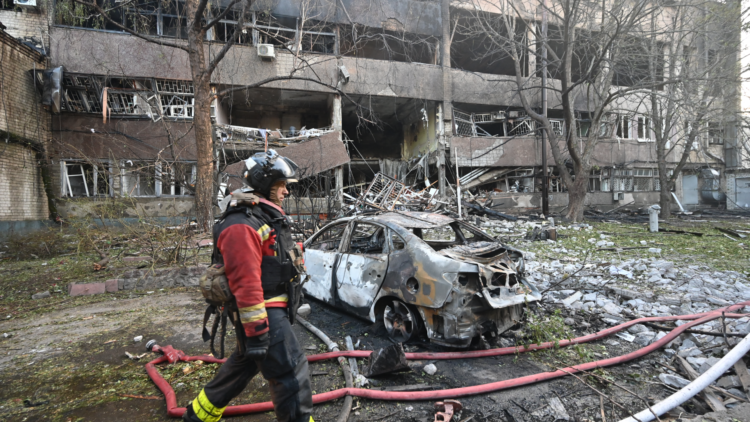
Ukraine experienced another severe escalation in Russian military operations this week as forces launched widespread strikes across the country, killing multiple civilians and cutting into critical infrastructure in the midst of a protracted war that entered its fourth year.
Local authorities and private firms reported intense bombardments that devastated neighbourhoods, injured dozens and plunged parts of the country into disrupted power supplies, with one of the confirmed fatalities a four-year-old child.

AD: Capeesh Restaurant
The coordinated attacks described in Ukrainian statements as “massive” struck urban and rural areas alike, highlighting both the scale of Russia’s military campaign and the profound human cost of continued hostilities.
Officials said residential buildings, transport corridors and energy facilities were hit, exacerbating already dire conditions ahead of winter and further challenging Ukraine’s resilience.
According to a newly reported Reuters dispatch, Russian missile and drone strikes focused heavily on the capital Kyiv and other regions, inflicting fatalities and widespread damage.

AD: Oysterian Sea Food Restaurant And Bar
In Kyiv’s Sviatoshynskyi district, residential buildings bore the brunt of the assault, leaving civilians among the dead and prompting emergency power outages as regional energy grids struggled to cope. The attacks triggered air raid alerts across almost all of Ukraine, underscoring the breadth of the offensive and the enduring threat posed to communities nationwide.
Energy firm DTEK, Ukraine’s largest private power company, indicated that critical parts of the nation’s energy infrastructure came under heavy fire, complicating efforts to keep power flowing during the severe winter months.
The company noted that thermal power stations and other facilities vital to electricity generation were targeted, causing cascading effects on both civilian life and industrial activity. Ukrainian officials emphasised that repeated targeting of energy networks reflects a broader strategy aimed at weakening essential services.
Among the confirmed fatalities in the recent strikes was a young child. A separate Reuters report earlier in 2025 documented a large-scale Russian drone attack on Kyiv that killed three people, including a five-year-old, and caused significant fires in high-rise apartment buildings.
That assault drew international attention as another stark illustration of the toll on families and non-combatants in the conflict.
Civilian Harm and Strategic Targets
The unfolding violence this month adds to a pattern of Russian operations that have repeatedly struck both civilian populations and strategic infrastructure throughout Ukraine. Ukraine’s President Volodymyr Zelensky and regional governors have condemned the attacks, asserting that many strikes unjustly harm non-combatants and violate international humanitarian law.
Earlier in the year, a Russian missile strike on Sumy in April resulted in at least 35 deaths, including children, and wounded more than 129 people, making it one of the deadliest attacks on Polish territory since the conflict’s height in 2025.
Additional documented incidents include a missile attack on Ternopil residential buildings in November that killed dozens, including seven children, and left scores more injured, emphasising the wide geographic dispersal of Russian firepower.
Russia’s targeting of energy infrastructure has become especially acute during the winter season, as power stations and electrical grids are hit repeatedly, leading to rolling outages and complicating efforts to maintain heat, light and water services for millions.
Government and private sector officials alike have warned that sustained attacks on these systems risk a humanitarian crisis unless air defence and reconstruction support is strengthened.
The assaults have not been confined solely to Kyiv and the east. Ukrainian officials have reported strikes near Odesa, which killed at least one woman and injured her three children in mid-December, further illustrating the human cost of the conflict far from front-line positions.
International reactions have been swift. Western leaders and NATO officials have reiterated support for Ukraine’s sovereignty while condemning strikes that result in civilian deaths and infrastructure damage.
Sanctions regimes against Russian entities have been extended in recent months, including broad measures by the European Council aimed at curtailing Moscow’s ability to sustain its military campaign.
Human rights groups and conflict analysts have grown increasingly vocal about documentation of civilian harm. They argue that the frequency and intensity of attacks on populated areas including those resulting in child casualties indicate a disregard for the protections afforded under international law.
Peace and humanitarian organisations have repeatedly called for increased pressure on all parties to reduce hostilities and allow unimpeded aid access.
War’s End Seems Distant
Despite ongoing diplomatic efforts, including peace negotiations involving U.S., European and Ukrainian and Russian representatives, violence has shown little sign of abating.
Military analysts say Russia’s latest strikes appear timed to exploit winter vulnerabilities in Ukraine’s energy network and to apply psychological and strategic pressure as diplomatic channels remain strained.
Officials also note that air defence systems in Ukraine have intercepted hundreds of drones and missiles in past attacks, yet the volume and variety of munitions continue to challenge defensive capabilities.
Ukrainian President Zelensky has repeatedly called for increased deliveries of air defence equipment and for deeper sanctions against entities assisting Russia’s military efforts.
The ongoing war, which began with Russia’s full-scale invasion in early 2022, now shows clear signs of entrenchment, with repeated large-scale attacks becoming a feature of the conflict landscape.
The civilian population continues to bear a disproportionate share of the toll, with children among the casualties and critical infrastructure systems repeatedly under threat.
Each new wave of bombardments deepens trauma and disruption to daily life. Public services, already strained by almost four years of conflict, struggle to respond to emergency needs while trying to maintain essential utilities amid an intensifying campaign of infrastructure attacks.
The coming weeks and months are likely to test both Ukraine’s resilience and the strength of international support. The human toll continues to rise, with fresh calls from Kyiv for global partners to bolster defensive support and pursue avenues that might bring an end to one of Europe’s most devastating conflicts in decades.

AD: Heritage And Restaurant Lounge Bar