
By Ben Kerrigan-
Ministers are to summon representatives of Britain’s critical infrastructure and defence industries to closed-door Whitehall briefings on the threat posed by Russia, amid growing concern over cyber attacks, sabotage and other forms of hostile activity against the UK and its allies.
Security Minister Dan Jarvis will chair a briefing for organisations representing critical national infrastructure, while Armed Forces Minister Louise Sandher-Jones will meet representatives from the defence industry as the Government seeks to strengthen Britain’s ability to withstand what it describes as an increasingly persistent Russian threat.

AD: Capeesh Restaurant
The meetings are intended to give companies and organisations a clearer understanding of the intelligence available to the Government and to set out measures that can be taken to protect systems, businesses and facilities that are considered essential to Britain’s security and daily life.
The Government says the briefings will focus particularly on cooperation between the state and industry, with ministers seeking to ensure that organisations understand both the nature of the threat and their responsibilities in preparing for it.

AD: Oysterian Sea Food Restaurant And Bar
The decision comes amid a significant expansion of Britain’s assessment of the security risks posed by Russia since the invasion of Ukraine. While Russia and the UK are not engaged in direct military conflict, British security agencies have repeatedly warned that
Moscow and groups aligned with it are capable of operating below the threshold of conventional warfare through cyber attacks, espionage, sabotage and information operations.
The term “hybrid warfare” is increasingly used by governments and security agencies to describe this mixture of military and non-military activity. In Britain’s case, the concern extends to attempts to disrupt computer networks, interfere with essential services, steal sensitive information and undermine confidence in public institutions.
The National Cyber Security Centre has warned that Russian activity is increasingly affecting targets beyond the battlefield in Ukraine and is being directed towards countries that Moscow considers hostile.
The potential consequences are particularly serious when critical national infrastructure is involved. Such infrastructure encompasses the systems and services on which modern society depends, including energy, communications, transport, financial networks, water and other essential services.
A successful attack on one of these systems could cause disruption far beyond the organisation initially targeted. The National Cyber Security Centre, which is part of GCHQ, said earlier this year that more than 200 cyber incidents affecting Britain’s critical national infrastructure and its supporting ecosystem had been managed in the year to May 2026.
Around three quarters of those incidents were believed to have been linked to hostile state actors, according to NCSC chief executive Dr Richard Horne.
Russia is only one of the hostile states identified by British security authorities, but it has been a particular focus since the full-scale invasion of Ukraine in February 2022.
The NCSC has warned that Russian cyber operations developed during the war are increasingly being used against targets outside Ukraine, while Russian-aligned groups have also targeted Western organisations in response to their support for Kyiv.
In January, the NCSC issued a specific warning about Russian-aligned hacktivist groups targeting British organisations, particularly local authorities and operators of critical infrastructure.
The attacks have included attempts to disrupt online services and networks, with organisations being urged to improve their ability to withstand and recover from denial-of-service attacks. The NCSC noted that some of these groups are motivated by ideology and support for Russia rather than financial gain, although they are not
That distinction is important because the threat facing Britain is not confined to conventional Russian intelligence agencies. The NCSC has warned of a wider ecosystem of state-aligned groups that may sympathise with Moscow’s objectives while operating with varying degrees of independence.
Their activities can therefore be more difficult to predict and can extend beyond traditional espionage into disruptive attacks against vulnerable infrastructure
Britain’s concerns also have a much longer history. Relations between London and Moscow deteriorated sharply following Russia’s annexation of Crimea in 2014, while the poisoning of former Russian intelligence officer Sergei Skripal and his daughter Yulia in Salisbury in 2018 brought the confrontation directly onto British soil.
The British Government attributed the Salisbury attack to Russian military intelligence, a conclusion rejected by Moscow, and the incident prompted a major diplomatic response from Britain and its allies.
The invasion of Ukraine transformed that already difficult relationship into a broader confrontation between Russia and the Western alliance. Britain became one of Ukraine’s principal supporters, providing military, financial and humanitarian assistance while imposing extensive sanctions on Russia.
The Government says its support for Ukraine has now reached £25 billion, including £16 billion in military assistance. That policy has also made Britain an increasingly prominent target for Russian criticism and, according to British security agencies, for hostile cyber activity.
The threat is not confined to cyber attacks. British authorities have become increasingly concerned about physical sabotage and attempts to recruit individuals in Britain to carry out acts on behalf of hostile states.
The latest Government announcement follows a month in which the Crown Prosecution Service charged a British man under the National Security Act after alleging that he had prepared for an act of sabotage and received instructions from an individual believed to have links to the GRU Volunteer Corps.
The National Security Act, introduced in 2023, significantly strengthened Britain’s ability to prosecute activity carried out on behalf of foreign powers. The legislation was part of a wider effort to update national security law in response to threats that increasingly involve individuals, networks and organisations operating outside the traditional boundaries of espionage.
The Government is already providing specialist protection to critical infrastructure and defence organisations. The National Cyber Security Centre offers technical expertise and guidance, while the National Protective Security Authority provides advice on physical and personnel security.
Specialist police organisations, including the Civil Nuclear Constabulary, are responsible for protecting particularly sensitive sites.
The new Whitehall meetings are intended to complement that existing support by bringing senior representatives from Government and industry together to discuss the intelligence picture directly.
Jarvis said strong national defences depended on having a clear understanding of the threat and that the Government wanted to share intelligence with organisations responsible for some of Britain’s most important systems.
He said the discussions would concentrate on practical measures that industry could take in partnership with Government to strengthen national security.
Sandher-Jones said Russia was actively seeking to disrupt organisations that form part of Britain’s national security infrastructure. She said bringing Government and defence industry leaders together would improve their shared understanding of the threat and strengthen the country’s collective resilience.
The latest move follows similar closed-door briefings held earlier this year for university leaders and political parties on foreign interference and measures that could be taken to strengthen national security.
The Government’s approach reflects a growing recognition that national security is no longer solely a matter for the armed forces, intelligence agencies and police.
Modern conflicts increasingly involve privately owned networks, communications systems, energy infrastructure, technology companies and other organisations whose operations can have national consequences.
The NCSC has described cyberspace as part of an ongoing contest between states and warned that the lessons Russia has learned through cyber operations during the war in Ukraine are being applied beyond the battlefield.
The latest warnings come as Britain and its European allies face a security environment in which cyber attacks and other forms of disruption can occur without the clear warning associated with conventional military action.
The NCSC has said that attacks against critical infrastructure are becoming more frequent and potentially more damaging, while urging organisations to prepare for the possibility of severe cyber incidents.
For ministers, the objective of the Whitehall briefings is therefore not simply to warn industry about a hypothetical future threat. It is to persuade the organisations that keep Britain functioning to strengthen their defences before an attack occurs and to ensure that Government and industry know how they will respond if one does.
The meetings also underline the changing nature of Britain’s confrontation with Russia. The immediate danger is not that Russian forces will attack Britain directly, but that hostile activity can exploit vulnerabilities in various ectors.
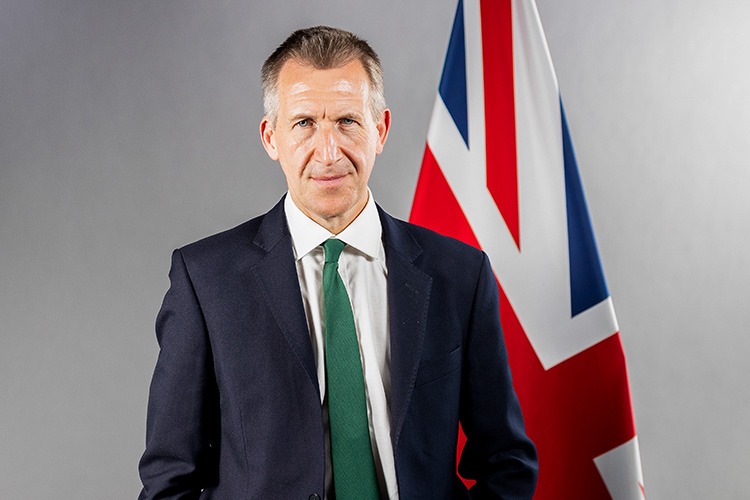
Security Minister, Dan Jarvis, (pictured)said:
Strong defences are built on a clear understanding of the threat.
That’s why I’ll be chairing this briefing, to share world-class intelligence with some of the most important organisations in the country, to ensure they understand and are prepared for the threats we face.
We’ll be focusing on the actions they can take in partnership with government, to help keep our country safe.
Minister for the Armed Forces, Louise Sandher-Jones, (picturedOsaid:
‘Russia is actively seeking to disrupt the organisations that form the bedrock of our national security.
By bringing government and defence industry leaders together, we can deepen our shared understanding of the threat and strengthen our collective resilience.
Protecting our defence sector is essential to keeping Britain secure.’
It follows similar briefings held earlier this year to update university leaders and political parties on the threat of foreign interference and the actions they could take to strengthen national security.
The briefings will sit alongside the support the UK Government already provides to help protect defence firms and Critical National Infrastructure providers from threats, including: specialist policing through organisations like the Civil Nuclear Constabulary; world class cyber expertise through the National Cyber Security Centre; and tailored security advice through the National Protective Security Authority.
Just this month, the Crown Prosecution Service charged a British man with offences under the National Security Act, after he allegedly engaged in conduct to prepare an act of sabotage and received instructions from an individual believed to be linked to the GRU Volunteer Corps.

AD: Heritage And Restaurant Lounge Bar