
By Lucy Caulkett-
The United Kingdom and Cambodia are strengthening their partnership to tackle the criminal networks behind online scams, as the UK steps up cooperation with Phnom Penh to disrupt fraud operations, trace illicit money and protect people trafficked into scam centres.
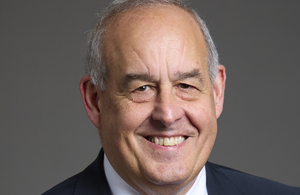
Lord Hanson, (pictured)Minister of State for the Home Office, is visiting Phnom Penh from 22 to 24 September to attend the International Conference on Combating Online Scams, where he is meeting Cambodian government counterparts and representatives from the international community to discuss the growing global threat posed by organised online fraud.

AD: Capeesh Restaurant
During the visit, Britain and Cambodia are expected to sign a new Memorandum of Understanding aimed at taking their cooperation to a more practical level. The agreement will support closer intelligence sharing, joint financial and digital investigations, and stronger protection for victims of trafficking linked to scam operations.
The deal comes as governments across the region face growing pressure to dismantle sophisticated criminal networks that operate scam centres in Southeast Asia while targeting victims around the world, including in the United Kingdom.

AD: Oysterian Sea Food Restaurant And Bar
In October 2025, the UK and US jointly sanctioned the Prince Group , its chairman Chen Zhi, and related entities Jin Bei Group, Golden Fortune Resorts World and Byex Exchange, for their role in operating scam centres across Southeast Asia. The sanctions froze UK-based assets worth more than £125 million, including a £12 million mansion in North London and a £100 million office building in the City of London.
The UK Government said Cambodia has taken significant steps in recent months to confront scam operations within its borders. Those measures include new legislation, sustained enforcement activity and the establishment of a dedicated commission to coordinate the country’s national response.
Britain said it recognised both the scale of the challenge facing Cambodia and the efforts being made by the Cambodian authorities, stressing that international cooperation will be essential in confronting criminal groups whose activities cross national borders.
The UK has already worked with the United States to disrupt criminal networks operating scam centres across Southeast Asia. According to the Government, coordinated sanctions have frozen more than £125 million in assets and supported wider investigations across the region.
The latest UK-Cambodia agreement forms part of a broader international effort involving countries including the United States, Australia and Singapore, with representatives from those countries also attending the conference in Phnom Penh.
At the centre of the initiative is the recognition that online scams are not simply a financial crime. Behind many operations are criminal networks that exploit vulnerable people, including individuals who are trafficked and forced to carry out fraudulent activity against victims overseas.
Lord Hanson said the consequences of fraud could be devastating for both the people targeted by scams and those trapped inside the criminal operations.
“Fraud is a truly global threat, which leaves a devastating human impact in its wake,” he said, highlighting victims who can lose the savings they have spent a lifetime building as well as trafficked people who lose their freedom and can face severe mistreatment.
“No country can tackle this threat alone,” Hanson added.
The minister said Cambodia had demonstrated determination in confronting criminal networks operating from within its borders and said the UK was committed to working alongside its Cambodian partners to hold those responsible to account.
He described the new agreement as a practical framework for closer cooperation, with intelligence sharing, financial investigations and efforts to trace illicit money forming key elements of the partnership.
“Above all,” Hanson said, the agreement would focus on protecting people harmed by the criminal activity.
The UK Government said the international nature of scam networks makes cooperation between law enforcement agencies increasingly important. Criminal groups can operate in one country, recruit or traffic people from another and target victims thousands of miles away, making investigations more complex and allowing offenders to exploit gaps between national jurisdictions.
The new memorandum is intended to help authorities respond to that challenge by strengthening the flow of information and improving cooperation around financial and digital investigations.
Lord Hanson is also due to meet United Nations agencies and independent journalists during his visit. The Government has highlighted the role played by journalists in documenting scam centres and helping to establish the evidence base that has contributed to international action against the networks operating them.
The agreement can be seen as representing another step in its efforts to demonstrate that criminal organisations operating within its territory will face increased scrutiny and enforcement. The partnership for the UK forms part of a wider effort to strengthen cooperation on fraud across the Indo-Pacific.
That includes work through the INTERPOL Global Fraud Taskforce, which reflects the increasing emphasis on international coordination in tackling organised financial crime.
The scale of the challenge extends well beyond the countries where scam centres are physically located. Criminal networks can target people across continents through online platforms and communications technology, while the people carrying out the scams may themselves be victims of trafficking and coercion.
The UK and Cambodia therefore face a dual challenge: protecting people from financial fraud while also identifying and safeguarding individuals who have been exploited by the criminal organisations behind the operations.
The new agreement is intended to address both sides of that problem, combining law-enforcement cooperation with stronger protections for trafficking victims. The Government said the ultimate objective is to move beyond international commitments and produce practical results for people affected by scam networks in Cambodia, Britain and elsewhere around the world.
The Phnom Penh conference provides an opportunity for governments and international organisations to coordinate their response to a rapidly evolving form of organised crime. With online fraud increasingly crossing borders, authorities are seeking to disrupt not only individual scam operations but also the networks, financial structures and people that enable them to function.
The UK-Cambodia memorandum marks a further step in that effort. By bringing intelligence sharing, financial tracing, digital investigations and victim protection into a closer bilateral framework, both countries are seeking to turn their existing cooperation into a longer-term strategy against the criminal networks behind online scams.
The partnership also sends a wider message that tackling international fraud will require countries to work collectively rather than attempting to confront increasingly sophisticated criminal organisations in isolation.

AD: Heritage And Restaurant Lounge Bar