
By Theodore Brown
WASHINGTON, October 23, 2026 — The Federal Bureau of Investigation is facing renewed scrutiny after two former senior officials were charged with allegedly lying to Congress about their knowledge of and involvement in investigations concerning Hunter Biden, reigniting a wider debate over accountability, political influence and public trust in America’s premier federal law enforcement agency.
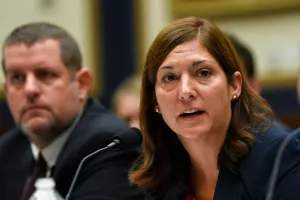
Nikki Cole Floris, (pictured)46, and Bradley Benavides, 56, surrendered to authorities on Friday after federal prosecutors accused them of making false statements during congressional testimony in 2023. Both previously held senior positions within the FBI’s now-dissolved Foreign Influence Task Force, which worked to counter foreign interference in US elections.

AD: Capeesh Restaurant
According to the US Department of Justice, each former official faces one charge of making false statements in a matter within the jurisdiction of the legislative branch. Prosecutors allege that their testimony about the FBI’s involvement in investigations concerning Hunter Biden contradicted documentary evidence, communications and witness accounts.
The case centres on the FBI’s handling of investigations involving Hunter Biden, the son of former US president Joe Biden, in the period leading up to the 2020 presidential election. Hunter Biden’s laptop became a major political controversy after reports about its contents emerged shortly before the election.
The dispute prompted questions about the FBI’s knowledge of the device, its communications with officials and its response to claims that information connected to Hunter Biden might have been linked to foreign influence.

AD: Oysterian Sea Food Restaurant And Bar
Floris and Benavides were interviewed by the House Judiciary Committee in 2023 about the Foreign Influence Task Force’s role in the FBI’s investigations. Prosecutors allege that both denied the task force’s involvement in those matters, despite evidence suggesting they had discussed the investigations and the laptop with other FBI personnel.
According to the criminal complaint, Floris said she had not participated in discussions about Hunter Biden while serving in the task force. Benavides, meanwhile, reportedly testified that he learned the FBI possessed the laptop through a Wikipedia article in 2023.
Investigators now allege that communications and other records contradict those accounts. The case will test whether prosecutors can establish that the statements were knowingly and materially false, rather than mistaken or incomplete recollections.
The charges do not, by themselves, establish that the FBI institutionally suppressed information or acted to protect Joe Biden. Those broader claims require separate evidence and should not be confused with the specific allegations against the two former officials.
A history of controversy and criminal charges
The latest case arrives against a backdrop of previous controversies involving senior FBI figures, including allegations of misconduct and criminal charges arising from testimony to Congress.
One prominent example is former FBI director James Comey, who was indicted in September 2025 on charges of making false statements and obstructing a congressional proceeding. The case concerned his testimony about whether he had authorised an associate to act as an anonymous source for media reporting related to FBI investigations.
Comey denied wrongdoing and pleaded not guilty. However, a federal judge dismissed the case without prejudice in November 2025 after finding that the prosecutor who brought it had been unlawfully appointed.
That decision did not amount to a finding that the allegations against Comey were true, nor did it establish his guilt. The prosecution nevertheless became another flashpoint in the debate over the independence of federal law enforcement and the potential politicisation of criminal investigations.
The comparison with the Floris and Benavides case is significant, although the circumstances differ. Both matters involve allegations concerning statements made to congressional investigators, raising questions about the obligation of senior law enforcement officials to provide truthful testimony and the mechanisms available to hold them accountable.
The distinction is equally important: charges against individual officials do not mean the FBI itself has been convicted of a crime.Public trust and institutional accountability
The FBI occupies a central role in US national security and criminal investigations. Its responsibilities include counterintelligence, counterterrorism and investigating federal offences. Because its work can affect elections, political figures and national security, allegations of dishonesty by senior personnel can have consequences far beyond the individuals involved.
Prosecutors say that public officials must face scrutiny when evidence suggests they may have misled Congress. Congressional oversight depends on witnesses providing accurate information, particularly when lawmakers are examining the conduct of powerful government agencies.
The Hunter Biden controversy has been a recurring source of political conflict, and the latest charges are likely to intensify disagreements over how the FBI handled politically sensitive information before the 2020 election.
The criminal complaint marks the beginning of the legal process, not its conclusion. Prosecutors will need to demonstrate that the defendants knowingly made materially false statements within therelevant legal framework.

AD: Heritage And Restaurant Lounge Bar