
By Aaron Miller-
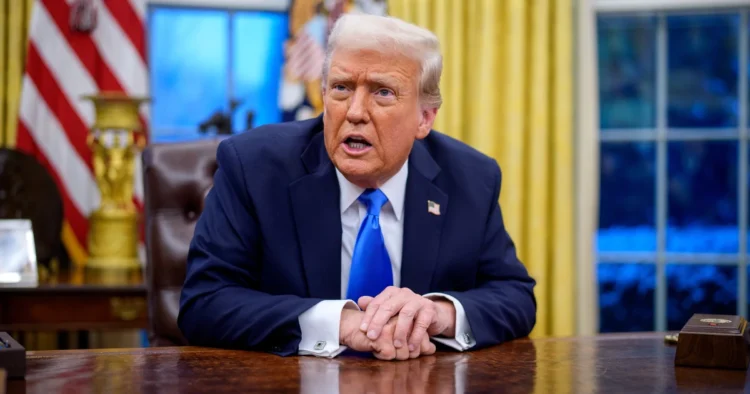
Donald Trump’s approval rating has fallen to a record low of 31%, according to a Reuters/Ipsos poll, raising questions about the political challenges facing Republicans ahead of the US midterm elections on 3 November. The figures represent the lowest level of approval recorded for the president across his two terms in office and highlight growing public dissatisfaction with his leadership as voters prepare to decide the balance of power in Congress.
The poll also points to a significant gap in voter preference between the two major parties. When asked which party they would support if congressional elections were held today, 47% of respondents chose the Democrats, compared with 35% who backed the Republicans. The findings could strengthen Democratic hopes of gaining control of the House of Representatives and the Senate, although polling figures do not guarantee a particular election outcome.

AD: Capeesh Restaurant
Economic concerns appear to be a major factor behind the president’s declining popularity. Trump’s approval rating has suffered since he ordered military strikes on Iran in February, an action that was followed by a surge in energy prices and borrowing costs. The rising cost of living has added to pressure on households already concerned about affordability, putting the administration’s economic promises under greater scrutiny.
During his 2024 presidential campaign, Trump pledged to bring gasoline prices below $2 per gallon. However, the national average now stands at $4.29 per gallon, equivalent to approximately £3.22. He also promised to deliver mortgage rates of 2%, but the average rate for a 30-year fixed-rate mortgage currently stands at 7.4%. These figures illustrate the gap between the commitments made during the campaign and the costs facing many Americans.

AD: Oysterian Sea Food Restaurant And Bar
Public dissatisfaction extends beyond fuel and housing costs. The poll found that 68% of Americans disapprove of Trump’s handling of the economy, including 37% of respondents who identify as Republicans. The findings suggest that economic concerns are not confined to opposition voters and that dissatisfaction with the administration’s performance is also present within the president’s own party. Previous polling has similarly indicated that many voters believe Trump is not paying sufficient attention to the country’s most pressing problems, particularly the rising cost of living.
Alongside the economic debate, the president has attracted attention over a series of proposed geographical name changes. On Monday, Trump caused controversy after suggesting on his Truth Social platform that New Mexico should change its name to “New America”. Writing ahead of a rally in Kansas, he declared: “We are not Mexico, we are the United States of America!” The comments followed his recent move to have Lake Ontario referred to as “Lake America”.
New Mexico’s name dates back to the 1600s, before the United States was established. Any official change to the state’s name would need to be made by the state itself, rather than imposed solely through a presidential statement. The episode has added another point of public discussion as attention remains focused on the president’s economic record and the approaching elections.
The midterm elections are held halfway through a four-year presidential term and are widely regarded as an important measure of public sentiment towards the administration in power. Although neither the president nor the vice-president is on the ballot, the results determine which party controls Congress and can therefore influence the passage of legislation and the direction of national policy. More than 100 million Americans are expected to cast ballots, with early voting already under way in several areas.
Republicans currently hold a narrow 218–214 majority in the House of Representatives and a 53–47 majority in the Senate. On 3 November, all 435 seats in the House will be contested, alongside approximately one-third of the Senate’s 100 seats. A change in control of either chamber could make it more difficult for Trump to advance his legislative agenda, as Democrats would gain greater influence over congressional priorities and the legislative process.
With the election approaching, the Reuters/Ipsos findings place the administration’s economic record, public approval and control of Congress at the centre of the political debate. The results do not determine how Americans will vote on election day, but they provide a snapshot of voter sentiment at a critical moment in Trump’s presidency. For Republicans, the central challenge is whether they can address concerns about household costs and maintain congressional support, while Democrats will be watching closely to see whether the polling gap is reflected in the final results.
For Democrats, the figures offer an indication of the level of dissatisfaction they could seek to address during the election campaign. Their reported 12-percentage-point advantage in the congressional preference question suggests that economic concerns may be providing an important opening for the opposition. However, translating national polling support into congressional seats is not straightforward. House elections take place across individual districts, where local issues, candidate profiles and the distribution of voters can influence results. Senate contests are also determined state by state, meaning that a national polling advantage does not automatically translate into control of the chamber.
The economy is likely to remain central to the campaign as voters assess whether the administration’s policies have improved their financial circumstances. Fuel prices affect transport and household budgets, while mortgage rates influence the cost of buying a home and can make homeownership increasingly difficult for prospective buyers. Higher borrowing costs can also affect businesses and consumer spending, creating wider concerns about economic growth. Against this background, the gap between Trump’s campaign promises and current prices could become a recurring issue in debates over his performance.
The president’s comments about geographical names also illustrate how his public statements can generate attention beyond the issues of economic policy and congressional control. While the proposed renaming of New Mexico has attracted controversy, the practical authority to change a state’s official name rests with the state itself. Such episodes may contribute to wider discussion about the administration’s priorities, although their precise influence on voting decisions cannot be established from the available polling figures.
Ultimately, the midterm elections will provide a clearer indication of how voters judge the administration’s record. The Reuters/Ipsos poll captures public opinion at a particular moment, rather than predicting the final result. Turnout, developments in the economy and events during the remaining campaign period could all affect the outcome. Nevertheless, the combination of low presidential approval, dissatisfaction with economic management and a reported Democratic lead in congressional preference places renewed attention on the contest for control of Washington.

AD: Heritage And Restaurant Lounge Bar