
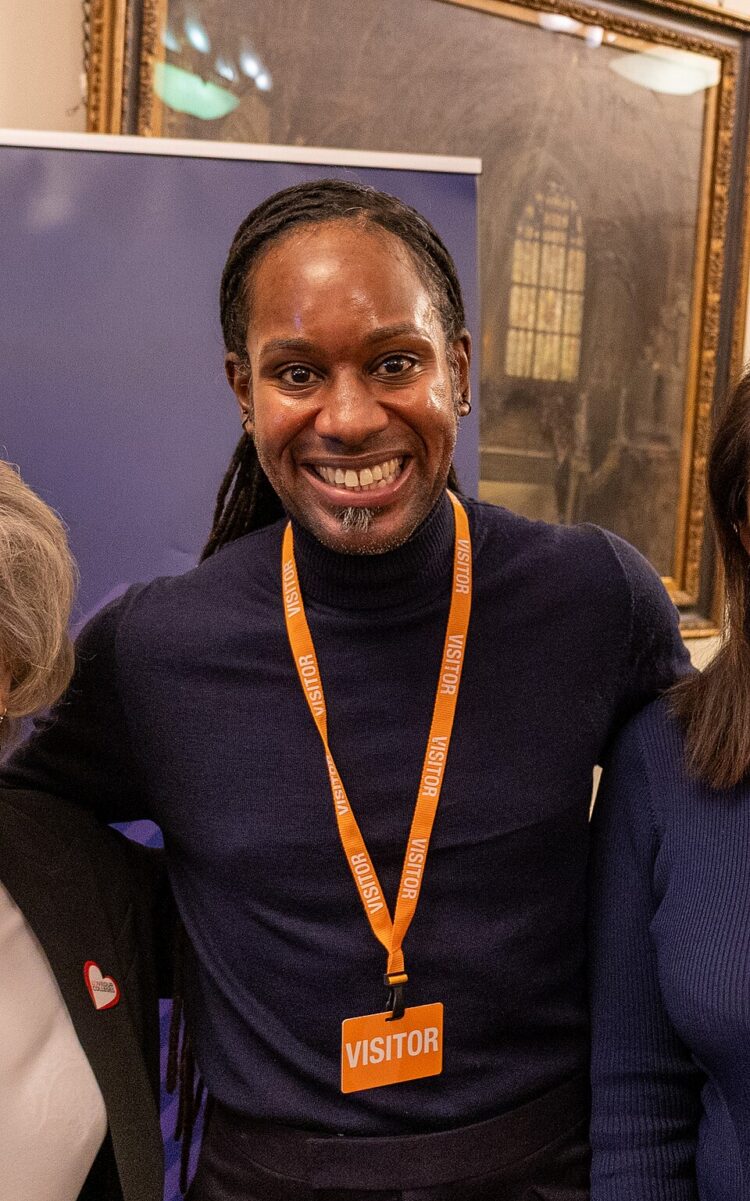
By Tony O’Reilly-
The Jason Arday controversy surrounding his death and the associated campaign of media criticism and scrutiny has gone quiet, whilst the public wait for both the independent press Regulation Authourity (Ipso) Cambridge University complete their review of the various factors they have committed to undertake. No doubt, Arday needlessly exaggerated many aspects of his accomplishments , and this attracted the interest and intense scrutiny of his credentials. some of the exaggerations contained in his memoire, leads to the inescapable conclusion those exaggerations, when added to his extremely high accolades, drew attention quickly, leading to his immediate vilification.
The fact the campaign was first sparked by a university professor known for his active promotion of racial intelligence theories was a bad start as far as perception is concerned, but does not change whatever facts emerge from the original revelation suggesting or indicating academic misconduct or alleged exaggerations involving phenomenal claims. The critical issue relates to what facts are established following the revelation, and whether what is done with those facts those facts is justifiable, or crosses a line that is. If it does, the next question maybe whether it crossed it deliberately, and if it was clear that the line had been crossed. such an analysis can exist together with an assessment of any responsibility that may be assigned to the late professor Arday himself when all is considered.

AD: Capeesh Restaurant
However, the most difficult question raised by the controversy surrounding Professor Jason Arday’s doctoral thesis is also the one that has become easiest to lose amid the extraordinary volume of reporting, commentary and counter-commentary that followed his death. That question is not whether passages in his thesis resemble material written by another student, because the evidence now publicly available makes clear that they do. But the question is what those similarities actually establish about the academic integrity of the thesis, and about the institutions that examined, approved and subsequently defended it. That distinction is not a technicality because it goes to the heart of a story in which a serious allegation of plagiarism has collided with an equally serious institutional finding that the allegation was not upheld, while a university that later employed Arday has now commissioned an independent examination of its own conduct in responding to the controversy.
The starting point is the thesis itself. Arday’s 2015 PhD, An exploration of peer-mentoring among student teachers to inform reflective practice within the context of action research, was awarded by Liverpool John Moores University. The thesis is publicly available through the university’s research repository. The subsequent allegations concerned similarities between Arday’s thesis and an earlier doctoral dissertation by Paula Zwozdiak-Myers, submitted to Brunel University in 2009. Newspaper reporting identified more than 100 passages said to be identical or highly similar. A separate passage-by-passage comparison subsequently published online claims a substantially larger number of textual correspondences and, more significantly, argues that in several chapters the matching material appears in the same sequence as it appears in Zwozdiak-Myers’s thesis. That analysis is not an institutional finding and does not itself determine plagiarism, but it provides material that readers can examine rather than merely asking them to accept an assertion that the two works were “similar”.
That evidence deserves to be confronted rather than minimised. It is entirely legitimate for journalists and academics to ask why two doctoral theses contain passages that appear so closely related, particularly where the later work does not make the nature of that relationship sufficiently clear- if it did not. It is equally legitimate to ask whether the explanation offered at the time adequately accounts for the scale, distribution, and sequence of the similarities. But it is at precisely this point that the language of the controversy becomes important. A finding that two pieces of academic work contain extensive textual overlap is a finding about the texts. A finding of plagiarism is an institutional or disciplinary judgement about what that overlap means under the relevant academic rules. The two propositions are related, but they are not synonymous. And, crucially, the institution responsible for awarding Arday’s doctorate did investigate the allegation.

AD: Oysterian Sea Food Restaurant And Bar
Liverpool John Moores University has said that Arday’s PhD “still stands”, even after the controversy surround Reporting of the university’s investigation states that its panel concluded that the citation problems represented “honest and reasonable error” and that the overlap with Zwozdiak-Myers’s work was within the accepted range of compliance with the academic standards applicable at the time.The investigation also considered the circumstances in which Arday completed the doctorate, including what was described as a depleted supervisory arrangement.
That conclusion does not erase the similarities. Nor does the fact that a university awarded a doctorate provide an automatic guarantee that every element of a thesis complied perfectly with the standards of academic attribution. Universities, like every other institution, can make mistakes, and an examination undertaken in 2015 cannot retrospectively be treated as an infallible certification of every sentence subsequently scrutinised by journalists a decade later. But neither can the doctorate, and the subsequent institutional investigation, simply be treated as irrelevant because the textual comparisons are striking.
The central issue is therefore not whether Arday’s thesis contains material that resembles Zwozdiak-Myers’s earlier work. On the evidence available, that proposition is difficult to dispute. The more consequential question is whether the similarities crossed the threshold from error or inadequate attribution into plagiarism according to the rules that governed the doctorate — and on that question the university that awarded the qualification reached a conclusion that did not uphold the allegation. Cambridge University has clear guidelines about what constitutes plagiarism
Indeed, Liverpool John Moores’ own published research-integrity guidance makes the distinction between misconduct and honest error explicit. Its guidance states that research misconduct will not normally include “honest and reasonable error” or honest and reasonable differences of interpretation or judgement in the reporting of research. at makes the university’s reported finding more intelligible, even if it does not necessarily make it immune from criticism. It also raises an uncomfortable question for those who have treated the existence of textual similarities as though it settled the matter by itself. If the material was sufficiently similar to establish plagiarism as a matter of fact, why did the institution that had the responsibility for examining the thesis conclude otherwise? Conversely, if the university’s investigation was correct, what precisely was the evidential and regulatory basis for concluding that such extensive similarities nevertheless fell within the permissible bounds of academic practice at the time?
Those questions are not answered merely by saying that the university awarded Arday his doctorate. The award tells us that the thesis passed the university’s doctoral examination process; it does not make the content of the thesis immune from subsequent scrutiny. But the award becomes considerably more significant once it is joined by the fact that the university later considered the allegations and nevertheless allowed the qualification to stand. In other words, the doctorate does not “negate” criticism of the similarities, but it does complicate any account in which the discovery of those similarities is presented as equivalent to proof of plagiarism, and therefore a detraction from his eventual professorship
There is a second institutional question, and this one concerns Cambridge. Cambridge has now made its position unusually clear.. In a statement issued in August, the university said that allegations of academic misconduct are ordinarily investigated by the institution at which the research was undertaken, because that institution has access to the information required for a full and fair investigation. Cambridge said that allegations concerning Arday’s thesis and some of his journal publications had been investigated by Liverpool John Moores University and the journals concerned.
That is an important clarification because some of the public discussion has blurred together two very different questions; the first being whether Cambridge itself conducted an original investigation into the alleged plagiarism in Arday’s PhD, and whether Cambridge was entitled to rely upon the investigation conducted by the institution that awarded the doctorate. The first question now appears to have a straightforward answer from Cambridge. It did not itself conduct the original plagiarism investigation because the thesis was produced at LJMU, and Cambridge says the relevant allegations were passed to or directed towards the appropriate institutions. The second question is much less straightforward, and it is precisely where the university’s new review becomes significant.
Jack Grove of Times Higher Education, who submitted a 97-page body of evidence to LJMU, subsequently reported that Arday was cleared of plagiarism by an LJMU review. Cambridge announced an independent review following Arday’s death, divided into two parts. Nazir Afzal, the former Chief Crown Prosecutor for North West England, has been appointed to lead the first part, examining the support, interventions and welfare protections available to Arday and, critically, what the university knew, when it knew it, and whether its actions were reasonable on the information available at the time. Afzal’s published terms of reference explicitly caution against judging past decisions with hindsight. The second part is broader. It will examine Cambridge’s recruitment and appointment processes, mentoring and support arrangements, institutional oversight, its response to allegations of research misconduct and the support available to academics subjected to intense public and media scrutiny. Cambridge has expressly said that this review is not an investigation into Arday himself or an adjudication of the allegations concerning his thesis.
This presents an opportunity for Cambridge to answer a question that has remained surprisingly opaque throughout the controversy. that is, what did the university itself understand the allegation to be, what evidence did it receive, what did it do with that evidence, and at what point did it regard the matter as having been adequately investigated elsewhere? That is not the same as asking Cambridge to overturn LJMU’s decision. Nor is it asking the university to retrospectively pronounce Arday guilty or innocent of plagiarism. It is asking how an institution that appointed and employed him dealt with information concerning an allegation of academic misconduct against one of its professors. And there is now another institution examining the conduct of the press.
The Independent Press Regulation Authourity(IPSO has said that it received a high volume of complaints and concerns about the recent coverage of Arday and is reviewing them, including the broader issues raised by those complaints and whether further steps are necessary to uphold the principles of the Editors’ Code. It has specifically reminded editors of their obligations concerning privacy, harassment and the reporting of personal grief and shock That announcement should not be mistaken for a finding that the reporting was improper. Nor should scrutiny of the press become a means of insulating academic work from scrutiny. Times Higher Education, for example, has defended its examination of the similarities between Arday’s thesis and the earlier dissertation as a matter of legitimate public inter
The more interesting journalistic question is whether those two propositions can coexist. In other words, whether the press was right to investigate the thesis, while some aspects of the subsequent coverage nevertheless warrant scrutiny by the press regulator. A journalist does not have to establish plagiarism in order to report evidence that two theses contain extensive similarities. Equally, a newspaper reporting the existence of those similarities should be careful not to transform an allegation into a settled finding when the institution responsible for adjudicating the allegation reached a different conclusion. That is where the story becomes considerably more complicated — and, ultimately, more interesting — than the simple binary suggested by the word “plagiarism”.
There is evidence of substantial textual correspondence because there was an institutional investigation. That investigation did not result in the withdrawal of the doctorate. LJMU continues to say that the PhD stands. Cambridge says the allegations concerning the thesis were investigated by LJMU rather than by Cambridge. Cambridge is now reviewing its own handling of the wider controversy, while IPSO is considering complaints about how the British press reported it. Those facts do not comfortably fit either of the two narratives that have emerged.
They do not support the proposition that the similarity allegations were invented or that the underlying textual evidence is insignificant. But neither do they justify treating the existence of similar passages as though it were itself a formal finding of plagiarism. The unresolved issue is therefore not simply whether Arday’s thesis was “too similar” to another student’s. It is whether the academic rules applicable at the time provided a principled basis for distinguishing what the university regarded as honest and reasonable error or a shortcoming, from what critics regarded as plagiarism — and whether that distinction was applied consistently, transparently and convincingly. That is precisely the point at which Cambridge, as Arday’s subsequent employer, now deserves to be asked for a fuller account. And the bigger question is whether the British media’s sustained criticism of Arday was reasonable and proportionate, in light of all the available facts.

AD: Heritage And Restaurant Lounge Bar