
By Gabriel Princewill-
With the European Courts seeking to overturn the Uk ruling on transgender subjects, it faces an uphill struggle in achieving that objective.
In April 2025, the UK Supreme Court made a landmark decision in For Women Scotland v Scottish Ministers, ruling unanimously that under the Equality Act 2010, the words “woman,” “man,” and “sex” refer strictly to biological, sex assigned at birth, not to gender identity. In its judgment, the Court went to great lengths to explain that it was neither defining the general meaning of the word ‘woman’ nor settling debates on the meaning of ‘sex’ – it was only providing an interpretation of these words for the purposes of the Equality Act.

AD: Capeesh Restaurant
In doing so, it also clarified that trans people can claim discrimination based on ‘gender reassignment’ as a protected characteristic. it also clarified that trans people can claim direct and indirect discrimination on the basis of being perceived as belonging to the gender they identify as (i.e. based on their legal gender marker acquired under Gender Recognition Act 2004).
That ruling has ignited fierce controversy, with civil society, human rights organisations, and prominent trans figures arguing that the ruling erodes the meaningful protections of transgender people. A trans judge in particular has waded into the debate, as she sought to be included in the legal battle.
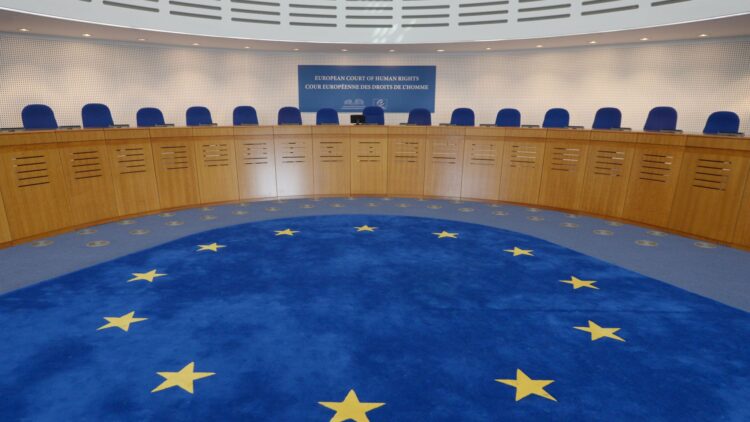
The European Court of Human Rights (ECHR) is clearly seeking to intervene, but the practical difficulties it faces in altering its direction in the UK are significant.

AD: Oysterian Sea Food Restaurant And Bar
Critics have said the ruling empowers institutional and societal violence under the guise of clarity and that the court has effectively undone twenty years of struggles for equality protections for trans people based on a highly technical interpretative exercise. They insist that it undermines trans people’s dignity, forces trans, non-binary and intersex people into legal categories that do not reflect their lived identities, and erases the existence of lesbian trans women.
Such an outcome appears perverse; the main conundrum being that the court could not depart from the incontrovertible fact that the original biological meaning of sex when the statute was instituted was indeed a person’s biological gender.
That historical fact could not be easily circumvented, but the question really lies on whether the original meaning of sex ought to have been adjusted to incorporate gender reassignment.
Advocates of transgender groups point to the Committee of Ministers Recommendation CM Rec (2010)5 on measures to combat discrimination on the grounds of sexual orientation and gender identity,. There it states that member States of the Council of Europe are required to take appropriate measures to guarantee the full legal recognition of a person’s gender reassignment in all areas of life (para 21).
However, protections of rights in law are also to take into competing rights , that is the rights of individuals or groups outside of them. Other campaigners have complained about trans women sharing the same toilets as females born women, or participating in the same gender category in combat sports.
One of the most fundamental obstacles for the European courts is the deeply entrenched doctrine of parliamentary and judicial sovereignty in the UK. The Supreme Court’s ruling is not just a policy judgment; it is a definitive interpretation of UK domestic law and remains the final domestic legal word on how “woman” is defined under the Equality Act. The European Courts can make a declaration of incompatibility with domestic courts, or rule than their application of the law is in breach of The European Convention.
The ECHR does not have the power to directly rewrite UK legislation; instead, it can issue a judgment against the UK and call on it to change. Enforcement depends largely on diplomatic and political pressure, as the Council of Europe’s Committee of Ministers oversees implementation of ECHR judgments.
The UK, however, may resist or delay significant changes — particularly where domestic political and public sentiment supports the Supreme Court’s interpretation.
Any challenge at the ECHR would thus require framing that ruling not merely as a regrettable political decision, but as a breach of rights under the European Convention on Human Rights.
Dr Victoria McCloud, Britain’s first openly transgender judge, has already pursued such a challenge after she was refused leave to join the litigation. She argues that the Supreme Court’s decision violated her Article 6 right to a fair trial because she and other trans people were not permitted to intervene, and their evidence was not heard. She said that the Supreme Court’s refusal to include transgender voices from judicial proceedings directly affects their rights, stating: “For the trans community, it embodies a simple truth: there must be no more conversations about us, without us.”
Dr Victoria McCloud who came out as transgender in the 1990s and became a judge in 2006 had told Euronews that: “as a trans woman with female genitalia who came out decades ago, I must now use mens’ toilets, men’s changing rooms, and be treated as a male. Life is now impossible for people like me”.
Her case also touches on Article 8 (right to private and family life) and Article 14 (non-discrimination), according to her legal team. She asserts that the benchmark used for determining gender according to birth is wrong because of a separate definition that says female by court process. She laments the imposition by the courts that she must share toilets with males having come out as a transgender along time ago.
But even if Strasbourg agrees, securing a binding, effective response is tricky. The ECHR does not have the power to directly rewrite UK legislation; instead, it can issue a judgment against the UK and call on it to change. Enforcement depends largely on diplomatic and political pressure, as the Council of Europe’s Committee of Ministers oversees implementation of ECHR judgments.
The UK, however, may resist or delay significant changes — particularly where domestic political and public sentiment supports the Supreme Court’s interpretation.
Moreover, the divergence in political views within the UK (both at national and devolved levels) complicates the matter further. Scottish public opinion, for example, has often been more favourable toward trans-inclusive policies than parts of England, but Westminster holds the power to legislate. That means even a favourable ECHR ruling could clash with domestic policy dynamics and be met with partial or symbolic change, rather than full alignment with Strasbourg’s judgment.
Public Backlash, Polarisation, and Political Risk
European courts must also contend with a highly charged public debate around trans rights in the UK. The Supreme Court’s ruling immediately triggered protests and political backlash. AP News+1 Transgender rights organisations and parts of the political left have expressed deep concern, warning that the ruling strips away years of protections. tgeu.org+1
On the other side, some conservative voices welcomed the judgment, arguing that it restores legal clarity about sex-based rights. The Guardian+2CARE+2
This contentious atmosphere presents a serious practical challenge. Any ruling that orders major legal changes risks being painted in the UK as an imposition from an external court, undermining national sovereignty — particularly in a climate where the very legitimacy of European institutions is questioned.
Political leaders may resist implementation not only out of principle but from fear of political cost.
Further complicating matters is how domestic institutions are interpreting and operationalising the Supreme Court judgment. The Equality and Human Rights Commission (EHRC) has issued guidance following the ruling — guidance that has drawn sharp criticism from trans rights groups.is alarmed transgender groups . Guidance from the supreme court’s ruling is that the legal definition of a woman was based just on biological sex meant transgender people should not be allowed to use toilets of the gender they live as, and that in some cases they could not use toilets of their birth sex, would effectively exclude transgender people from much of the public realm
Public perception of European courts may also be a roadblock. If parts of the British public view the ECHR ruling as ideological or foreign interference, domestic opposition could be galvanised. That political risk can dampen momentum for rapid or far-reaching changes following an ECHR judgment.
Trans groups have lamented the fact that the Supreme Court took arguments from the human rights campaign group Amnesty International, but not from trans activists who asked to make representations.
European courts depend on precedent and legal principle, but ensuring their decisions translate into real protections on the ground is a separate challenge altogether.
Historically, the UK has complied with many ECHR judgments. Still, implementation is not automatic: it often involves reporting to the Council of Europe, ongoing monitoring by the Committee of Ministers, and persistent civil-society pressure. In the context of trans rights, a judgment from Strasbourg would need sustained advocacy to push for changes to legislation, administrative guidance, and service provision.
There is also the risk of partial or minimal compliance. The UK government or public bodies might choose to respond in the narrowest possible way, adjusting some policies but preserving key exclusions from single-sex spaces, if doing so satisfies the minimal requirement from Strasbourg. Such an approach would blunt the transformative potential of an ECHR ruling.
Another complicating factor is legal divergence. Since Brexit, the UK has already begun recalibrating parts of its regulatory and legal frameworks. Some analysts warn that within a decade, as much as 20 percent of regulatory areas may diverge significantly from European norms.
Lastly, damage may already be done. The Supreme Court ruling is not just theoretical: it has clear day-to-day ramifications. According to Human Rights Watch, the decision forces trans people to use sex-segregated public services in line with sex assigned at birth, even if that contradicts their identity or recognition
Critics argue this creates a “dangerous legal limbo” in which trans people are excluded from spaces that align with their gender identity.
The European courts face a deeply challenging task in responding to the UK’s 2025 Supreme Court ruling on the legal definition of “woman.” While there are clear arguments that the decision breaches fundamental rights under the European Convention on Human Rights, enforcing a transformative response will require more than legal reasoning.
The courts must navigate the UK’s constitutional doctrine of sovereignty, political resistance and public backlash, and the messy realities of policy implementation.
That said, the challenge is not insurmountable. The application filed by Dr Victoria McCloud shows that individuals directly affected are willing to make their case at Strasbourg. If the ECHR can issue a clear, principled ruling, and civil society sustains pressure for implementation, change is possible — though likely gradual, negotiated, and contested.
Ultimately, the battle will not only be about legal definitions. It will be about how human rights are lived, experienced, and enforced in a society deeply divided over questions of identity and belonging.

AD: Heritage And Restaurant Lounge Bar