
By Ben Kerrigan-
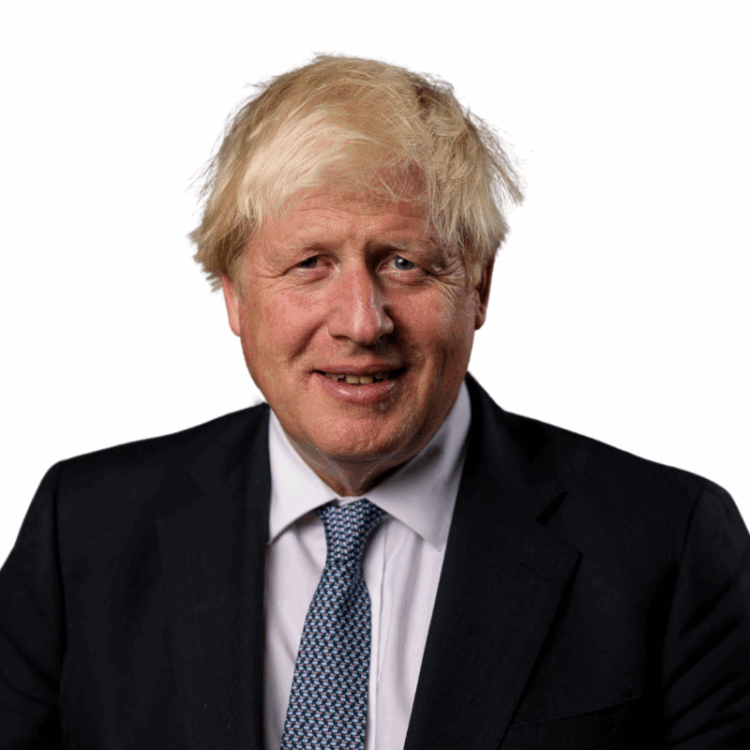
The attack on Boris Johnson for the multiple deaths during the pandemic is not entirely fair given the numerous other factors that played a role in the decisions made.
Truly, Johnson was the prime minister at the time, but well informed people would know that a lot of key decisions were being influenced by other powerful forces, including so-called professional scientists, many of whom appear to have had an agenda of their own. As prime minister, he was under pressure from many quarters to impose a lockdown after he had openly expressed a preference for ‘herd immunity’.

AD: Capeesh Restaurant
France for example heaped enormous pressure on the UK to implement a stricter and earlier lockdown during the initial wave of the COVID-19 pandemic in March 2020.
French Prime Minister Édouard Philippe publicly stated that if the UK “spend too long continuing to avoid these containment measures, then we’d have difficulty accepting British nationals who would move freely in their own country, and then come to ours”.
French political sources indicated that President Emmanuel Macron was prepared to close the border with the UK to non-EU citizens, including Britons, if the UK did not toughen its approach. This plan was called off after a call between Macron and UK Prime Minister Boris Johnson.

AD: Oysterian Sea Food Restaurant And Bar
Downing Street at the time officially denied that the timing of the UK’s lockdown measures (e.g., closing pubs and restaurants) was a direct result of French pressure, stating the decision was driven by the advice of UK scientists and the need to increase social distancing.
Last week, Johnson rejected claims he presided over a toxic and chaotic culture at the heart of the UK government during the pandemic, and accused the COVID-19 Inquiry of being “totally muddled”.
Writing in the Daily Mail, Boris Johnson said the inquiry – which he set up – had failed to answer the “big questions”, specifically where the virus came from, and whether lockdowns were worthwhile. The former prime minister said the report should be filed “vertically”, and insisted those involved in the pandemic response were “doing our level best.
He wrote: “Some judge has just spent the thick end of £200m on an inquiry, and what is the upshot?
“She seems, if anything, to want more lockdowns. She seems to have laid into the previous Tory government for not locking down hard enough or fast enough – just when the rest of the world has been thinking that lockdowns were probably wildly overdone.”
Bereaved families called for all privileges Johnson received as a former prime minister – including his ministerial pension, his place on the privy council and access to the public duty costs allowance – to be withdrawn.
In the aftermath of the COVID-19 pandemic, public scrutiny has largely focused on political leaders. Prime ministers, health secretaries and heads of state have been grilled in inquiries, challenged by journalists and criticised by the public for decisions that shaped the trajectory of the crisis. But behind these political figures stood another influential group whose advice shaped every major intervention: government scientific advisers.
From modelling teams to behavioural experts and virologists, these advisers provided the analyses that governments said they were “following”. Their influence was enormous. Yet their accountability remains far less examined than that of elected officials. While politicians ultimately decide, advisers determine which options are deemed viable, urgent or unacceptable. And that distinction matters.
It is not about placing blame on scientists who worked under intense pressure with incomplete information. Rather, the question is whether some recommendations — including lockdowns — were based on modelling assumptions or behavioural predictions that were not as robust as claimed.
It also becomes questionable the extent to which scientific advice was based o genuinely held beliefs or other unknown motives and agendas. One might ask the question why some of them flouted their own rules o lockdowns. Evidently, eve scientists deserve a share of responsibility for misjudgements made in the fog of uncertainty.
Early in 2020, governments faced extraordinary uncertainty. Scientists were scrambling to understand a virus that spread fast, struck hard and defied early expectations. In the UK, the Scientific Advisory Group for Emergencies (SAGE) and its modelling subgroups played a central role in shaping policy. Politicians relied heavily on projections that attempted to forecast hospitalisations, deaths and the impact of interventions. Modelling was essential, but it had limits that were not always clearly communicated.
One of the most influential forecasts in the UK came in March 2020, when Imperial College London published a model suggesting that, without mitigation, up to 510,000 people in the UK could die in a worst-case scenario. The number was not a prediction but an estimate based on assumptions. However, it was received publicly — and arguably politically — as a near certainty.
This projection undoubtedly spurred governments into fast and decisive lockdowns. Yet later reviews highlighted that some modelling teams underestimated the social and economic consequences while overestimating behavioural compliance and epidemiological uniformity.
Similarly, early modelling often assumed that COVID-19 spread evenly across age groups and regions. By the end of 2020, it was well-established that around 90% of COVID-19 deaths in the UK occurred among people aged 60 and above, indicating that age-stratified strategies could have been considered more seriously.
None of this invalidates the need for urgent action. But it does underscore the disproportionate influence of worst-case modelling. Some scientists warned at the time that overreliance on a single modelling group’s forecasts could distort decision-making. Those warnings were sidelined.
In pandemic policy, numbers are not neutral. They shape fear, urgency and the perceived moral basis for restrictions. When modelling became the main driver of government action, scientific advisers gained enormous power — and therefore share responsibility for the consequences.
Perhaps the most consequential misjudgement made by advisers was behavioural, not epidemiological. In early 2020, the UK government delayed implementing lockdown partly due to concerns about “behavioural fatigue” — the idea that the public would not sustain compliance if restrictions were introduced too early.
Yet as later revealed, there was little empirical evidence for this theory. A review of behavioural science papers showed that no peer-reviewed studies prior to 2020 provided evidence that lockdown compliance would diminish rapidly due to fatigue. Despite this, the concept became a cornerstone of early strategic advice.
SAGE behavioural subgroups defended the idea based on theoretical reasoning. But in hindsight, the theory appears to have been an assumption rather than a measurable reality. Subsequent polling in 2020 showed that around 80% of the UK public reported high willingness to comply with restrictions in the initial months, disproving the fatigue hypothesis.
This raises an important question of how such a speculative behavioural idea gain such influence? Some critics argue that advisers were overly cautious about public tolerance for restrictions, while others say they lacked the humility to distinguish between evidence and intuition under pressure.
Regardless, the delay in implementing lockdown — influenced in part by these behavioural concerns likely contributed to the speed at which the virus spread in March 2020. Government ministers signed off on this delay, but scientific advisers shaped the timing by framing early lockdown as counterproductive.
In a crisis where days mattered, the interpretation of public psychology may have cost lives.
Pandemic inquiries have repeatedly pointed to another problem among scientific advisers: a tendency toward groupthink. In high-pressure advisory environments, dissenting voices often struggled to gain traction.
Several advisers later acknowledged that challenging dominant narratives was difficult because the system rewarded consensus over debate. This is not unique to the UK. Across Europe, advisory bodies faced similar critiques.
There were limited options of alternatives to lockdowns. Approaches such as targeted shielding, rapid testing for high-risk settings, or earlier ventilation upgrades in public buildings received less attention than broad national lockdowns. Yet by late 2020, it was widely recognised that improving ventilation could reduce airborne transmission by up to 80% in indoor spaces. Had this insight gained prominence earlier, restrictions might have been targeted differently.
Advisory groups were dominated by epidemiologists and modellers, with fewer economists or social scientists contributing. Yet the impact of lockdowns was not only medical. By mid-2021, it was recorded that the UK economy contracted by 9.8% in 2020, its largest fall in over 300 years. Decisions that carried such consequences arguably required a more interdisciplinary advisory system.
Some scientific advice treated the country as a single epidemiological unit. In reality, infection rates varied dramatically by region. In early 2021, data showed that infection rates in some northern cities were more than double those in parts of the South West, suggesting that localised measures could have been more effective and less disruptive than national ones.
All of these shortcomings were decisions shaped — or limited — by advisers. Politicians implemented policies, but many of the policy frameworks originated within scientific advisory groups.
This does not diminish the difficulty of their task. Scientists were navigating unprecedented uncertainty, often with incomplete data. But the reverence given to scientific expertise sometimes obscured the fact that advisers, like politicians, are fallible and influenced by institutional dynamics.
The story of COVID-19 policy cannot be reduced to political leadership alone. Scientific advisers played a central role — sometimes constructive, sometimes flawed. Their recommendations were vital, but they were also shaped by assumptions, limited evidence and institutional pressures. Accountability must necessarily reflect this shared responsibility.
Future systems may need more diverse advisory groups, integrating economists, social scientists, behavioural experts and engineers alongside epidemiologists.
They would also need clearer communication of uncertainty, ensuring that worst-case scenarios are not mistaken for predictions external scrutiny panels to challenge assumptions and avoid groupthink
The pandemic was a historic crisis that demanded rapid action. Mistakes were inevitable. But genuine learning requires acknowledging that scientific advisers were not simply neutral providers of data, they were key architects of policy.
Heaping too much blame on Boris Johnson is not really fair, although he clearly did not always behave responsibly as a leader of the country.
The occurrence of covid parties in Downing Street for example was shockingly disappointing, but this may also be evidence that those at the helm of power did not really believe a lockdown was as necessary as stipulated, but merely succumbed to pressure .
Understanding the shared responsibility between government and scientific advisers is not about assigning guilt but about preparing better for the next crisis. Only by examining the full picture can societies build advisory systems capable of responding to future pandemics with clarity, humility and resilience.

AD: Heritage And Restaurant Lounge Bar