
By Tony O’Reilly-
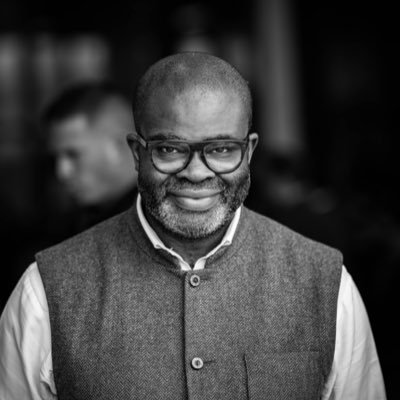
Misan Harriman has come under sustained attack after questioning why coverage of the Golders Green stabbings appeared to focus overwhelmingly on two Jewish victims while giving comparatively little attention to a Muslim victim allegedly attacked by the same suspect, igniting a fierce national row over media framing, political pressure and who gets visibility in Britain’s public tragedies.
What began as a pointed criticism of news coverage rapidly escalated into a broader cultural and political firestorm involving accusations of antisemitism, organised smear campaigns, ideological policing and institutional intimidation. In the process, the controversy has evolved far beyond one social media intervention or one high-profile public figure.
It has instead become a revealing portrait of modern Britain’s fractured information landscape — a country where questioning editorial priorities can quickly trigger reputational warfare.
At the heart of the dispute lies an explosive and emotionally charged question: when violence shocks the nation, whose suffering is amplified, and whose suffering quietly disappears from view?
The original attack horrified Britain. Two Jewish men were stabbed in Golders Green in what police described as a suspected antisemitic terror attack. The incident prompted immediate political condemnation and intensified concerns within Britain’s Jewish community amid already rising fears about antisemitism connected to tensions surrounding the war in Gaza. Counter-terrorism police stated that the suspect appeared to have targeted visibly Jewish individuals.
National media outlets covered the attack extensively. Headlines focused on antisemitic violence, fear within Jewish communities and the growing anxiety surrounding hate crimes in Britain. Images of police cordons and eyewitness testimony dominated rolling coverage.
But alongside those reports sat another allegation that received significantly less public attention: prosecutors had also authorised a separate attempted murder charge involving a Muslim victim allegedly attacked by the same suspect earlier the same day.
That discrepancy became the focus of Harriman’s intervention.
The Oscar-nominated photographer and chairman of the Southbank Centre publicly questioned why references to the Muslim victim appeared marginal or entirely absent in large sections of mainstream reporting. Supporters viewed his comments as a legitimate challenge to editorial imbalance. Critics accused him of promoting conspiracy theories and attempting to dilute the seriousness of antisemitic violence.
The backlash was immediate and ferocious.
Right-leaning newspapers and commentators accused Harriman of undermining coverage of antisemitism and reframing a terror attack for ideological purposes. Some critics argued the issue was not whether another victim existed — police themselves acknowledged that fact — but that the Golders Green stabbings were specifically antisemitic attacks against strangers, while reports suggested the Muslim victim knew the suspect personally and was attacked elsewhere.
To Harriman’s critics, implying that the Muslim victim had been “ignored” risked creating the false impression that media organisations were deliberately suppressing anti-Muslim violence.
But supporters of Harriman insist the scale and intensity of the response revealed something much larger and more troubling than a disagreement about headlines.
According to campaigners defending him, the photographer was transformed almost overnight from a respected cultural figure into the target of a coordinated reputational assault simply for questioning narrative emphasis in mainstream reporting. Tens of thousands of complaints were reportedly lodged with media regulators and newspapers over coverage attacking Harriman, while online campaigns accused sections of the press of deliberately misrepresenting his comments.
The speed of the escalation exposed how combustible discussions surrounding race, religion and media framing have become in Britain’s post-October 7 political climate.
Harriman;s supporters say he was not denying antisemitism or minimising violence against Jewish victims. They argue he was asking a broader question about selective visibility: why was one victim’s identity central to the national conversation while another appeared largely absent?
Several journalists and public figures defended Harriman on precisely those grounds. Broadcaster Mehdi Hasan and others argued that the existence of a third victim was materially relevant and that questioning media framing should not automatically be conflated with antisemitism.
An open letter signed by public figures including Gary Lineker and Greta Thunberg condemned what supporters described as a “dishonest smear campaign” against Harriman.
The controversy has since widened into a much larger battle over institutional power, acceptable speech and the treatment of dissenting voices in public life.
Some politicians and commentators called for scrutiny of Harriman’s suitability to chair the Southbank Centre, arguing that figures leading publicly funded cultural institutions should avoid politically divisive commentary. Questions were raised about his wider activism, including outspoken support for Palestinian rights and criticism of media narratives surrounding Gaza.
Others viewed those attacks as politically motivated attempts to silence a prominent Black public figure who had challenged dominant narratives around identity and violence.
For many observers, that dimension of the story is impossible to ignore.
Columnist Afua Hirsch argued the treatment of Harriman reflected a wider pattern in which Black and minority ethnic figures in public life are subjected to heightened scrutiny once they move beyond symbolic diversity roles and begin openly challenging establishment assumptions.
Whether one agrees with that analysis or not, the affair has exposed an increasingly uncomfortable reality about modern media culture: questioning editorial emphasis has itself become politically dangerous.
A broader argument about empathy and visibility is central to the dispute
News organisations inevitably make editorial decisions about which aspects of stories receive prominence. But in an era dominated by identity politics, social media outrage and collapsing public trust in institutions, those decisions are now interpreted not merely as journalistic judgements but as moral and political choices.
Some Muslim commentators regard the Golders Green coverage as reflecting a pattern in which Muslim suffering receives less sustained emotional attention than attacks involving other communities. Others strongly rejected that suggestion, insisting the central significance of the attack lay precisely in its alleged antisemitic motivation and the climate of fear facing Jewish communities.
The result was a collision between two deeply sensitive realities. Antisemitism in Britain has risen sharply and remains a genuine source of fear for many Jewish people. At the same time, concerns about unequal media representation and differential empathy are also deeply felt among many minority ethnic communities.
Britain’s increasingly polarised public discourse appears unable to hold those truths simultaneously. Instead, debates quickly collapse into binary accusations: either one is accused of minimising antisemitism, or accused of defending media bias.
Social media intensified the conflict dramatically. Platforms like X transformed a nuanced discussion about narrative framing into a tribal ideological battle fought through viral outrage posts, clipped screenshots and inflammatory headlines. Harriman’s original comments became detached from broader context as critics and supporters alike interpreted them through existing political loyalties.
In that atmosphere, complexity became almost impossible.
The affair also exposed how rapidly criticism of journalism can now become reframed as a threat to institutional legitimacy itself. In previous decades, disputes about news emphasis may have remained confined to media commentators and editors. Today, however, public distrust in institutions has made such challenges far more explosive.
Critics of Harriman, say his comments represented irresponsible insinuation at a moment of heightened fear about antisemitic violence. For supporters, the furious backlash merely demonstrated how aggressively parts of the establishment react when influential public figures question dominant narratives.
Meanwhile, the original victims risked becoming secondary figures in a much wider ideological conflict. The two Jewish men stabbed in Golders Green remain central victims of a deeply disturbing attack that police continue to investigate with utmost seriousness. But supporters of Harriman argue that acknowledging another alleged victim should never have provoked such outrage in the first place.
That tension perhaps explains why the controversy resonated so powerfully across Britain’s cultural and political landscape.
The row surrounding Misan Harriman was never simply about one tweet, one interview or one news cycle. It became a symbol of something much larger: a country increasingly divided not only over politics, race and religion, but over who controls public narratives and who is permitted to question them without becoming a target themselves.
In the end, the controversy exposed a media culture that often struggles with nuance, rewards outrage over complexity, and increasingly treats dissenting interpretations not as contributions to debate, but as acts of ideological transgression.
Whether Harriman was reckless, courageous or merely provocative will remain contested. But the ferocity of the reaction to his comments revealed something undeniable about modern Britain: in an age of polarised narratives and perpetual outrage, even asking who gets remembered can become an act of political danger.
-
Share On
- Categories
- Date