
By Sheila Mckenzie-
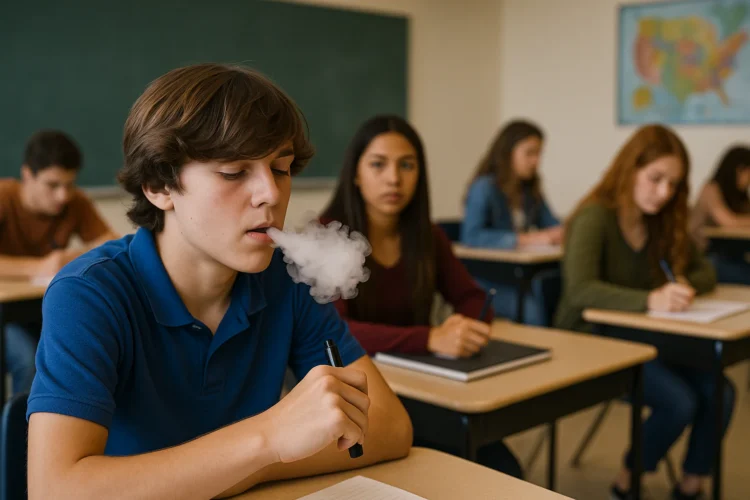
Across classrooms and playgrounds in Britain, teachers and headteachers say they feel stranded in a growing struggle against youth vaping. What once appeared as a niche issue has become a daily concern, with brightly packaged devices, sweet flavours, and discreet designs slipping into school life.
Educators warn that policies and punishments inside school gates cannot keep pace with an industry that markets products aggressively and a culture where vaping appears normalised among young people. Smoking cigarettes has for decades been the fashion line of secondary school pupils, but it now seems that vaping is competing fairly strongly with this.

AD: Capeesh Restaurant
School leaders describe the situation as a lonely battle, but are not giving up at all. Staff confiscate devices, hold assemblies, contact parents, and offer support, yet the problem returns. Pupils arrive with vapes hidden in sleeves or pencil cases, sharing devices between lessons and during breaks.
Some children admit they do not fully understand what they inhale, but many see vaping as a healthy alternative to smoking cigarettes. Once they see their peers whom they may hold in high esteem vaping, many impressionable students become automatically drawn to the practise. Others say peer pressure and social media trends draw them in.

AD: Oysterian Sea Food Restaurant And Bar
Health authorities continue to stress that vaping poses risks, especially during adolescence when lungs and brains are still developing. The National Health Service warns that nicotine addiction can harm concentration and mood while increasing anxiety in young people.
In schools, these effects show up as disrupted lessons, behavioural issues, and a rise in pupils seeking time out due to stress or withdrawal.
Teachers say enforcement alone fails. Exclusions and detentions remove symptoms rather than causes. A headteacher at a large secondary school described to The Eye Of Media.Coma a cycle where one confiscated device leads to two replacements within days.
Insisting on anonymity to protect the reputation of the school, the Headteacher said:
”Disposable vapes remain cheap and easy to obtain despite age restrictions. Shops near schools face criticism, yet online sales and social networks often bypass checks entirely.
”Many parents often express shock when schools call home. Many assume vaping targets adults trying to quit smoking. Educators report that families struggle to discuss the issue, uncertain whether to treat vaping as a health matter or a discipline problem. That uncertainty adds to school frustration, as consistent messaging remains difficult.
”No responsible school will allow their pupils to vape or smoke within the premises, it is simply unacceptable and must be continuously challenged’.
‘Most schools rely on behaviour policies that never anticipated vaping, but smoke free rules now extend to devices, yet enforcement strains staff already managing heavy workloads. Pastoral teams devote hours to conversations, referrals, and paperwork related to vaping incidents. Some schools invest in detectors, yet pupils adapt quickly, moving activity to toilets or secluded areas.
The issue came to this publication’s attention in the course of our research with schools , to identify the strengths and weaknesses of various schools in order to use these as a template for informing standards across the country.
Education unions argue that schools cannot solve the problem alone. They call attention to marketing practices that appeal to young audiences, such as colourful designs and candy inspired flavours.
Campaigners say such products blur the line between adult cessation tools and youth lifestyle accessories. Public health groups warn that early nicotine exposure increases the likelihood of long term dependence
Although lessons on health and wellbeing attempt to address vaping risks, teachers say these sessions compete with online content that downplays harm. Short videos and influencer posts often portray vaping as harmless fun.
Without regulation of digital promotion, schools feel undermined. Pupils in many schools challenge warnings with claims seen online, placing teachers in the role of myth debunkers rather than educators.
Although inspection bodies are said to recognise the issue, their main focus is on academic outcomes. School leaders argue that wellbeing challenges linked to vaping affect attendance and performance, creating a hidden impact on results. They want recognition that safeguarding now includes protection from addictive products marketed toward children.
Many educators are now callling on government, health agencies, and industry regulators to share responsibility. They argue that stronger controls on packaging, flavours, and advertising would reduce appeal. Some advocate higher prices and limits on disposable devices, which dominate school seizures. Others urge tighter enforcement of age laws at retail level.
Public health experts agree that comprehensive action works best. Evidence from countries that restricted marketing and flavours shows declines in youth uptake. International health bodies recommend clear separation between adult smoking cessation tools and products that attract children
Parents groups also push involvement, as workshops and open discussions aim to equip families with language and confidence to address vaping at home. Schools that partner with parent networks report better outcomes, though success varies widely.
Students themselves have a role to play as peer led initiatives encourage honest conversation without judgement. Some schools train older pupils as ambassadors who challenge myths and support younger students. Teachers say messages carry more weight when delivered peer to peer rather than from authority figures.
Despite these efforts, schools remain frustrated. They see new devices appear faster than guidance updates. Each term brings another trend, another product, another challenge. Without coordinated national action, educators fear the burden will remain uneven and exhausting.
The headteacher summed up the mood. Schools want help in a battle they did not choose. They accept responsibility to educate and safeguard children, yet they cannot regulate markets, control online promotion, or police supply chains. Expecting them to do so alone risks normalising a problem that demands wider action.

AD: Heritage And Restaurant Lounge Bar
-
Share On
- Categories
- Date