
By Lucy Caulkett-
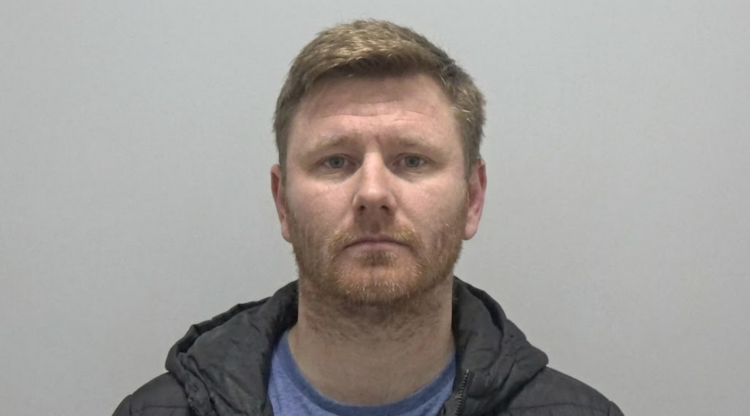
St Albans, UK — A notable rise in the statistics of police officers who abuse their position for sexual purposes, has been observed, after a former Hertfordshire Constabulary Youth Crime Police Community Support Officer (PCSO) avoided immediate imprisonment when he pleaded guilty to pursuing an inappropriate relationship with a child and illegally accessing confidential police intelligence systems.
Keith Sayers, 43, of Borehamwood, appeared at St Albans Crown Court last week to admit the deplorable offence. He was handed a 12-month custodial sentence, suspended for 18 months. He was also ordered to complete 180 hours of unpaid work, following a comprehensive investigation led by the Independent Office for Police Conduct (IOPC). Additionally, a 10-year Sexual Risk Order was granted by the court.
It was today revealed that a met police call handler is due to attend a magistrates hearing for money laundering attempts, and attemptys to import claas A drugs, although it is worth noting that a police call handler is not the same as a police officer, although both work in the same environment.
A Surge in Misconduct and Data Abuse
The prosecution of Sayers sheds light on an ongoing challenge within UK law enforcement regarding data breaches and the exploitation of power. National figures underscore that Sayers’ dual offenses—data manipulation and sexual misconduct—are part of a rising tide of police corruption allegations across England and Wales.
According to latest Home Office Police Misconduct Statistics, allegations of sexual misconduct against police officers have risen dramatically. In the reporting year ending 31 March 2025, forces finalized 1,100 specific allegations of sexual conduct—with a striking 53% finding a case to answer, the highest substantiation rate of any major misconduct category. Year-on-year data revealed a 34% spike in sexual misconduct allegations across territorial forces.
Simultaneously, the improper harvesting of intelligence remains a persistent threat to police integrity. The Home Office reported 1,309 finalized allegations regarding the illicit “access and/or disclosure of information“. Of those data breach cases, 38% were proven to have a case to answer, leading to a staggering 82% being pushed through to formal disciplinary proceedings.
| Key Misconduct Metrics (Home Office Annual Data) | Total Finalized Allegations | Proved “Case to Answer” Rate | Referred to Formal Proceedings |
|---|---|---|---|
| Access/Disclosure of Information | 1,309 | 38% | 82% |
| Sexual Conduct | 1,100 | 53% | 85% |
| Abuse of Position / Corruption | 517 | 36% | 79% |
Historical data from the IOPC also establishes that Abuse of Position for a Sexual Purpose (APSP) serves as the single largest category of corruption investigated by the watchdog, routinely driving nearly 40% of all gross misconduct disciplinary referrals originating from independent probes.
Sayers, who worked across Watford and Hertsmere from 2016 until his suspension in January 2024, utilized his designated role as a Youth Crime PCSO to interact with vulnerable minors. Investigators proved that between September 2021 and December 2023, Sayers engaged in a prolonged, inappropriate relationship with a girl who was between 14 and 16 years old during the timeline of the offenses.
The court heard that Sayers met the victim in private while off-duty. He admitted to kissing the minor on one occasion and viewing explicit imagery of her on another, with both specific events transpiring when she was 16 years old. A digital forensic audit of Sayers’ phone also uncovered a history of highly inappropriate WhatsApp communication.
Beyond the relational misconduct, Sayers actively manipulated his authority to compromise data integrity. He admitted to three counts of unauthorized access to police computer systems. Sayers used secure police databases to perform queries regarding confidential information about the child, alongside harvesting the personal profiles of several other individuals linked to her social circle.
The Path to Dismissal and Prosecution
The investigation began in February 2024 following a mandatory conduct referral submitted by Hertfordshire Constabulary immediately after Sayers’ arrest. Following a 17-month probe, the IOPC finalized its evidentiary file in July 2025, referring it directly to the Crown Prosecution Service (CPS), which authorized criminal charges.
Concurrently, an internal disciplinary fast-track hearing arranged by the force resulted in Sayers being dismissed without notice for gross misconduct.
Hertfordshire’s Deputy Chief Constable strongly condemned the former officer’s actions:
“Sayers betrayed the trust that the public place in the police. He abused his position in a despicable way, letting down the community and the whole of policing. He has no place in policing.”
Similarly, Emily Barry, the IOPC’s Director of Engagement, reemphasized that the outcome reflects the severe accountability measures facing personnel who exploit their public status to target vulnerable groups.
Many critics believe corruption in the police force is largely due to poor vetting processes, although the force has pledged to significantly improve those processes. The force by enlarge claim to be doing their best, although recommendations for polygraph(lie detector) testing at the recruitment sate appears to have faced enormous push back, not to have been implemented in the UK.