
By Isabelle Wilson-
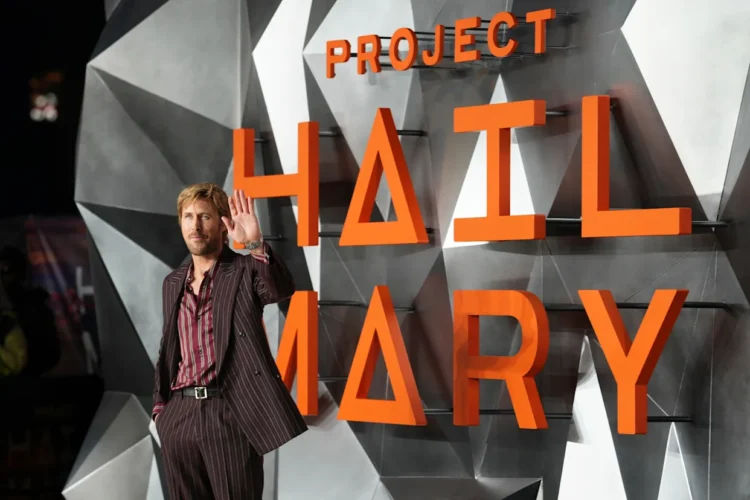
In an unexpected twist that’s shaking up the 2026 film landscape, Project Hail Mary has rocketed past one of the year’s biggest sci‑fi franchises to become the highest‑grossing film in the United States so far. The Amazon MGM‑produced space adventure, starring Ryan Gosling and based on Andy Weir’s bestselling novel, has captured audiences across the country, overtaking Avatar: Fire and Ash long considered an untouchable franchise entry to take the top domestic box office position this spring.
Originally released on March 20, the film has enjoyed a powerful cumulative run, earning an estimated $164.3 million domestically over its first two weeks a figure that now tops all other films released this year. Through comparison, Avatar: Fire and Ash had generated approximately $153.7 million in the United States through the same period, industry trackers reported.

AD: Capeesh Restaurant
While Hollywood tentpoles and established franchises often dominate the box office year after year, Project Hail Mary’s rise underscores a broader appetite among moviegoers for original or at least less franchise‑dependent storytelling that blends spectacle with character‑driven drama.
The film’s strength began with its strong opening weekend. Early industry estimates pegged its domestic debut at around $80 million, a remarkable figure for a non‑franchise project and the best opening of the year at the time. That figure not only marked the biggest debut for Amazon MGM Studios but also placed it among the strongest March openings in recent Hollywood history.
Part of the film’s success can be traced to positive critical reception and strong word‑of‑mouth support. While exact aggregated critics scores vary, its combination of emotional stakes, thoughtful science fiction elements, and Ryan Gosling’s charismatic lead performance has been frequently cited in industry reviews and audience reactions.

AD: Oysterian Sea Food Restaurant And Bar
Behind the scenes, the production was a major investment for Amazon MGM Studios with a reported budget of around $248 million, the company was clearly hoping the movie could become a breakout hit.
Early box office numbers show that Project Hail Mary is delivering on that promise, with its impressive domestic tally already well over $164 million and global figures pushing toward $300 million.
Industry analysts note that the film’s strong second weekend with only a modest dropoff in revenue signalled unusual staying power in a crowded release schedule. This kind of hold is typically associated with franchise staples, yet Project Hail Mary has managed to sustain audience interest without an existing cinematic universe behind it.
At the same time, competition from blockbuster sequels and established properties throughout 2026 makes this achievement all the more notable. Pixar’s Hoppers, for instance, has remained one of the biggest films of the year globally, while the Scream franchise and others have continued to rack up strong box office totals.
Still, Project Hail Mary has maintained a firm lead on domestic charts a position that once seemed unlikely for an original sci‑fi film in the current market.
The success of Project Hail Mary represents more than just a box office milestone; it may also signal a shift in how studios approach large‑scale tentpole projects in an era shaped by streaming competition and shifting audience habits.
Amazon’s gamble on a big‑budget original rather than depending on an existing franchise property appears to have paid off in ways that could influence future studio strategies.
With Amazon MGM, this moment is especially significant. The studio has long sought a major theatrical hit to anchor its cinematic slate, particularly following its high‑profile acquisition by Amazon several years ago.
Prior releases had failed to generate sustained buzz or major box office returns, but Project Hail Mary’s performance has provided the studio with the kind of marquee success that rivals count as both a financial and cultural win.
Moreover, the film’s achievement suggests that audiences remain eager for original storytelling that takes big risks on the big screen. After years of franchise dominance from Marvel and Star Wars to Avatar sequels the emergence of a new top‑grossing title may encourage major studios to balance franchise development with fresh, ambitious projects that can stand on their own merits.
The broader implications could extend to talent and creative investment. Directors Phil Lord and Christopher Miller known for their work on projects ranging from Spider‑Verse to 21 Jump Street have now delivered what may be one of 2026’s most memorable theatrical experiences, proving that original films can still break through in a crowded marketplace.
While the domestic and global box office continues to evolve, Project Hail Mary serves as a reminder of the power of cinema to draw audiences into worlds that feel both fresh and resonant. Whether its lead position will hold as the year progresses remains to be seen, but for now, the film has unmistakably planted its flag atop the 2026 box office landscape.
Looking ahead, industry watchers will be keenly observing whether Project Hail Mary can maintain its remarkable momentum in a year already packed with major releases.
Historically, even films with strong openings face steep competition from sequels, franchise Installments, and seasonal tentpoles, which can rapidly siphon audience attention. Yet, the film’s combination of gripping storytelling, scientific intrigue, and a compelling lead performance by Ryan Gosling gives it an unusual staying power.
Unlike many franchise films that rely heavily on brand loyalty, Project Hail Mary has drawn viewers primarily through curiosity and word-of-mouth buzz, a factor that could extend its box office longevity if positive reviews continue to circulate.
The broader implications for Hollywood are significant. Studios have long relied on sequels, reboots, and cinematic universes to secure predictable returns, often at the expense of original storytelling.
The success of Project Hail Mary challenges this formula, suggesting that audiences are not only willing but eager to engage with fresh narratives that offer both spectacle and emotional depth. If this trend continues, it could embolden studios to invest more heavily in high-concept, original properties projects that combine commercial appeal with artistic ambition.
Moreover, the film’s achievement highlights the evolving role of star power in the modern cinematic landscape. Ryan Gosling’s performance has been widely praised for grounding an otherwise fantastical narrative, proving that audiences still respond to strong acting within visually ambitious stories.
This success may influence casting and development strategies, encouraging studios to pair established talent with innovative scripts rather than relying solely on franchise recognition.
Ultimately, Project Hail Mary has carved out a rare position in the marketplace. Its triumph is not merely financial but symbolic: a signal that original, risk-taking storytelling can thrive in a blockbuster-driven era, inspiring both filmmakers and studios to rethink what constitutes a cinematic hit.
Its sustained performance could mark the beginning of a new chapter in Hollywood, where originality and spectacle coexist at the top of the box office.

AD: Heritage And Restaurant Lounge Bar