
By Sammy Jones-
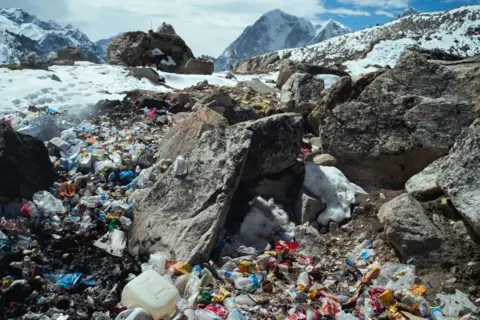
Nepal has announced plans to scrap its long-running waste deposit system for climbers on Mount Everest after years of effort failed to significantly reduce the staggering amount of rubbish left on the world’s highest peak.
Officials acknowledged that despite more than a decade of requiring climbers to carry trash down the mountain to reclaim a large deposit, the results fell short of expectations as garbage continued to accumulate, particularly at higher camps where it is hardest to monitor and remove.

AD: Capeesh Restaurant
The deposit scheme, introduced in the mid-2010s, required each climber to pay a refundable fee of approximately $4,000 (£2,960). If at least 8 kg of waste was returned from expeditions, the deposit was refunded.
However, authorities now say the arrangement became administratively cumbersome and “failed to show a tangible result” in addressing the most visible waste problems on Everest’s upper slopes.
Tourism ministry officials reported that most climbers complied with the lower-camp requirements and were able to reclaim their deposits, suggesting the incentive did not alter disposal habits where it mattered most.

AD: Oysterian Sea Food Restaurant And Bar
Trash such as discarded tents, food packaging, oxygen bottles and even human waste continues to litter areas above the Khumbu Icefall, with little enforcement where conditions are most extreme and access most difficult.
Mount Everest stands as a powerful symbol of human achievement, yet in recent years it has also become an emblem of environmental strain.
The sheer volume of climbers and support staff often around 400 climbers annually, along with guides and porters has intensified pressure on the fragile Himalayan ecosystem, turning parts of the mountain into what critics have called “the world’s highest garbage dump.”
Officials now plan to replace the refundable model with a non-refundable clean-up fee, likely to remain at about the same financial level as the previous deposit. Pending legislative approval, the new fee structure would support expanded waste management infrastructure, including checkpoints and trained waste-management personnel at higher camps.
Years of Effort, Persistent Problems
The idea behind the deposit system was straightforward: create a strong financial motivation for climbers to carry their own waste down from Everest. At lower camps, the strategy appeared to work reasonably well, with many climbers returning with trash and receiving refunds.
But officials have admitted that the scheme’s design did not account for the realities above base camp, where hazardous terrain and exhaustion make thorough clean-ups challenging.
Tshering Sherpa, chief executive officer of the Sagarmatha Pollution Control Committee (SPCC), pointed out that climbers tended to prioritise bringing back heavier items like oxygen cylinders from higher altitudes, while leaving behind tents, packaging and other debris that contribute significantly to the mountain’s pollution problems.
Under the current plan, Nepalese authorities hope that a non-refundable contribution earmarked specifically for waste management will generate stable funding for more rigorous supervision. The funds are expected to help establish a permanent checkpoint at Camp Two and deploy “mountain rangers” tasked with monitoring waste removal at more inaccessible sections of the route.
Local leaders have welcomed the shift. Mingma Sherpa, chairperson of the Pasang Lhamu rural municipality in the Everest region, noted that the deposit system had long been questioned for its lack of impact, with no real penalties for climbers who failed to bring down their trash. Under the new approach, resources could be dedicated to actual enforcement and cleanup efforts rather than returning most deposits.
The Everest region’s waste dilemma reflects broader environmental concerns that have grown more acute as climate change alters Himalayan landscapes. Melting ice and snow not only uncover decades-old trash but also release human waste and equipment long buried in ice, exposing ecosystems and water sources downstream to contamination risks.
Even below Everest’s base camp, plastic bottles, discarded gear and other rubbish have been found strewn across trails and campsites, highlighting how tourism and mountaineering have outpaced efforts to manage their ecological footprint.
Despite the shortcomings of the deposit scheme, it was not the only attempt to address the issue. Nepal has developed a broader five-year clean-up strategy aimed at overhauling waste management practices throughout the region.
The draft plan calls for higher fees, increased monitoring and technological solutions such as drones to assist with the collection of debris above base camp.
That strategy also envisages a dedicated fund for clean-up campaigns and proposes measures to integrate environmental education among local communities and expedition operators. A GPS-based tracking system for climbers is even being piloted to improve accountability for waste removal and monitor movement at altitude.
Global Spotlight on Everest’s Environmental Strain
The decision to scrap the deposit scheme underscores the difficulty of regulating human activity in extreme environments. Everest’s fame draws climbers from around the world, and many expeditions bring with them gear, supplies and waste.
With each climber generating an estimated 12 kg of rubbish over the course of an expedition, the cumulative effect is substantial, especially as warming temperatures reveal trash once trapped beneath ice.
Environmental advocates have long highlighted the need for more effective action. Cleanup campaigns have unearthed vast quantities of waste, from empty oxygen cylinders to abandoned tents, ropes and even discarded human waste, much of which poses long-term ecological risks.
In response, Nepal and its partners have undertaken numerous efforts over the years. Volunteers have removed tons of trash from lower camps, and annual expeditions such as the Eco Everest Expedition have pulled many kilograms of debris from the mountain since they began in 2008.
Still, the decision to end the deposit scheme marks a significant policy shift. Authorities contend that sustainable change will require constant funding and dedicated resources, rather than relying on climbers’ compliance with incentive-based rules that lack enforceable structures at the heart of the problem.
Mountaineering operators and local communities are now placing hope in the revamped approach, expecting that a funded system staffed with trained personnel will improve outcomes. The redistribution of funds from a non-refundable fee could offer a more predictable revenue stream to support cleanup campaigns, purchase equipment and establish additional infrastructure.
Environmental organisations and conservation groups are watching closely as Nepal rolls out its new policies. Everest has for many decades represented human achievement, but for the mountain’s caretakers it has increasingly become a test case for managing tourism’s environmental toll.
With the decision to end the deposit scheme, Nepal is signalling a willingness to rethink its approach, placing an emphasis on direct investment in waste management rather than deferred incentives.

AD: Heritage And Restaurant Lounge Bar