
By Tony O’Reilly-
Martin Compston, the acclaimed Scottish actor known for Line of Duty and other screen roles, has revealed that he has adjusted the way he expresses his personal views in public due to hostility encountered online.
Once outspoken on social media and in interviews about his passions for football and Scottish political issues, Compston now says he still holds the same beliefs but prefers to show support in a quieter manner after witnessing the intense anger and vitriol that often fills digital discussions.

AD: Capeesh Restaurant
Compston, who hails from Greenock in Inverclyde and has strong ties to Scottish affairs both on and off screen, explained in recent remarks that the backlash he has seen online has changed the way he approaches public commentary.
He reflected that while he continues to support the same teams and political movements as before, he has consciously stepped back from becoming heavily involved in public debates, particularly on social media.

AD: Oysterian Sea Food Restaurant And Bar
Compston described the digital landscape as “like shouting into a void,” where meaningful exchanges are rare and exchanges too often descend into angry screeds rather than constructive conversations.
In a media interview, he said that although his views have not changed, the environment around online discussion has. He cited the level of animosity and “anger” present in many social forums as a key reason for his decision to dial down public expressions of support.
The actor pointed out that this evolution in his behaviour should not be interpreted as disengagement or indifference, but rather as a deliberate response to the way online hostility can affect both participants and observers.
Compston’s comments have shone a spotlight on a broader issue that has troubled public figures across the United Kingdom and beyond: the challenge of balancing personal convictions with the often toxic nature of social media engagement.
His experience reflects a trend among celebrities and public personalities who are rethinking how much of themselves they reveal online after encountering negative reactions, sometimes disproportionate to the subject at hand.
While his public commentary has changed in tone and volume, the underlying causes he cares about especially in Scottish football and politics remain central to his identity.
Long-Standing Advocate in Football and Politics
In many years Compston has been vocal about subjects close to his heart, including his loyalty to Celtic Football Club and his support of Scottish political causes.
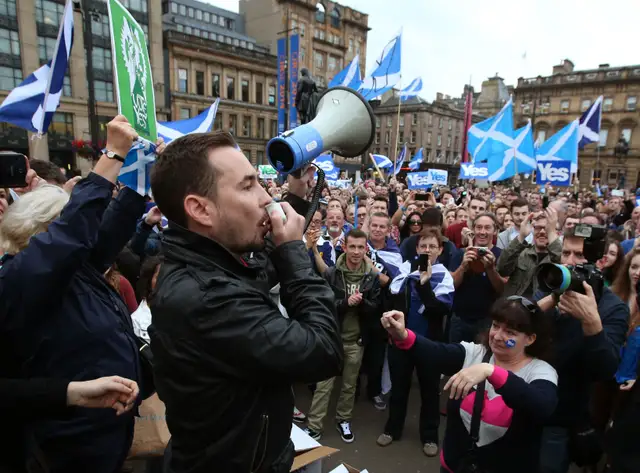
His prominence as an actor has not insulated him from the passions and pressures that come with public positions in these areas, particularly in relation to Scottish independence and the Scottish National Party (SNP).
Compston first gained widespread public attention through his acting career, but his roots in Scotland and genuine enthusiasm for regional issues have made him a recognisable voice in discussions outside the entertainment world as well.
He has openly supported the SNP and confirmed his intention to back its leadership in the Scottish Parliament elections in May, affirming that his allegiance to these causes remains strong even as he modifies how he expresses it.
His shift toward quieter support highlights a key dilemma faced by many public figures: whether staying silent in public on issues one cares about risks being seen as apathy, or if retreating from comment protects personal wellbeing amid a swirl of online hostility.
Compston’s remarks make clear that his choice reflects a prioritisation of energy and focus on aspects of his life he values more, such as time with family and engagement in offline activities that enrich him outside of social media turbulence.
A consistent theme in his recent discussions has been the observation that social media no longer feels like a space where thoughtful debate occurs.
He said that rather than engaging in debates or conversations that might persuade or inform, many online exchanges feel dominated by people simply “screaming” at one another. That perception, he explained, is part of what led him to recalibrate how he engages with the public.
Compston’s stance has sparked discussion among fans and commentators about how public figures should navigate their roles as both entertainers and citizens with real opinions and convictions.
Some have applauded his honesty and maturity in reassessing how he engages, while others have noted that his quieter approach could signal broader disillusionment with the digital public square.
These conversations play out against a backdrop of evolving norms in media and politics. In recent years, social platforms have faced scrutiny for the way they amplify outrage and polarisation, often at the expense of nuanced discussion or compromise.
Public personalities from multiple sectors have commented on how this environment can distort discussions, damage relationships, and distract from substantive issues. Compston’s reflections echo concerns shared by politicians, athletes and artists alike, each grappling with how to maintain authenticity in an increasingly combative digital sphere.
Despite his more reserved approach, Compston emphasises that stepping back does not mean stepping away. He continues to hold his political views and intends to support causes and organisations he believes in, even if he chooses to do so without broadcasting every opinion online or in interviews.
That nuanced position underscores the idea that care for one’s mental health and wellbeing can coexist with engagement in civic life.
Social media platforms, once heralded as spaces for democratic discourse and community connection, have transformed into arenas where hostility and bots frequently crowd out civil exchange.
Compston’s description of social interaction as “shouting into a void” captures a sentiment echoed across sectors: that the cost of engagement, particularly for high-profile individuals, often outweighs the perceived benefits in terms of genuine dialogue or influence.
While debate continues about how society should reckon with the influence of digital platforms on public conversation, Compston’s personal choice offers insight into how the pressures of online discourse can influence behaviour.
His decision reflects both a response to external forces and an internal reassessment of how best to direct his energies without feeling overwhelmed or dragged into unproductive exchanges.
In adjusting how he engages publicly, Compston models a particular approach to contemporary challenges facing those who step into the spotlight not just as entertainers but as voices in civic and cultural conversations.
He illustrates that evolving one’s relationship with public commentary can be both a strategic and emotionally protective decision, aimed at preserving personal focus while remaining true to core commitments.
Compston’s evolution from outspoken online presence to measured supporter highlights tensions inherent in public life today. It underscores a growing awareness among performers and others in the public eye that engagement in the digital public square often comes with significant emotional cost.His experience continues to resonate as others contemplate how to balance authenticity, conviction and mental wellbeing in an age marked by digital confrontation and polarisation.

AD: Heritage And Restaurant Lounge Bar