
By Kenneth Williams-
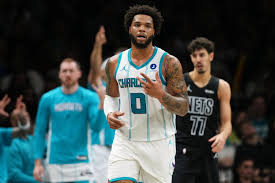
The NBA offseason has once again demonstrated why it remains one of the league’s most compelling periods, with front offices increasingly willing to make bold decisions that reshape the future of franchises in a matter of hours. According to reports surrounding the latest wave of offseason activity, the Charlotte Hornets have agreed to send forward Miles Bridges to the Phoenix Suns in a move that encapsulates two organisations travelling in very different directions.
While player movement has become an annual feature of the NBA calendar, this reported deal carries significance beyond the transfer of an established scorer. It represents a philosophical divide that has become increasingly common throughout the modern NBA, where teams either commit fully to rebuilding through patience or aggressively pursue immediate championship contention with little regard for long-term flexibility. Moving Bridges would represent another chapter in an organisational reset that has gradually taken shape over recent seasons. For Phoenix, the acquisition would reinforce a strategy built around maximising a championship window while it remains open, adding another experienced scorer to a roster already assembled with postseason success firmly in mind.

AD: Capeesh Restaurant
The timing is notable. With the NBA salary cap becoming increasingly restrictive under the league’s latest collective bargaining agreement, front offices have been forced to make more decisive choices regarding roster construction. Rather than attempting to remain competitive while simultaneously developing young talent, franchises are increasingly choosing one direction or the other.
The Hornets appear to have chosen patience. Charlotte has for many years occupied an uncomfortable position within the Eastern Conference. The franchise has possessed enough individual talent to remain competitive on many nights, but rarely enough cohesion to establish itself as a genuine playoff threat. That inconsistency has become one of the defining characteristics of the organisation since returning to the NBA as the Bobcats in 2004 before reclaiming the Hornets identity in 2014. Although there have been moments of optimism, including playoff appearances under coaches Steve Clifford and James Borrego, sustained success has remained elusive. The franchise has not won a playoff series since 2002, when it was still the original Charlotte Hornets before the team’s relocation to New Orleans.
Against that backdrop, Bridges has represented both promise and frustration.

AD: Oysterian Sea Food Restaurant And Bar
Initially viewed as one of the cornerstones of Charlotte’s young core after arriving from Michigan State, Bridges developed into one of the team’s most productive offensive players. His athleticism, transition finishing and ability to score from multiple positions made him an increasingly important part of the Hornets’ attack.
His game evolved considerably during his time in Charlotte. Early in his career he established himself primarily as an explosive finisher above the rim, but gradually expanded his offensive repertoire to include perimeter shooting, improved ball handling and secondary playmaking. At his best, Bridges became capable of producing significant scoring nights while contributing on the boards and providing positional versatility across both forward spots. Despite his individual development, Charlotte rarely managed to convert talent into consistent success.
Defensive lapses frequently undermined promising offensive performances, while the team’s inability to establish continuity left the Hornets hovering around the lower reaches of the Eastern Conference standings. Seasons often began with optimism before inconsistency ultimately derailed hopes of meaningful postseason progress.
In that context, moving Bridges would represent more than a simple basketball decision.
It would be an acknowledgement that the existing core had reached its ceiling.
Across the NBA, rebuilding franchises have increasingly recognised that flexibility can be just as valuable as established production. Draft selections, salary-cap room and financial manoeuvrability are now viewed as premium assets capable of accelerating long-term success.
Rather than remaining committed to a roster that has produced limited postseason returns, Charlotte appears prepared to prioritise future opportunities over present familiarity.
The exact compensation involved in the reported deal has yet to be fully outlined, but modern NBA trades increasingly revolve around draft capital, expiring contracts and salary matching rather than straightforward player exchanges. Under the league’s financial rules, teams must balance contracts while simultaneously preserving flexibility for future transactions.
For rebuilding organisations, those mechanisms have become essential tools.
Instead of measuring trades solely by the calibre of players received, executives now evaluate the wider opportunities created by financial flexibility, additional draft picks and the ability to reshape a roster over several seasons.
Charlotte’s reported willingness to move one of its most recognisable players therefore reflects a broader league-wide evolution in team-building philosophy.
If the Hornets’ approach is centred on tomorrow, Phoenix’s focus remains firmly fixed on today. Few organisations have embraced aggressive roster construction quite like the Suns over the past several years. Following their appearance in the 2021 NBA Finals, Phoenix has consistently pursued established talent in an effort to maximise its championship aspirations.
The franchise has repeatedly demonstrated that it is prepared to sacrifice future assets in exchange for immediate competitiveness, assembling a roster designed to compete with the NBA’s elite while its championship window remains open. Adding Bridges would continue that trend. His athletic profile complements many of Phoenix’s existing strengths. Capable of playing multiple positions, running effectively in transition and providing another scoring option alongside established stars, Bridges could offer valuable versatility within the Suns’ rotation. Modern NBA offences increasingly rely upon wings capable of switching defensively while creating offence without dominating possession. Bridges has shown flashes of those qualities throughout his career, making him an intriguing addition for a team seeking greater depth during what promises to be another fiercely competitive Western Conference campaign.
However, integrating talented players into established contenders is rarely straightforward. Success in Phoenix would demand a different level of discipline than his previous role in Charlotte. Rather than serving as one of the primary offensive focal points, Bridges would likely be expected to embrace a more structured role, making quicker decisions, moving efficiently without the basketball and maximising opportunities created by teammates. Championship contenders require consistency above all else. Every defensive rotation, every shot selection and every possession carries greater significance when expectations extend beyond simply reaching the playoffs. The Suns’ coaching staff would therefore face the challenge of incorporating another accomplished scorer without disrupting the chemistry and offensive hierarchy already established within the squad. That balancing act has become one of the defining challenges facing championship contenders throughout today’s NBA.
Unlike rebuilding teams, which can afford developmental mistakes, title hopefuls operate under immediate pressure. Every roster addition is judged through a singular lens: does it improve the team’s chances of winning a championship? Phoenix evidently believes the answer is yes. The reported acquisition also reflects wider changes taking place across professional basketball.
The introduction of stricter financial regulations under the NBA’s latest collective bargaining agreement has encouraged franchises to think differently about roster construction. Teams can no longer rely solely upon spending power to maintain championship windows, making efficient roster management increasingly important. As a result, player movement has become more strategic than ever. Rebuilding organisations seek flexibility. Contenders pursue marginal improvements. The middle ground continues to shrink. Charlotte’s reported decision to move Bridges illustrates this changing reality perfectly. Rather than attempting incremental improvement around an inconsistent core, the Hornets appear prepared to reset their competitive timeline entirely. Phoenix, by contrast, continues to embrace calculated risk.
The organisation understands that championship opportunities are fleeting, particularly within an increasingly competitive Western Conference where numerous franchises possess legitimate title ambitions.
In that environment, standing still often represents the greatest risk of all. The reported move for bridges would represent perhaps the most significant transition of his NBA career.
Throughout his time in Charlotte, individual production often formed the basis of his evaluation. In Phoenix, those standards would inevitably change.
Efficiency would matter more than volume. Defensive commitment would become equally important as offensive output. Postseason performances would ultimately define success.
It is a challenge many talented players face when moving from rebuilding franchises to championship contenders. Statistics become secondary to winning. Roles become more specialised.
Expectations become considerably higher. Whether Bridges can make that adjustment would likely become one of the more intriguing storylines of the coming NBA season should the reported trade be completed.
Ultimately, transactions such as this are rarely judged immediately. Charlotte’s willingness to embrace a longer-term rebuild will be evaluated through future draft selections, player development and sustained organisational progress rather than short-term results. Phoenix’s aggressive approach will be measured against postseason success. If the Suns advance deep into the playoffs or capture the NBA championship, the acquisition will be remembered as another example of a contender recognising the importance of strengthening while opportunity remains. If not, questions will inevitably arise regarding the cost of pursuing immediate success at the expense of future flexibility.
That uncertainty is precisely what makes the NBA offseason so compelling. Every trade represents far more than a change of uniform. It reflects an organisation’s assessment of where it stands, where it hopes to go and how quickly it believes it can get there. Whether this reported deal ultimately becomes a defining moment for both franchises will only become clear over the coming seasons. What is already apparent, however, is that it reflects the modern NBA’s increasingly uncompromising approach to team-building, where decisive action has become preferable to cautious optimism, and where the pursuit of either patience or a championship rarely allows room for anything in between. The agreement, first reported through league channels and later reflected in transaction logs, underscores a widening gap between teams prioritising long-term reconstruction and those locked into immediate contention. What makes this deal particularly notable is not just the movement of a recognizable name, but the timing. It arrives at a moment when both franchises are attempting to redefine their competitive identity, one by subtraction and recalibration, the other by accumulation and urgency.
With Charlotte, this trade represents more than a roster adjustment; it is a declaration of intent. The Hornets have spent recent seasons oscillating between development and competitiveness, never quite committing fully to either path. That ambiguity has produced uneven results on the court and growing pressure off it. Bridges, once viewed as a key part of the Charlotte Hornets’ young core, increasingly embodied the tension between individual production and collective inconsistency.
Detailed in a Brew Hoop scouting and trade analysis, he profiles as a versatile forward capable of toggling between wing and power forward roles, offering scoring punch through a blend of transition finishing, spot-up shooting, and secondary creation, while also contributing on the glass and as a supplementary playmaker.
However, that same analysis also highlights the limitations that have defined much of Charlotte’s recent struggles: streaky efficiency, defensive inconsistency, and questions about overall impact on winning lineups.
While Bridges’ athletic scoring and physical versatility made him a valuable contributor and occasional offensive focal point, the broader roster construction around him never stabilised into sustained success.
Instead, Charlotte’s performances often swung between explosive offensive outings and defensive breakdowns, a volatility that has become a defining feature of the team’s recent identity and has repeatedly prevented the franchise from converting talent into consistent results.
The decision to move him suggests a shift toward structural clarity. Rather than continuing to invest in a roster that has hovered in mediocrity, the Hornets appear to be embracing flexibility as a competitive strategy. That approach is increasingly common across the league, where cap space, draft positioning, and developmental runway are treated as assets as valuable as veteran production.
Within this context, the trade functions as a pivot point. It signals that Charlotte is willing to prioritize future optionality over present familiarity. The front office, operating under the broader strategic direction while is effectively reordering its priorities: build first, compete later.
The return package in a move of this nature is typically not fully disclosed at the time of reporting, but it is widely expected to center on salary relief and future draft considerations, reflecting how modern NBA trades are structured around flexible value rather than one-for-one player swaps.
That framework aligns with the broader evolution of the league’s trade ecosystem, where franchises in transition often prioritise future draft capital and cap flexibility over immediate on-court replacements, effectively treating established players as mechanisms to reset financial structure and extend optionality for future roster construction decisions.
A franchise that has struggled to break out of the lower tiers of the Eastern Conference, this is a bet on patience. Whether that patience translates into progress will depend on drafting success, player development, and the ability to convert financial flexibility into future impact talent.
Phoenix’s Calculated Push Toward Immediate Contention
If Charlotte’s motivation is clarity through subtraction, Phoenix’s is ambition through addition. The Phoenix Suns have spent the past several seasons operating under a compressed competitive window, where each roster move is measured against a single question: does it increase championship probability now? Adding Miles Bridges fits squarely within that framework.
Bridges brings a blend of athleticism, transition scoring, and positional versatility that complements Phoenix’s existing structure. His ability to run the floor and finish in space adds another dimension to a roster that often relies heavily on half-court creation. In a system where spacing and quick decision-making are critical, his off-ball movement could prove particularly valuable.
Yet the move also introduces complexity. Integrating another high-usage forward into an already established rotation requires tactical adjustment. Phoenix’s offensive hierarchy is not fluid by accident; it is structured around defined roles and veteran decision-making. Bridges will be expected to adapt quickly to those expectations, particularly in late-game scenarios where efficiency is paramount.
There is also the question of defensive consistency. While Bridges brings physical tools and versatility, Phoenix’s system demands disciplined execution across multiple coverage schemes. The transition from a rebuilding environment in Charlotte to a contender in Phoenix is not merely a change of scenery; it is a shift in accountability. Optimism within the organisation appears justified. In a Western Conference defined by depth and volatility, teams rarely succeed without multiple scoring threats capable of independent creation. Bridges offers Phoenix another layer of that capability, potentially easing pressure on primary offensive options and improving line up flexibility. Within the immediate implications for both franchises, the deal highlights a broader truth about the current NBA landscape: timelines no longer align neatly, and roster construction is increasingly fluid.
With Charlotte, the trade is an acknowledgment that incremental improvement had reached its limit. Staying the course with a familiar core had not produced meaningful advancement in the standings, and the opportunity cost of inaction had become too high. Through moving Bridges, the Hornets are effectively resetting their competitive clock, even if that means short-term regression.
In Phoenix, the logic is the opposite. The Suns are operating within a compressed window where roster peaks must be maximised immediately. That urgency drives aggressive decision-making, even at the risk of future constraints. It is a philosophy that prioritizes volatility over stability, with the understanding that championship contention often requires imperfect balance sheets.
Bridges himself now becomes a figure of transition. His performance in Phoenix will be evaluated through a different lens than in Charlotte. Efficiency, adaptability, and postseason impact will matter more than raw scoring totals. In many ways, his role becomes a test case for whether athletic, high-usage forwards can seamlessly integrate into tightly structured contender systems.
Ultimately, the trade will be judged not in the immediate aftermath, but over seasons. If Charlotte successfully converts this move into sustained growth through drafting and development, it will be remembered as a foundational pivot. If Phoenix advances deeper into championship contention, it will be seen as another example of calculated aggression paying off in a league where hesitation is often more costly than risk.

AD: Heritage And Restaurant Lounge Bar