
By Ione Wells
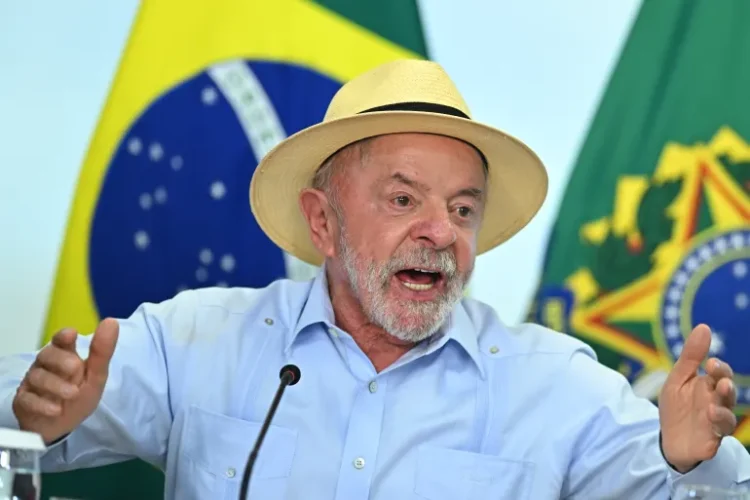
Brazilian President Luiz Inácio Lula da Silva has secured an unprecedented fourth presidential term, defeating far-right challenger Flávio Bolsonaro in a dramatic election victory that has reshaped the country’s political landscape and delivered a major setback to the Bolsonaro movement.
The result marks a remarkable comeback for Lula, who entered the second round of voting behind his rival and defied a political trend that had stood unchallenged since Brazil’s return to democracy in the 1980s. With approximately 51.75% of the vote against Bolsonaro’s 48.25%, Lula emerged victorious after a fiercely contested campaign that exposed deep divisions over Brazil’s economic future, social priorities and political direction.

AD: Capeesh Restaurant
The outcome represents one of the most consequential moments in the country’s recent democratic history, restoring momentum to the left while dealing a significant blow to the conservative movement built around former president Jair Bolsonaro and now carried forward by his son.
Lula’s victory is historic not simply because it secures another term in office, but because of the extraordinary reversal that preceded it. In the first round, held on 4 October, Flávio Bolsonaro finished ahead of the incumbent, winning approximately 47.03% of valid votes compared with Lula’s 45.16%.
The result placed Bolsonaro in a commanding position heading into the run-off and raised serious questions about whether the veteran left-wing leader could overcome public dissatisfaction and secure another mandate.

AD: Oysterian Sea Food Restaurant And Bar
Yet Lula succeeded in turning the contest around, becoming the first candidate in Brazil’s modern democratic era to finish second in the first round and subsequently win the presidency in the second. His victory demonstrates the continuing strength of his political base and the ability of his campaign to mobilise voters during a highly polarised election.
It also illustrates how a narrow initial lead can prove insufficient when rival campaigns succeed in consolidating support and bringing more voters to the polls.
For Lula, the result represents another extraordinary chapter in a political career defined by dramatic reversals, enduring popular support and repeated challenges. A former factory worker and trade union leader who rose from poverty to become one of Brazil’s most influential political figures, he has now secured a fourth presidential term across his non-consecutive periods in office.
A Divided Nation and a High-Stakes Contest
The election pitted two sharply contrasting political visions against one another. Lula campaigned on his record of social welfare, poverty reduction and efforts to address inequality, presenting his administration as a defender of working people and vulnerable communities.His supporters argued that continued investment in social programmes and economic opportunity was essential to maintaining progress in Latin America’s largest economy.
Bolsonaro, meanwhile, sought to capitalise on dissatisfaction with the incumbent and the enduring influence of the conservative movement associated with his father. His campaign appealed to voters concerned about the cost of living, taxation, public security and the direction of national leadership. His first-round success demonstrated that the Bolsonaro political brand retained substantial support despite the controversies surrounding the former president.
The narrow margin in the final result highlights the extent of Brazil’s political divisions. Neither candidate succeeded in securing an overwhelming national mandate, leaving the country facing the challenge of reconciling competing demands over economic policy, public spending, social protection and the role of government.
Lula’s victory will therefore be celebrated by supporters as a defence of progressive politics, but it should not be interpreted as evidence that conservative voters have disappeared or that the country’s political tensions have been resolved.
Bolsonaro’s substantial share of the vote confirms that the right remains a powerful force capable of shaping national debate and challenging the government throughout its next term. Despite the significance of the result, the final hours of voting were marked by controversy after the authorities extended the voting period by two hours following complaints about disruptions affecting access to polling stations.
Problems involving public transport in some cities, alongside adverse weather conditions, were cited as reasons for the delay. The disruption raised concerns about whether all eligible voters had been given a fair opportunity to cast their ballots before polling stations closed.
The decision added tension to an already closely fought contest, with the campaigns seeking to ensure that their supporters were not disadvantaged by circumstances beyond their control. In an election decided by a relatively narrow margin, questions about access to polling stations and the administration of voting are particularly sensitive.
Bolsonaro’s campaign had also raised doubts about the electoral process before the result was announced. Those concerns placed additional scrutiny on the authorities responsible for overseeing the vote and threatened to complicate the political response to the outcome.
However, concerns raised by a campaign do not, by themselves, establish that electoral misconduct occurred or that the result was invalid. Any formal challenge would need to be assessed against verifiable evidence and the applicable electoral rules. Maintaining public confidence in the process will depend on transparent explanations from the authorities and a willingness by political leaders to respect the mechanisms established for resolving disputes.
A Difficult Road Ahead for Lula
Although the victory represents a major personal and political achievement, Lula’s next term is likely to present formidable challenges. His government will have to respond to public concerns over household finances, living costs and economic opportunity while balancing its commitment to social spending against wider fiscal pressures.
The election has also exposed the limits of the president’s political support. With Bolsonaro and allied conservative forces retaining a substantial electoral base and considerable influence in Congress, Lula will need to negotiate carefully to advance his legislative agenda. Winning the presidency does not automatically guarantee the parliamentary backing required to implement major reforms.
The challenge will be to convert an election victory into practical improvements in the lives of ordinary Brazilians. Supporters will expect continued action on poverty, inequality and employment, while critics will scrutinise the government’s management of public finances, its economic priorities and its ability to deliver results.
Lula must also confront the wider problem of political polarisation. His administration will need to govern beyond its core supporters and demonstrate that democratic institutions can function effectively despite intense partisan disagreement. Failure to address the concerns of voters who backed Bolsonaro could leave the country vulnerable to renewed political confrontation.
Brazil’s election carries significance beyond its borders. As Latin America’s largest economy and an influential voice in international affairs, the country plays an important role in discussions about trade, climate change, global development and regional cooperation.
Lula’s re-election is likely to preserve Brazil’s broadly progressive international orientation, including its emphasis on multilateral diplomacy and the country’s independent position in global affairs. The result also provides a setback to right-wing political forces across the region that have sought to build influence through alliances with conservative movements in the United States and elsewhere.
Nevertheless, Brazil’s international standing will depend on more than the outcome of a presidential election. Economic performance, diplomatic relationships and the government’s ability to maintain domestic stability will all shape its influence over the coming years.
Lula’s fourth-term victory is a landmark achievement that overturns expectations formed during the first round and demonstrates the resilience of his political movement. By defeating Flávio Bolsonaro after initially trailing him, the president has secured a remarkable comeback and reinforced his position as one of the defining figures in modern Brazilian politics.
Yet the result also reveals a country divided almost evenly between competing visions of its future. The voting delays and questions raised by Bolsonaro’s campaign underline the importance of transparency, credible electoral institutions and respect for democratic procedures. At the same time, the scale of Bolsonaro’s support shows that Lula will face a determined opposition rather than an electorate united behind his programme.
The immediate political victory belongs to Lula, but the harder task begins now. He must transform the confidence placed in him by millions of voters into effective government, economic progress and renewed public trust.
His success will ultimately be judged not only by the historic nature of his election comeback, but by whether his next term can deliver stability and tangible improvements in the lives of Brazilians.

AD: Heritage And Restaurant Lounge Bar