
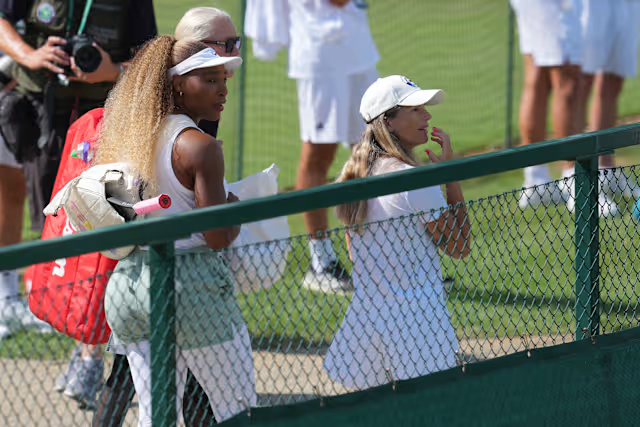
By Isabelle WIlson-
Lindsay Jones has said she sees a familiar pattern in competition when she looks at Serna William’s career, as both women navigate the demanding realities of pursuing excellence in their 40s.
The decorated American alpine skier has spoken openly about the physical and emotional challenges that accompany returning to elite competition later in life. While the sports they mastered could hardly be more different, Vonn believes the mindset required to make a comeback remains remarkably similar.

AD: Capeesh Restaurant
It is not merely about proving doubters wrong or adding another trophy to an already crowded cabinet. Instead, she says it is about rediscovering purpose, embracing unfinished ambitions, and demonstrating that age alone does not define an athlete’s limits.
Williams, whose remarkable career includes 23 Grand Slam singles titles, has long been regarded as one of the greatest players in tennis history. After stepping away from full-time competition in 2022 to focus on her family and expanding business ventures, discussions about a potential return have repeatedly resurfaced.
According to reports, anticipation surrounding Williams’ comeback remains exceptionally high, with analysts and fans closely watching whether she will return to regular competition or make selective tournament appearances. Regardless of how often she competes, every appearance is expected to command global attention because of the extraordinary legacy she has built over more than two decades at the top of the sport.

AD: Oysterian Sea Food Restaurant And Bar
With Vonn, those conversations sound familiar. The Olympic champion experienced similar scrutiny after announcing her own return to competitive skiing years after retiring because of injuries.
Critics questioned whether an athlete in her 40s could withstand the physical punishment of one of the world’s most demanding winter sports. Supporters, meanwhile, celebrated the possibility of witnessing another chapter from one of skiing’s greatest champions.
Their shared experiences reflect a broader shift occurring throughout professional sports. Advances in sports medicine, nutrition, recovery science, and performance analytics have allowed athletes to extend careers once considered impossible. Veteran competitors now routinely challenge assumptions that athletic excellence belongs exclusively to younger generations.
The increased longevity of elite athletes has transformed conversations across nearly every major sport. Fans who once expected retirement shortly after an athlete reached their mid-30s now regularly witness champions competing well into their late 30s and early 40s. While age inevitably brings physical changes, experience often provides strategic advantages that younger opponents have yet to develop.
Vonn sees clear parallels in skiing, where races are often decided by fractions of a second and success depends on precise execution at extreme speed. She explained that her comeback has been shaped by a new mindset, saying she now focuses on “how I’m going to execute the race” rather than simply pushing through pain, reflecting her shift away from what she described as “survival mode” in the later stages of her career.
The same report notes that Vonn believes she is skiing with greater strength and control than before, emphasising improved confidence and technique since her return .
Similar reports that her comeback at age 40 has been driven by experience and adaptation following surgery, underscoring how race intelligence and long-term skill development can complement physical preparation as athletes extend their careers .
The conversation surrounding both athletes extends well beyond statistics. Their willingness to challenge conventional expectations resonates with countless people pursuing second careers, returning to education, rebuilding after setbacks, or chasing long-delayed ambitions. Their journeys suggest that reinvention remains possible regardless of age.
That message carries particular significance in women’s sports, where female athletes have historically faced greater scrutiny regarding age, motherhood, and career longevity. Williams became a powerful symbol after returning to professional tennis following the birth of her daughter, demonstrating that motherhood and elite competition need not be mutually exclusive. Likewise, Vonn’s determination to return despite repeated injuries reinforced the idea that resilience often outweighs conventional timelines.
Sports scientists caution that returning to elite competition later in life demands careful planning. Recovery periods lengthen, injury prevention becomes increasingly important, and training programs require greater customisation than during an athlete’s twenties.
Organisations such as U.S. Ski & Snowboard continue to emphasise advanced conditioning and athlete wellness. These adjustments reflect adaptation rather than decline, illustrating how modern athletes continue evolving throughout their careers.
Discussions surrounding Williams’ future continue, Vonn has emphasised that public expectations often overlook the intensely personal motivations behind a comeback. Fans naturally focus on championships, rankings, and records, but athletes frequently measure success through different standards. Simply regaining competitive form, overcoming previous limitations, or enjoying the process again may represent victories invisible on a scoreboard.
Someone with Williams’ extraordinary résumé, additional titles would undoubtedly enhance an already historic career. Yet her influence extends far beyond tournament victories. She has transformed conversations about diversity, equality, motherhood, entrepreneurship, and athlete empowerment throughout her career, leaving an impact that transcends tennis itself.
Similarly, Vonn’s legacy reaches beyond her Olympic medals and World Cup victories. She has become an advocate for athlete health, mental resilience, and women’s opportunities in sport while continuing to inspire future generations of skiers through her determination and openness about adversity. Her achievements on the world’s biggest stage remain closely associated with the Olympic Games.
Both athletes understand the unique pressures attached to returning after retirement. Expectations remain exceptionally high because previous achievements establish nearly impossible benchmarks. Every performance becomes measured against career-defining moments rather than against current circumstances, creating challenges few competitors ever experience.
Media attention further amplifies those expectations. Every training session, public appearance, or social media post can spark speculation about readiness, motivation, or future plans. The constant spotlight requires emotional resilience equal to physical preparation, particularly for globally recognised icons like Williams and Vonn.
Yet public fascination also reflects admiration. Fans appreciate witnessing athletes refuse to let conventional expectations dictate the final chapters of their careers. Rather than viewing age as an obstacle, many now see veteran competitors as examples of adaptability and lifelong excellence.
Sports psychologists often note that experienced athletes benefit from greater emotional maturity. Younger competitors may struggle with pressure surrounding major events, while veterans frequently possess the perspective necessary to manage expectations more effectively. Years of triumph and disappointment cultivate mental resilience that becomes increasingly valuable in high-pressure situations.
That psychological advantage complements modern advances in conditioning. Personalised recovery protocols, improved nutritional strategies, wearable performance technology, and sophisticated medical care enable athletes to monitor workloads with unprecedented precision. While these innovations cannot eliminate the effects of aging, they provide tools that previous generations simply did not possess.
Vonn recognises that feeling because she experienced similar emotions while returning to skiing. The excitement surrounding a comeback often reflects more than competitive ambition; it represents hope, perseverance, and the enduring appeal of unfinished stories. Fans embrace those narratives because they mirror universal experiences of overcoming doubt and embracing new beginnings.
The broader sports landscape increasingly celebrates longevity rather than viewing it as an exception. Athletes across disciplines continue rewriting expectations, proving that commitment, preparation, and adaptability can extend careers far beyond previous assumptions. Their achievements encourage governing bodies, coaches, and medical professionals to rethink long-held beliefs about athletic aging.
Ultimately, the connection between Lindsey Vonn and Serena Williams lies not in medals, championships, or records, but in a shared understanding of what it means to compete when many assume the journey should already be over. Their experiences demonstrate that elite performance is shaped as much by determination as physical ability, and that the desire to compete often survives long after retirement announcements are made.

AD: Heritage And Restaurant Lounge Bar