
By Ben Kerrigan-
Israeli authorities have begun demolishing structures within the United Nations Relief and Works Agency (UNRWA)compound in occupied East Jerusalem, sparking a new wave of international controversy, legal debate and diplomatic condemnation.
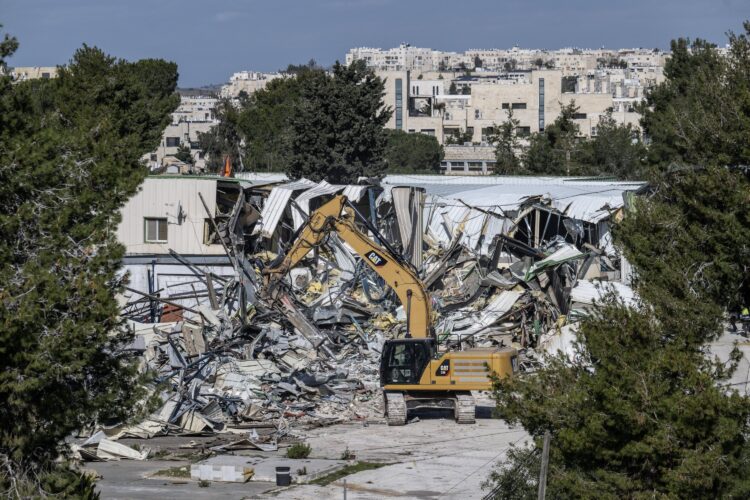
On Tuesday morning, bulldozers and Israeli security forces entered the former UNRWA site in the Sheikh Jarrah neighbourhood, razing buildings that for decades had served as a hub for aid operations and administrative work for Palestinian refugees.

AD: Capeesh Restaurant
The move defended by Israeli officials as a lawful execution of domestic legislation has been decried by the United Nations and several governments as a serious violation of international law and the inviolability of UN premises.
UNRWA, which provides essential services such as education and healthcare to millions of Palestinian refugees in East Jerusalem, the West Bank and Gaza, has labelled the demolition “an unprecedented attack” and called for it to be halted immediately.
The confrontation underscores mounting tensions in the region over contested territory, the legal status of international organisations’ assets, and broader geopolitical disputes that have simmered since the October 2023 conflict rekindled violence and mistrust.

AD: Oysterian Sea Food Restaurant And Bar
Shortly after dawn on Tuesday, Israeli security forces accompanied by heavy machinery moved into the UNRWA compound in the Sheikh Jarrah district of East Jerusalem, a densely populated area long at the centre of disputes over property and sovereignty.
Bulldozers began dismantling buildings inside the site, which had long served as UNRWA’s principal operational space in Jerusalem.
According to UNRWA spokesperson Jonathan Fowler, the agency’s security personnel were forced to leave before the demolition began, and bulldozers reportedly escorted by armed forces tore down administrative and storage structures once used by the agency.
UNRWA has described the action as “an unprecedented attack” that undermines the privileges and immunities afforded to United Nations entities under international law.
The Israeli Foreign Ministry, however, insists that the demolition is part of the ongoing enforcement of a 2025 law banning UNRWA’s operations within Israeli territory legislation passed by the Knesset last year that criminalised official dealings with the agency and effectively barred it from maintaining a presence in Jerusalem or other parts of Israel.
A ministry spokesman argued that Israel owns the land and that the compound “does not enjoy any immunity”, asserting that the demolition is consistent with domestic and international legal frameworks.
UNRWA was compelled to vacate the site in early 2025 after the law came into force and visas for international staff were revoked by Israeli authorities. Since that time, UN personnel have been unable to resume activities at the compound, although the agency continues to provide services to Palestinian refugees in other areas, including the West Bank and Gaza.
International reaction has been swift. The United Nations Office at Geneva released a statement last December condemning an earlier unauthorised Israeli entry into the UNRWA compound, noting that Israel is obligated to respect the Convention on the Privileges and Immunities of the United Nations, which protects UN premises from interference.
That statement called such entries a dangerous precedent, with Secretary‑General António Guterres emphasising that UN facilities are “inviolable and immune from any form of interference”.
While the latest demolition does not involve active UN staff or operations, critics argue that the unconditional destruction of buildings once used by a United Nations agency escalates concerns about the erosion of protections for international organisations in conflict zones.
Several diplomatic missions in Europe and the Middle East have expressed alarm, warning that the action could weaken the legal safeguards that protect humanitarian and relief agencies in volatile settings.
Israeli authorities have framed the demolition as an implementation of domestic policy a continuation of efforts to enforce the Knesset’s ban on UNRWA dating back to 2024 and 2025. They have repeated allegations that UNRWA was compromised by militants and used for activities beyond humanitarian aid.
These claims have been widely rejected by UNRWA and many international observers, who argue there has been insufficient evidence linking the agency’s broader operations to militant activity.
National Security Minister Itamar Ben‑Gvir celebrated the demolition as a symbolic victory, describing it as a historic day that will allow the state greater control over strategic land in Jerusalem. His comments reflect the broader political context in Israel, where far‑right lawmakers have pushed for tighter restrictions on Palestinian institutions and increased sovereignty over contested areas.
The demolition has irritated regional and international actors alike. Several Middle Eastern governments have criticised the move, with the Arab League and other diplomatic bodies calling it part of a systematic effort to eliminate UNRWA’s presence and undermine services for Palestinian refugees.
They argue that dismantling UN facilities jeopardises essential support systems established to assist millions affected by decades of conflict and displacement.
Humanitarian groups warn that shrinking physical infrastructure for agencies like UNRWA will complicate efforts to deliver aid in a region already struggling with poverty, displacement and recurring violence.
UNRWA operates hospitals, schools, and relief services across Palestinian communities, and losing even a portion of its operational footprint increases pressure on an already precarious system of support. Critics fear that demolition of its property could signal further restrictions on aid delivery, particularly as Gaza continues to recover from recent hostilities.
Josephine Kuo, a Middle East analyst focusing on humanitarian law, noted that the demolition “not only impacts services but also erodes trust” in the neutrality and safety of international agencies working in high‑conflict regions.
She added that continued demolition of structures once designated for relief efforts could discourage other organisations from maintaining a presence in conflict‑affected areas, further starving vulnerable populations of essential support.
While Israeli officials maintain their position, UNRWA and allied governments argue that the legal basis for the demolition is flawed. They contend that even if an organisation ceases active operations, the Convention on the Privileges and Immunities of the United Nations still protects its physical premises from destruction or seizure, a principle affirmed by the International Court of Justice and repeated in multiple UN resolutions.
The reset of diplomatic relations around this action remains uncertain. Some Western governments have signalled concern and urged restraint, warning that attacks on UN infrastructure could have broader repercussions for international cooperation on humanitarian crises. Others have stressed that any loss of critical aid capacity in the region would deepen suffering among civilians dependent on ongoing services.
Adding to the complexity, local advocates in East Jerusalem warn that demolition can exacerbate already fraught tensions between communities. The area has been a flashpoint for disputes over residence rights, property claims and the political status of East Jerusalem, matters that carry emotional and symbolic weight for both Palestinians and Israelis.
With tensions already elevated over broader Middle East conflicts, events at the UNRWA compound may serve as a barometer for wider geopolitical shifts and negotiations concerning humanitarian operations, state sovereignty and international legal norms.

AD: Heritage And Restaurant Lounge Bar