
By Bobby Chacko-
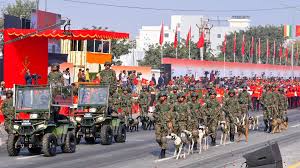
In a significant milestone for India’s military traditions, the 78th Indian Army Day Parade is being held today on the streets of Jaipur, marking the first time the country’s flagship Army Day event took place along a public urban route rather than inside a military cantonment.
The shift underscores an effort to bring the nation’s armed forces closer to the public while celebrating the Army’s discipline, modern capabilities, and heritage with thousands of spectators lining Mahal Road in the Jagatpura area of the Rajasthan capital.

AD: Capeesh Restaurant
Army Day commemorates the historic moment in 1949 when Lieutenant General Kodandera M. Cariappa became the first Indian Commander-in-Chief of the Indian Army, taking command from his British predecessor.
Traditionally observed with military parades and gallantry awards, the 2026 celebrations combined this heritage with India’s evolving defence technology and broad public engagement.
Senior defence officials, including Defence Minister Rajnath Singh and Chief of Army Staff General Upendra Dwivedi, were present to lead the celebrations. Parade highlights ranged from ceremonial marching contingents and military bands to demonstrations of advanced weaponry, tactical vehicles, and India’s indigenous defence systems.

AD: Oysterian Sea Food Restaurant And Bar
The event began with meticulously timed march-pasts featuring infantry units, mounted cavalry, and contingents from across India’s vast geographical and regimental spectrum.
The newly raised Bhairav Battalion, formed to address contemporary operational requirements and positioned between elite and conventional infantry units, made its first public appearance, receiving robust applause from spectators.
The parade also showcased India’s evolving Drone Shakti capabilities and unmanned systems alongside traditional heavy armour.
T-90 Bhishma main battle tanks, Arjun tanks, BMP infantry fighting vehicles, advanced artillery systems such as the Dhanush gun and M777 howitzers, and the supersonic BrahMos missile system made impressive passes, illustrating a blend of legacy strength and future-ready technology.
To coincide with the display of hardware, the event incorporated aerial elements including helicopter flypasts and tactical demonstrations that highlighted the Indian Army’s integration with joint defence services. Mounted troops of the 61st Cavalry added a historical dimension to the parade, connecting India’s martial traditions with its modern force structure.
The broader programme also included cultural and ceremonial elements, such as a warrior dance by the Madras Regiment, emphasising the regimental pride and diversity of India’s forces.
An all-girls National Cadet Corps (NCC) contingent marched past alongside regional scout units including the Garhwal, Sikkim, and Arunachal Scouts reflecting the inclusive spirit of the nation’s defence ethos.
Beyond the static and moving displays, the celebrations integrated community engagement with the Know Your Army exhibition and related events in the city, allowing citizens particularly youth to interact with soldiers, explore equipment up close, and gain insight into army life and operations.
The Army Day festivities also honoured the courage and sacrifices of India’s soldiers. Before the parade’s march-past, gallantry awards were presented by the Chief of Army Staff, including Sena Medals (posthumously) to brave servicemen who displayed exemplary courage in recent operations such as Operation Sindoor. These awards highlighted the deep personal sacrifices behind India’s defence readiness.
Security for the event was meticulously planned and implemented, with thousands of police and army personnel deployed across Jaipur to manage the crowds expected to number in the hundreds of thousands.
The Jaipur Police issued traffic advisories and road diversions for key arteries like Mahal Road and adjacent routes to facilitate the smooth conduct of the parade while minimizing disruption for local commuters.
Residents and visitors were urged to use alternate routes and cooperate with law enforcement, with considerable preparation going into staging areas, parking provisions, and emergency access routes to ensure the event’s safety and accessibility.
Public response was overwhelmingly positive, with many spectators praising the parade’s scale, the clarity of organisation, and the opportunity to witness India’s defence capabilities firsthand. For many families and youth attending their first Army Day parade, the shift to a public city venue made the spectacle more accessible and meaningful than ever before.
This approach resonates with ongoing efforts to strengthen public understanding of the military’s role in national security and disaster response, as well as inspiring future recruitment.
Strategic commentators also noted that showcasing advanced systems like BrahMos and unmanned vehicles plays a dual role it reinforces deterrence while also signalling India’s growing capacity in indigenous defence manufacturing and technological innovation.
Several dignitaries and political leaders also called for the continuation of such public engagements in future Army Day celebrations. Rajasthan Deputy Chief Minister Diya Kumari expressed pride that Jaipur hosted the historic event, saying the public parade brought the armed forces “among the people” and strengthened the emotional bond between citizens and soldiers.
The parade’s success is likely to influence future decisions about the venue and format of Army Day celebrations, potentially encouraging other cities to host similar open-access military showcases that blend ceremonial tradition with public outreach.
The 78th Army Day Parade served as both a tribute to India’s military heritage and a vivid demonstration of contemporary strength. By taking the march beyond cantonment walls and into the heart of a bustling city, the Indian Army affirmed its enduring commitment to the nation it serves.

AD: Heritage And Restaurant Lounge Bar