
By Aaron Miller-
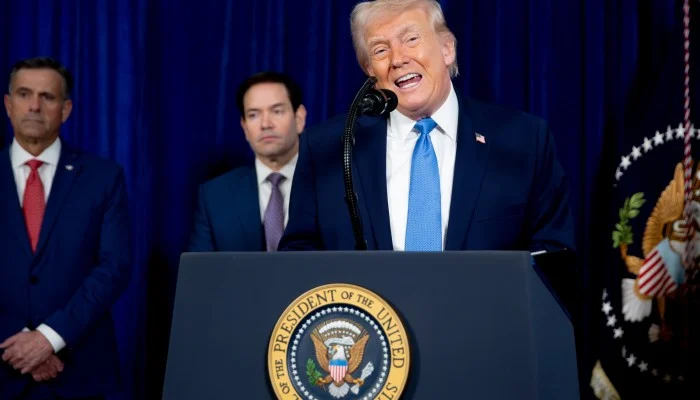
A tense political drama unfolded on the world stage this week as United States President Donald Trump issued a powerful warning to Venezuela’s incoming interim president Rodríguez just hours before her scheduled swearing in.
The message marks a dramatic moment at the intersection of foreign policy, national sovereignty, and regional stability, capturing global attention and deepening concern over the unfolding geopolitical crisis. Donald Trump’s warning to Delcy Rodríguez comes after an intense escalation involving the United States and Venezuela.

AD: Capeesh Restaurant
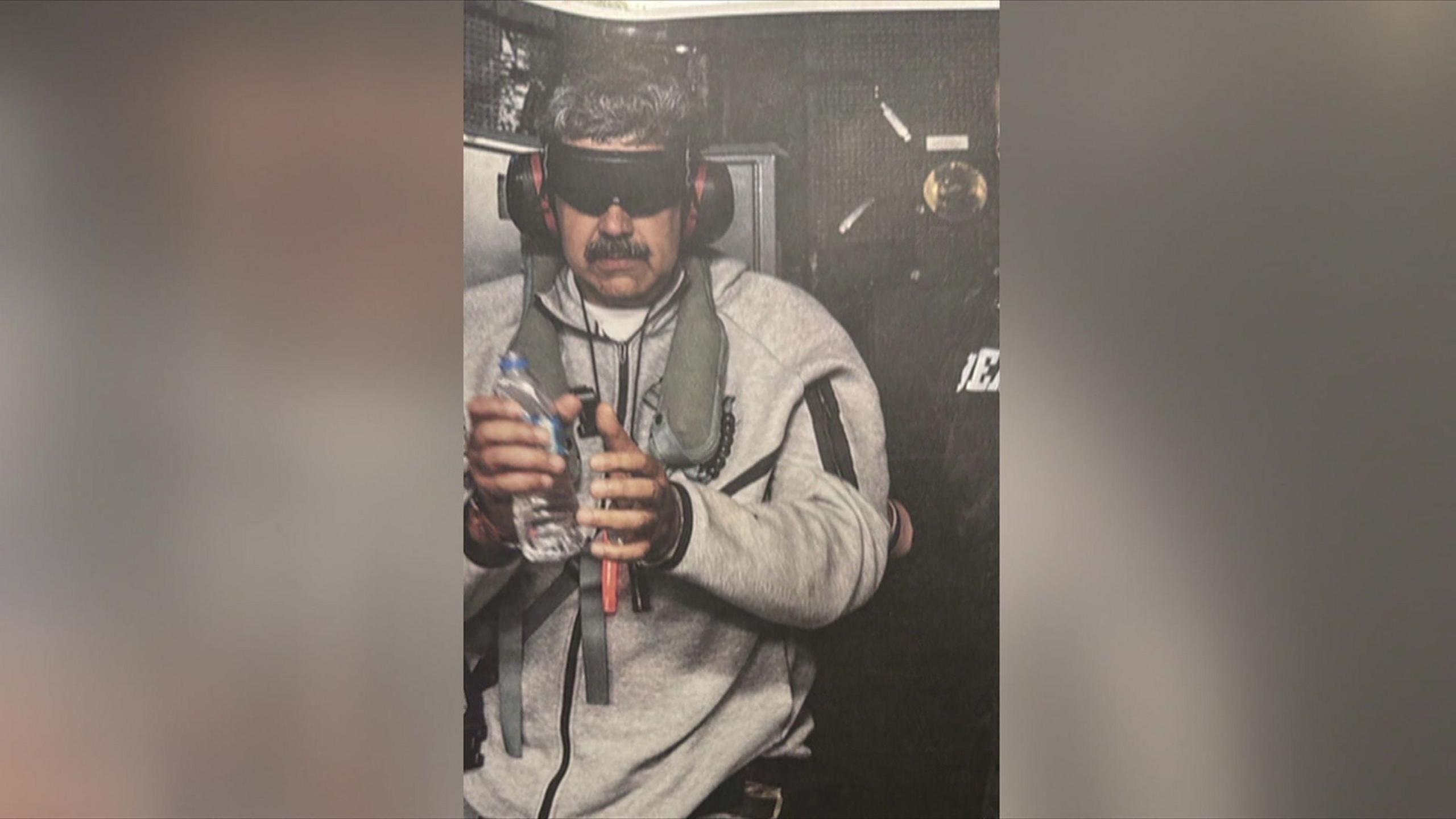
Former Venezuelan President Nicolás Maduro and his wife were captured and brought to the U.S over the weekend in relation to drug allegations. They will appear in federal court at noon on Monday, according to a spokesperson for the U.S. District Court in the Southern District of New York.
They are being held at the Metropolitan Detention Center in Brooklyn and will face federal charges related to drug trafficking and working with gangs designated as terrorist organizations, which Maduro denies. The U.S. Army’s Delta Force, an elite special forces unit, carried out the operation to capture Maduro, officials told CBS News.
President Trump told a Saturday press conference that the U.S. would “run” Venezuela temporarily during the transition, and “get the oil flowing.” He added on Sunday that the U.S. was “in charge” of Venezuela. Secretary of State Marco Rubio signalled on Sunday the U.S. doesn’t plan to directly govern Venezuela, but will continue to enforce an “oil quarantine” as part of a plan to influence policy.

AD: Oysterian Sea Food Restaurant And Bar
Following the capture of Maduro, Trump publicly stated that the United States would “run Venezuela” until there is a “proper transition.” That comment reinforces the idea that Washington sees its role as something more than passive observer during Venezuela’s immediate leadership change.
Publicly warning another country’s leader about consequences if conditions were not met echoes the president’s modus operandis.
However, direct military intervention against a sitting foreign head of state on foreign soil is not something the U.S. has conducted in recent memory and is widely regarded as unprecedented in this context.
Analysts have described the operation and warning as unprecedented in the modern era of U.S relations with Latin America. They note that capturing a sitting leader on his own soil and threatening harsher consequences for a successor is far beyond the typical practice of diplomatic pressure or economic sanctions.
Some critics have particularly condemned the operation as a violation of international law and intrusion of national sovereignty. There are concerns it could set a dangerous precedent for other countries with economic and political might to follow.
The warning was delivered in a high-profile interview ahead of Rodríguez assuming the presidency, following a U.S. military operation that removed Nicolás Maduro from power and brought him to New York to face charges. In that interview Trump stated “ she is going to pay a very big price, probably bigger than Maduro if she doesn’t do what’s right”
The forceful language heightened tensions between Washington and Caracas and reshaped expectations around how the relationship between the two nations might evolve. Venezuelan leaders described the threat as an attempt at interference while critics of Trump argued the message risked escalating conflict across the region.
Supporters of his stance argued that pressure was necessary to push Venezuela toward reforms they see as long overdue. Rodríguez long a high-ranking figure in Venezuelan politics and previously vice president under Maduro, has been thrust into the spotlight amid the crackdown and diplomatic turbulence.
The quote from Trump quickly circulated around the world, with analysts arguing that the phrasing signalled a willingness on Washington’s part to intensify economic or diplomatic pressure unless Rodríguez’s leadership aligned with U.S. objectives. Though Trump did not outline specific measures tied to the warning, the phrasing injected uncertainty about what would unfold next.
Tensions escalate as swearing in approaches
The warning came at a sensitive moment. Rodríguez prepares to take on the presidency under extraordinary conditions as Venezuela reels from political upheaval. U.S. forces carried out a widely reported operation that led to Maduro’s capture with the stated goal of bringing him to justice on charges including narcotrafficking.
Rodríguez’s role in the transition has drawn mixed reactions throughout Venezuela and internationally. Some political figures within the country framed the transfer of leadership as illegitimate and called for Maduro’s release.
Others have publicly urged cooperation with the United States, even while asserting national dignity and sovereignty. On social media and public platforms, observers within Venezuela expressed both fear and hope, highlighting deep divisions across society.
Public figures and artists shared emotional reflections, including calls for peace and unity, and phrases such as “Venezuela libre” and prayers for the country’s future.
At the same time, leaders across Europe and Latin America emphasised the need for dialogue and peaceful engagement.
International bodies urged restraint from all parties, encouraging governments to focus on stability and humanitarian assistance rather than confrontational rhetoric. United Nations statements highlighted the value of diplomacy in resolving disputes and helping nations in crisis.
Within the United States, reactions were equally polarised. Supporters of Trump argued that his warning reflected decisive leadership that would safeguard American interests, particularly in a nation that holds some of the world’s largest oil reserves.
Critics questioned the wisdom of issuing such a stark comment at a moment when diplomatic channels could prove pivotal in resolving tensions.
Rodríguez herself has addressed Washington’s posture with a blend of caution and defiance. In televised addresses and official posts she reiterated Venezuela’s right to sovereignty while also suggesting a willingness to seek dialogue under certain conditions.
The dual approach underscored the delicate balancing act she faces as she steps into leadership under extreme international pressure.
International consequences draw wide scrutiny
The impact of Trump’s warning extends beyond bilateral relations. Regional leaders across Latin America watched closely as events in Venezuela reverberated through political forums and public sentiment.
Some governments urged an immediate de-escalation and respect for non-interference, while others supported stronger measures aimed at promoting democratic reforms inside Venezuela.
Economic considerations also intensified the spotlight on the warning. Venezuela’s oil industry, long crippled by years of mismanagement and sanctions, has remained a strategic interest for policymakers around the globe.
Prospects of renewed foreign investment or shift in governance raised questions about the future of energy markets and trade flows. While Trump did not detail economic policy tied to his warning, the underlying context of resource access has factored into broader discussion.
Human rights groups also weighed in, emphasising that ordinary Venezuelans should not be left to suffer amid power struggles. These organisations called for attention toward humanitarian access, protection of civilians, and respect for fundamental freedoms, urging all actors to consider the welfare of those impacted most directly by political tensions.
The United States government characterised its stance as conditional, promising cooperation if Venezuelan leadership acted in accordance with certain principles such as greater openness to democratic processes.
Yet the heated nature of Trump’s comment highlighted deep uncertainty around how far diplomatic or economic engagement could go before setbacks occurred. In spite of international discussions, numerous Venezuelans in the country expressed feelings of confusion.
With individuals who have faced years of financial struggles, scarcity, and unpredictability, the swift succession of events ignited concerns regarding what lies ahead.
Images and discussions across social platforms showed community concern over safety, governance, and basic needs as political drama played out on an international stage.

Rodríguez’s inauguration itself has become a focal point of anticipation and protest. Ceremonial preparations brought both supporters and critics into public spaces, each seeking to project confidence in their vision of Venezuela’s future. The mood among citizens ranged from hopeful to wary, reflecting decades of political division and social strain.
Observers emphasised that Trump’s warning, while stark, is just one element in a much larger story. How it influences Venezuela internal politics and international relations will unfold over days, weeks, and potentially years.
Diplomatic channels, economic pressures, humanitarian efforts, and domestic leadership decisions will contribute toward shaping outcomes after such a dramatic opening Rodríguez rises to the presidency amid a haze of controversy and significant risks.
Trump’s statement has turned into a significant point in the story, summarising hopes and fears about Venezuela’s trajectory and the influence of foreign powers in domestic affairs. The whole saga highlights the delicate state of peace and the intricate equilibrium among sovereignty, influence, and worldwide collaboration.

AD: Heritage And Restaurant Lounge Bar