
By Ben Kerrigan-
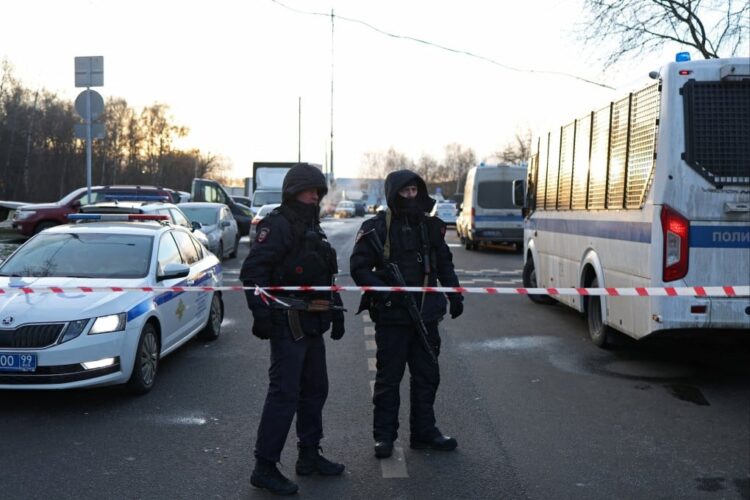
Two Russian police officers were killed early Wednesday in a powerful explosion in southern Moscow that also claimed the life of another person, Russian authorities said. The blast occurred as the officers approached a suspicious individual in a neighbourhood already under heightened security scrutiny following the recent assassination of a senior military official.
Investigators have launched multiple criminal inquiries into the incident amid a backdrop of intensified violence in the Russian capital.

AD: Capeesh Restaurant
Emergency services cordoned off Yeletskaya Street in the Orekhovo-Borisovo Yuzhnoye district after the explosion, which occurred shortly before 1:30 a.m. Russian state investigators said two traffic police officers noticed a man acting suspiciously near their patrol car and began to detain him when an explosive device detonated.
Both officers and the nearby individual were killed. Authorities have not definitively identified the third victim, and details about possible motives remain under investigation.

AD: Oysterian Sea Food Restaurant And Bar
Federal forensic teams have been deployed to analyse debris, medical evidence and surveillance footage as part of efforts to determine the circumstances surrounding the explosion.
The outbreak of violence has reverberated widely, given its proximity to another recent high-profile attack in the same area of Moscow. On 22 December, Lieutenant General Fanil Sarvarov, head of the Operational Training Directorate of the Russian General Staff, was killed when a bomb detonated beneath his car.
That car bombing, near Yasenevaya Street in southern Moscow, was also under criminal investigation, with authorities probing possible involvement of foreign intelligence services.
Rising Violence and Security Implications
Wednesday’s fatal blast comes at a tense moment for Russia’s capital, where a series of explosive attacks in recent months has raised serious concerns among security analysts and local authorities.
Observers say the recent incidents mark a disturbing trend in which explosive devices are being used not only against high-ranking military figures but also against local law enforcement. The string of attacks has placed additional pressure on national security agencies to adapt their tactics and enhance protective measures for frontline personnel.
Investigators have yet to release detailed findings on whether the incidents are connected by common perpetrators or broader coordinated efforts.
In the wake of these events, Russian leaders have reiterated directives to strengthen internal security and crack down on illegal weapons and explosive networks. Heightened patrols and checkpoints have been reported across key districts of the city, part of an effort to reassure the public and deter further violence.
Some analysts, however, warn that such measures may also strain community trust, especially if residents feel regular patrols and arbitrary stops become routine.
Security officials have also pointed to the broader context of ongoing tensions between Russia and Ukraine, though no definitive link between that conflict and the latest explosion has been confirmed.
Statements from Moscow have previously attributed similar attacks to hostile foreign intelligence activity, but these claims have not been independently corroborated by international observers.
The area where the blast occurred a mixed residential and commercial district in southern Moscow is now the focus of intense investigative activity. Law enforcement agencies continue to gather evidence and interview potential witnesses.
Local residents reported hearing a loud explosion that shook buildings and shattered windows in the early hours of the morning, underscoring the power of the device used in the attack.
The deaths of the two officers follow other troubling incidents in Russia in recent years involving law enforcement and explosive violence.
Analysts note that about a year earlier, Lieutenant General Igor Kirillov, a senior military commander, was killed in a separate explosion in Moscow widely reported in international news, though official claims about responsibility remain unverified.
The Russian Investigative Committee has appealed to the public for any information that could assist the ongoing probe. Authorities have emphasised the importance of local cooperation with law enforcement to prevent further loss of life. Given the evolving nature of the situation, officials have pledged additional updates as investigations proceed.
Impact on Public Safety and Law Enforcement
Public reaction in Moscow has been mixed, with many residents expressing shock that officers carrying out routine duties could be killed in such circumstances. Social media posts from Moscow neighbourhoods described the explosion as loud enough to be heard across several blocks, and some schools in the vicinity reported temporarily locking down as a precaution.
Security experts say the incident highlights the risks police officers face when responding to suspicious activity, particularly in environments where verification of threats may be difficult without adequate protective equipment.
In recent years, debates about police training and the availability of specialised gear have intensified, with advocates pressing for expanded resources to protect officers on the front lines.
Members of the public and civic organisations have called for transparency in the investigation and for clarity about whether broader security reforms are planned in response to the violence. Some commentators have questioned whether the pattern of explosive attacks reflects systemic vulnerabilities that require a recalibration of law enforcement protocols.
The deaths of two police officers in Moscow have also drawn international attention. Governments and foreign policy analysts closely watching security trends in Russia have underscored the complex environment in which nation-state tensions, insurgent tactics and urban policing intersect.
The interplay between large-scale geopolitical conflict and localized security incidents has become a focal point of analysis for Western think tanks and diplomatic missions, though comprehensive statements from foreign ministries remain limited.
The relatives of the cops and the third victim are waiting for official condolences from state officials and identity confirmation while Moscow authorities continue their investigations. Whether charges are brought against suspects identified by forensic evidence or posthumously will depend on Russian judicial procedures.
With increased police presence and public alerts regarding unexploded explosives and suspicious activity, the city is still on high alert.
Quite clearly, the impacts of larger conflicts have spread well beyond battlefield, into the streets of major cities like Moscow.
More information regarding the blast’s causes and the victims’ names is expected to surface in the next few days, which will assist determine Russia’s strategy for internal security during a time of unpredictability and violence.

AD: Heritage And Restaurant Lounge Bar