

By Lucy Caulkette-
In an emotional and profound moment at a memorial for her late husband, Charlie Kirk’s wife delivered a powerful message that many have called for. Speaking to a packed stadium, a tearful Erika Kirk addressed the assassin directly. Her words were initially met with silence before the crowd erupted into applause. She courageously stated, “I forgive him.” This moving address occurred during a service that was described as feeling like a “Republican state funeral,” drawing a vast crowd to mourn the prominent political figure. It was a raw and unfiltered display of human emotion in a very public forum.
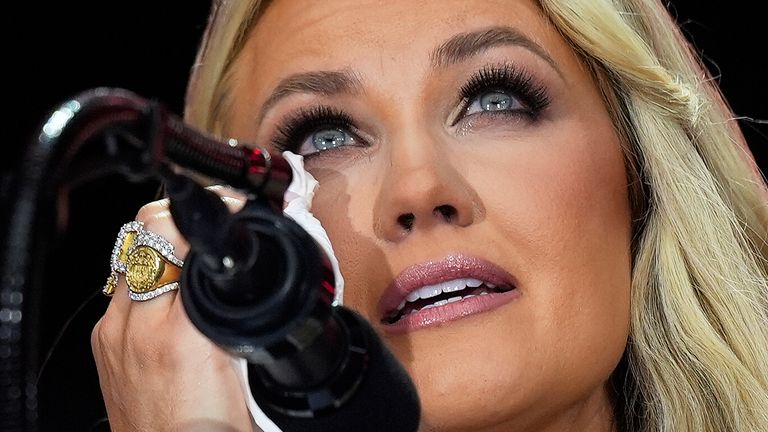
Erika Kirk wipes tears from her eyes during her speech. Pic: AP

President Donald Trump embraces Erika Kirk. Pic: AP
Her speech was not only a personal act of grace but also a broader appeal for a different way forward. She added that “The answer to hate is not hate,” a simple but deeply impactful statement that captured the attention of all in attendance. Erika Kirk’s message stands as a powerful counterpoint to the bitterness and division often seen in modern political discourse. Her act of forgiveness in the face of such a tragic loss has become a topic of national discussion, highlighting a different path for moving beyond hate.

AD: Capeesh Restaurant
The Impact of Charlie Kirk’s Wife’s Message
The resonance of Charlie Kirk’s wife’s message is undeniable. Her words have been shared widely across social media and news platforms, inspiring a conversation about empathy and reconciliation. The act of forgiveness, especially in a political context, is a rare and powerful gesture. By choosing forgiveness over anger, Erika Kirk has set a profound example for a nation grappling with its own deep political rifts. It is a bold statement about finding a way to heal. For more details on the event, you can read the original article on Sky News. Outbound Link to Original Article
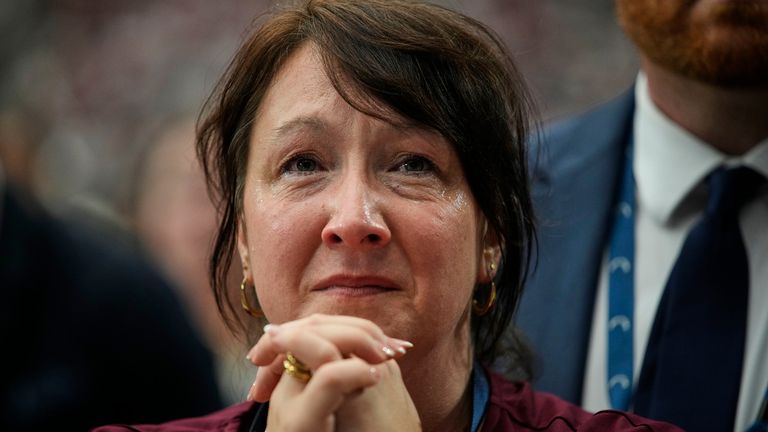
A woman is overcome with emotion while watching a Charlie Kirk tribute video. Pic: AP
The raw emotion in her speech serves as a reminder that personal tragedies can become moments of collective reflection. This message provides a striking contrast to the frequent political hostility that pervades public life. Her willingness to express such a difficult sentiment openly has offered a moment of grace and a potential turning point for a nation divided.

AD: Heritage And Restaurant Lounge Bar


