
By Tony O’Reilly-
Britain has every reason to stand with Ukraine, but Russia’s latest reaction should force Westminster to review its position in terms of weighing up the benefits and risks of continuing to show certain levels of support. How far British support can go, before helping Ukraine defend itself begins to expose Britain to unacceptable risks of direct confrontation with Moscow, is a valid question the British government must continue to consider.
Russia’s decision to withdraw Ambassador Andrey Kelin from London, coupled with its recent warning that Britain will face “consequences” over its alleged role in Ukrainian attacks using British-made drones, is a clear indication that Moscow increasingly regards Britain as one of the principal Western actors in the war.

AD: Capeesh Restaurant
The Kremlin has not formally broken diplomatic relations, but it has deliberately reduced the political space between the two countries at precisely the moment when Britain’s military involvement is becoming deeper and more consequential.
Britain should not respond to this pressure by abandoning Ukraine. Russia’s invasion remains the fundamental cause of the war, and Kyiv has a legitimate right to defend its territory and population. Nor should Moscow’s threats be allowed to dictate British foreign policy.
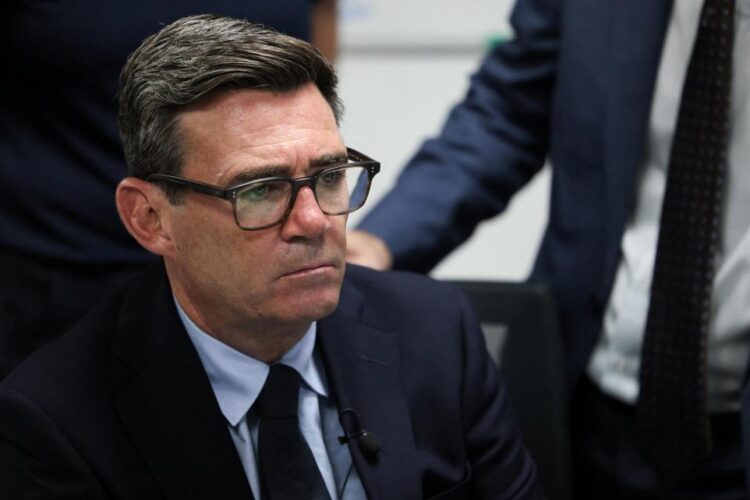
Prime Minister Andy Burnham(pictured) has made clear that Britain intends to remain firmly behind Ukraine, declaring that the country will continue to receive British support despite Russian warnings. Britain has already committed more than £25 billion in military and civilian assistance since Russia’s full-scale invasion, demonstrating the scale of its commitment.

AD: Oysterian Sea Food Restaurant And Bar
But supporting Ukraine and escalating Britain’s own confrontation with Russia are not necessarily the same thing. The latest dispute over British-made drones illustrates the problem. Russia has accused Britain of becoming an “accomplice and co-perpetrator” in attacks on targets inside Russian territory and has warned that the deeper British involvement becomes, the greater the price Britain will face.
The Ministry of Defence has not confirmed the specific allegations concerning the drones, and Moscow’s claims should therefore be treated with caution. Yet the political significance of the warning does not depend entirely on whether every Russian allegation is accurate. What matters is how the Kremlin perceives Britain’s role.
That perception is becoming harder to ignore. Britain is not merely supplying basic defensive equipment. London is now supporting efforts to expand Ukraine’s domestic production of long-range missiles, including by authorising the release of classified information concerning British components used in the Storm Shadow/SCALP missile system.
The stated purpose is to help Ukraine strengthen its own defence-industrial capacity, but such assistance inevitably carries a different strategic significance from humanitarian aid or purely defensive equipment. Long-range weapons can strike targets deep inside Russian territory, potentially widening the geographical scope of the conflict. This is precisely where Britain needs a more controlled policy.
The central danger is not that Russia will necessarily launch an immediate military attack on Britain. There is no evidence that such a conflict is inevitable. The greater danger is gradual escalation: one side takes a step, the other responds, and what initially appears to be a series of limited measures becomes a confrontation neither side intended to create.
Britain supplies increasingly sophisticated weapons; Ukraine uses them against Russian targets; Moscow responds with threats or other forms of retaliation; London then feels compelled to demonstrate that it will not be intimidated. The cycle can become self-reinforcing.
That risk is particularly serious because Britain and Russia are nuclear powers. The United Kingdom is also a major NATO member, meaning that any serious confrontation between British and Russian forces could have consequences far beyond the two countries. Britain therefore has a responsibility to ensure that its support for Ukraine strengthens European security rather than inadvertently creating a new and more dangerous front between NATO and Russia.
The withdrawal of Russia’s ambassador makes this argument more urgent. Diplomacy is often dismissed when relations are hostile, but it is precisely during periods of hostility that diplomatic channels become most valuable. The Russian embassy remains operational under a chargé d’affaires, and Moscow has said that it is not formally downgrading diplomatic relations.
Britain should therefore resist any temptation to allow the remaining channels of communication to wither. If a military incident involving British and Russian forces occurs, or if the conflict suddenly moves towards negotiations, London will need direct and credible means of communication with Moscow.
A controlled policy would therefore not mean reducing all assistance to Ukraine. It would mean establishing clearer strategic limits. Britain should prioritise assistance that directly strengthens Ukraine’s ability to defend its population, territory and critical infrastructure while carefully assessing measures that could substantially increase the risk of direct British-Russian confrontation.
Every new weapons commitment should be judged not only by what it can achieve on the battlefield but also by the likely Russian response, the consequences for British security and whether it contributes to a credible path towards ending the war. Britain must also avoid allowing military assistance to become an open-ended commitment without a clearly defined political objective. Supporting Ukraine “for as long as it takes” is a powerful expression of solidarity, but it cannot substitute for a strategy.
What Britain want the war to produce and what conditions would make negotiations possible without permanently locking Europe into confrontation with Moscow are questions require answers if British policy is to be sustainable. There is also a financial and military dimension. Britain must ensure that assistance to Ukraine does not undermine its own ability to defend itself.
The UK faces a range of security challenges, from NATO commitments and maritime security to cyber threats, air defence and the protection of critical infrastructure. Defence resources are finite. A responsible government must therefore balance the urgent needs of Ukraine with the long-term requirements of British national security.
The strongest British policy may consequently be neither retreat nor escalation, but controlled support. Britain can continue to stand firmly with Ukraine while imposing greater discipline on the scale, type and strategic purpose of its involvement. It can provide weapons, training and financial assistance while preserving diplomatic channels with Russia.
It can strengthen Ukraine’s bargaining position without assuming that every escalation is automatically in Britain’s interest. And it can coordinate its most consequential decisions with European and NATO allies rather than allowing the UK-Russia relationship to become a confrontation driven by bilateral retaliation.
Russia’s withdrawal of its ambassador should not frighten Britain into abandoning its principles. But neither should it be dismissed as empty Kremlin theatre. Combined with Moscow’s warning of “consequences” over alleged British involvement in Ukrainian strikes, it demonstrates that Russia is deliberately raising the political cost of Britain’s support for Kyiv.
The appropriate British response is therefore calm, firm and measured. Ukraine should continue to receive meaningful support, but Britain should avoid an open-ended progression towards ever deeper military involvement without assessing where that road leads.
The objective should be to help Ukraine survive, strengthen its negotiating position and secure a durable peace while keeping Britain itself out of a direct war with Russia. In the increasingly fragile relationship between London and Moscow, controlled support is not weakness. It is prudence — and prudence may now be one of Britain’s most important weapons.

AD: Heritage And Restaurant Lounge Bar