
By Bobby Chacko
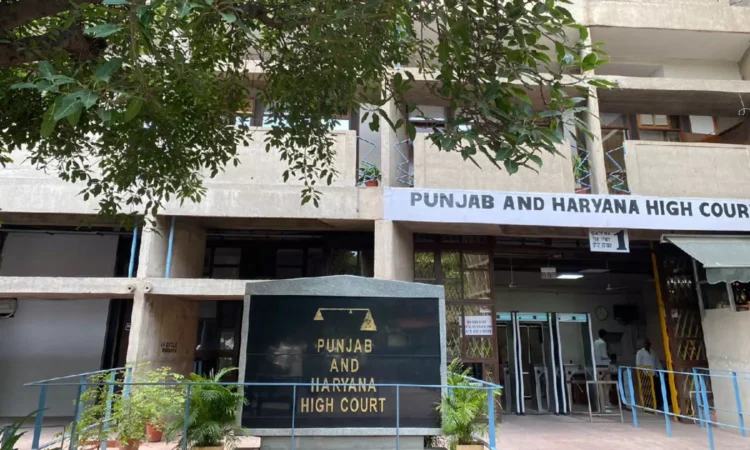
A four-year-old girl at the centre of a deeply troubling international custody battle could soon be reunited with her mother in the United Kingdom following a significant intervention by the Punjab and Haryana High Court. The court has directed the child’s father to hand over her custody to her mother on November 18, 2026, at 11am, marking a major development in a dispute that has stretched across two countries and involved multiple judicial orders.
The child was born in the United Kingdom in April 2022 and was brought to India by her father in June 2025. The mother alleged that the journey had been presented as a summer holiday, but the child was never returned to Britain. The father subsequently left the girl in the care of her paternal grandparents in India and returned to the UK, prompting the mother to begin legal proceedings to secure her daughter’s return.

AD: Capeesh Restaurant
The case took an increasingly serious turn when the mother approached the British courts. The High Court of Punjab made reference to earlier hearings at the UK High Court, Family Division, in England and Wales reportedly issued several directions concerning the child’s return. On March 25, 2026, it provisionally found that the child had been wrongfully removed from Britain and that the mother’s parental responsibilities had been interfered with. The court reiterated its position on April 15 before issuing a further order on May 5, extending the child’s status as a ward of the court and directing her return by May 20. Despite those interventions, the child remained in India, forcing the mother to seek assistance from the Indian judiciary.
Her petition eventually reached the Punjab and Haryana High Court, where Justice Vikram Aggarwal considered the competing claims of both parents and, crucially, the welfare of the young child. The father opposed the mother’s request, maintaining that she had consented to the child’s journey to India and arguing that the girl had settled into life with her paternal grandparents. He also maintained that he had been the child’s principal caregiver while the family was living in Britain and that she had since been enrolled in an Indian school.
However, the court was not persuaded that the mother’s application should be rejected simply because the dispute involved two biological parents. It held that habeas corpus proceedings could be entertained in circumstances where a minor was being kept in the custody of a parent, particularly when questions arose about the child’s welfare and the circumstances of her continued stay.An important consideration was the child’s tender age. The court referred to Section 6 of the Hindu Minority and Guardianship Act, 1956, which provides that the custody of a child below five years of age would ordinarily be with the mother. It also considered the mother’s employment and support network in Britain, the child’s British nationality and the circumstances surrounding her present living arrangements in India.

AD: Oysterian Sea Food Restaurant And Bar
The judge reportedly considered the interaction between mother and daughter in the courtroom, taking account of their emotional connection and comfort with one another. The court also rejected the suggestion that the mother’s personal relationship was, in itself, evidence that she was unfit to care for her daughter. In doing so, it reinforced the principle that custody decisions must be guided by the child’s interests rather than assumptions or allegations about either parent’s private life.
The High Court has directed the local police authorities, including the Senior Superintendent of Police in Nawanshahr and the relevant Station House Officer, to ensure that the handover takes place if the father does not comply voluntarily. Importantly, the judge stressed that the transfer must be handled peacefully, with particular care taken to prevent unnecessary distress or trauma to the child. The ruling does not represent a final determination of permanent parental custody, as the court has made clear that either parent remains free to approach the appropriate court for a final custody decision. The father has also been permitted to maintain contact with his daughter. If he returns to Britain, he may see her for two hours every Sunday in accordance with the British court’s directions, while video calls have also been permitted. If he remains in India, he may communicate with the child through video calls lasting between 15 and 30 minutes.
India is not a party to the 1980 Hague Convention on the Civil Aspects of International Child Abduction, the international framework designed to facilitate the return of children wrongfully removed or retained across international borders. Consequently, cases involving children brought to India from other countries can require Indian courts to independently examine the circumstances, the child’s welfare and the legal arguments presented by both parents. The child’s best interests remain central to the judicial assessment.

AD: Heritage And Restaurant Lounge Bar