
By Lucy Caulkett-
The Metropolitan Police is facing renewed questions over its handling of police misconduct after an investigation by BBC Panorama exposed a disturbing pattern of missed opportunities to stop a former detective inspector accused of sexually exploiting vulnerable women whose cases he was responsible for investigating. The revelations raise profound concerns about institutional accountability, the treatment of victims and whether senior officers did enough to confront allegations against one of their own.
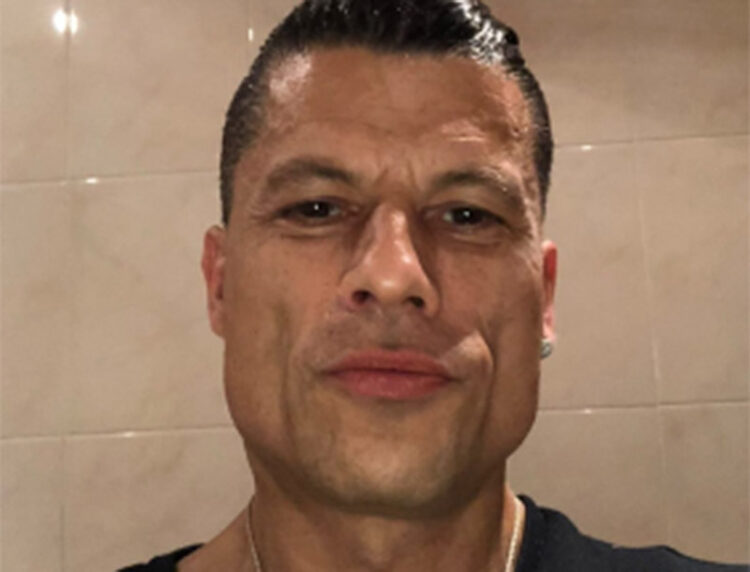
Warren Arter, who worked within a unit investigating sexual offences in south-east London, allegedly abused the authority and trust attached to his position to establish relationships with women who had approached the police for protection. Two women have now spoken publicly about their experiences, describing how they were groomed and sexually exploited. One alleges that she was raped. Their accounts suggest that the misconduct was not an isolated incident but part of a prolonged pattern that continued despite repeated warnings and opportunities for intervention.

AD: Capeesh Restaurant
Among the most disturbing aspects of the investigation is the treatment of Rebekah, a woman who initially encountered Arter after seeking police assistance to escape an abusive relationship. Rather than maintaining professional boundaries, the detective allegedly pursued a personal relationship with her after becoming involved in her case. He subsequently married her. Evidence examined by the BBC indicates that Rebekah endured years of abuse, including being filmed while sexually assaulted or incapacitated. Some recordings were allegedly circulated to other women, including individuals whose cases Arter had investigated.
Rebekah died in Barbados in June 2024 while on holiday with Arter. Her death, described as occurring in unexplained circumstances, has added another deeply troubling dimension to an already disturbing case. Arter was subsequently arrested following his return to Britain in connection with sexual offences alleged by another woman. He died by suicide in HMP Wandsworth days later. His death means that the allegations against him were never tested in a criminal trial, leaving serious questions about the full extent of his conduct unanswered.
However, the most significant public-interest issue is not simply the alleged actions of one detective. It is the apparent failure of the institution employing him to act on information that could have prevented further harm. In 2010, medical staff at a sexual assault referral centre reportedly discovered Arter alone with a woman who had recently reported being raped. A doctor raised concerns with the Metropolitan Police about his behaviour and inappropriate intimacy with the victim. Despite this warning, no effective investigation followed.

AD: Oysterian Sea Food Restaurant And Bar
Further concerns emerged between 2014 and 2018, when the force received six corroborated intelligence reports relating to Arter’s alleged sexual misconduct. An investigation led by former detective inspector Jaysen Veeren subsequently identified additional potential victims. Veeren has told the BBC that his inquiries encountered resistance from senior officers, who questioned the investigation’s legitimacy and compared it to a witch hunt. The senior officers involved have disputed the suggestion that they interfered, maintaining that their concerns related to the way the investigation was conducted.
Nevertheless, the consequences of the investigation’s limitations are significant. Arter was suspended in December 2016, but remained on full pay for seven years, reportedly receiving at least £300,000 before eventually being dismissed in 2023 for drug-related offences. Despite the suspension and the evidence gathered concerning alleged sexual misconduct, criminal proceedings were not pursued at that stage. The Independent Office for Police Conduct later identified 21 potential victims, assessing that Arter had inappropriate contact or relationships with eight women.
Another missed opportunity emerged in March 2024, when Arter allegedly sent an illegal upskirting image to a woman identified as Layla. Information about the image was passed to the Metropolitan Police, but the force failed to arrest him. The Met subsequently attributed the failure to human error involving a new crime-recording system. An arrest followed only after Rebekah’s death and Arter’s return from Barbados.
The revelations are particularly troubling given the wider history of misconduct within the Metropolitan Police. The Casey Review described the force as institutionally misogynistic, while the convictions of former officers Wayne Couzens and David Carrick exposed serious failures in identifying and addressing predatory behaviour within its ranks. Against that background, the Arter case raises difficult questions about whether lessons from previous scandals have translated into meaningful institutional change.
The Metropolitan Police has now issued a public apology to the women abused by Arter and says it is examining his electronic devices to establish whether further victims may have been affected.

AD: Heritage And Restaurant Lounge Bar