
By PA News Agency
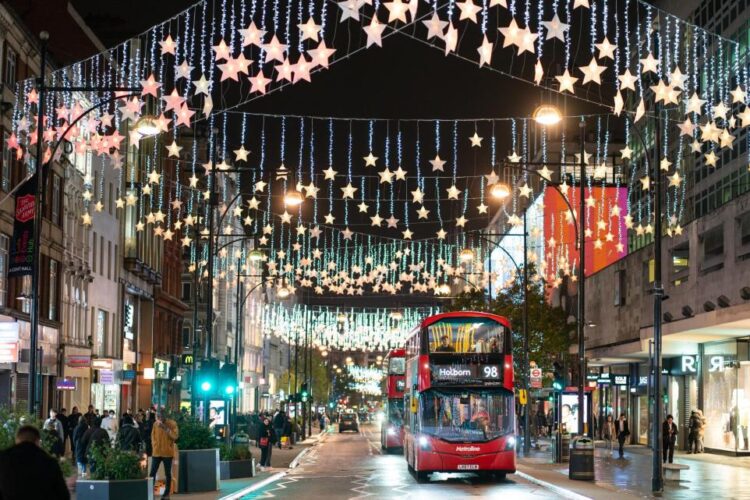
Thousands of Christmas shoppers on London’s Oxford Street will have their faces scanned by live facial recognition cameras, with the technology due to be installed in December, just in time for the festive shopping rush.
Oxford Street is one of the world’s busiest shopping areas, with about half a million visitors each day.

AD: Capeesh Restaurant
It will be among the first areas in the country to have permanent, live, facial recognition (LFR) infrastructure scanning the faces of people passing through and comparing them with a watchlist of wanted suspects. The cameras will likely be installed in December, it is understood, and could be attached to street furniture such as lampposts.
It comes as a stretch of Oxford Street is due to be pedestrianised next week, with plans for the whole street to eventually become traffic-free. The Metropolitan Police plans to use static, live, facial recognition cameras in London’s West End and Soho – which have some of the highest crime rates in London.
The Government launched a public consultation in December 2025 to develop a legal framework for law enforcement use of biometrics, facial recognition and similar technologies. The Home Office is expected to publish its response to the public consultation later this Parliamentary session.

AD: Oysterian Sea Food Restaurant And Bar
Akiko Hart, director of human rights organisation Liberty, told the Press Association: “The introduction of fixed, live, facial recognition cameras on Oxford Street will mean thousands of Christmas shoppers will have their faces scanned by this unregulated surveillance technology without being given a choice.
“Despite a public consultation on facial recognition closing in February, the Government has yet to publish its response. Yet permanent, facial recognition cameras are set to be installed in one of the country’s busiest destinations without a legal framework to protect the public’s rights.
“This lack of transparency damages public trust and, until clear laws, proper safeguards and independent oversight are in place, this significant rollout should be paused.”
A Met spokesperson said: “Live, facial recognition is an important tool which is helping us keep London safe.
“Static cameras have already been piloted in Croydon for six months and contributed to a 10% reduction in crime and led to 173 arrests – one every 35 minutes. Considering this success, the public would rightly expect us to look at how we can use technology to keep the busiest parts of our capital safe.
“It is important to note that static systems are only turned on when officers are present on the ground, and signs will make it clear to the public that a deployment is taking place.
“Conversations remain ongoing with our partners on where we will place the cameras.”
Commissioner Sir Mark Rowley, of the Met, has described LFR as “one of the most revolutionary technology advances in policing in recent years”, with the force arresting more than 2,000 people using facial recognition since the start of 2024. The technology has also started to be deployed at London’s Tube stations.
Conservative leader Kemi Badenoch has backed the expansion of LFR. Speaking at the Police Federation annual conference on Thursday, she said: “We will expand live, facial recognition so that instead of spending hours and hours crawling through CCTV, you’ll get a match in seconds.”
T

AD: Heritage And Restaurant Lounge Bar