
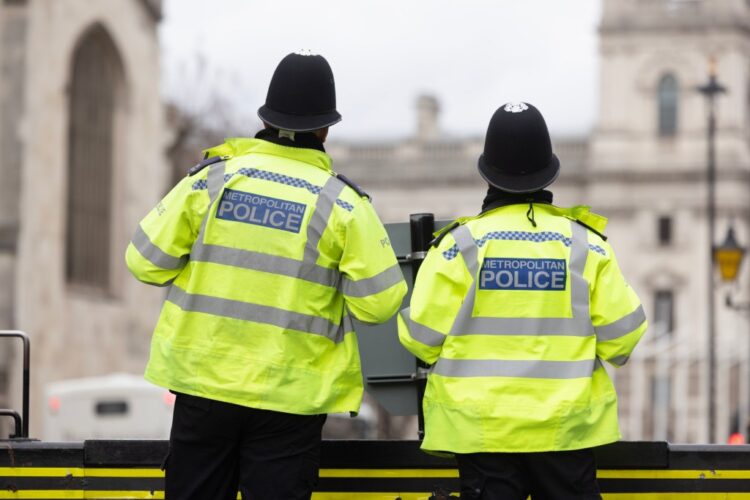
By Tony OReilly And Gabriel Princewill-
The Met police’s examination of the claim brought by aggrieved rape victim, Libda William, raises questions about the way it assessed her trauma in temrs of proportionality, institutional responsibility and the treatment of victims.
The Metropolitan Police’s legal right to scrutinise Linda Williams’s claim for damages. is beyond doubt. Public money is involved in civil settlements, and a police force cannot be expected to accept every allegation or compensation demand without examining the evidence.

AD: Capeesh Restaurant
But a legal right to challenge a claim does not settle the question of whether the challenge was fair, proportionate or consistent with the force’s stated commitment to supporting victims of sexual violence. That is the difficult issue raised by Williams’s case.
Williams, a serving Met officer who was raped by former colleague, David Carrick in 2004, has received an undisclosed six-figure settlement after a lengthy civil dispute with the force. The Met has not admitted liability. Williams says the legal process left her feeling controlled, abused and powerless, and that it drove her to contemplate suicide.
Her most serious criticism concerns the way the force’s legal team assessed the psychological damage caused by the assault. According to the BBC, a document sent to Williams described the abuse as an “isolated” episode and argued that, for at least 15 years after the rape, the psychological harm had not significantly affected her day-to-day life.

AD: Oysterian Sea Food Restaurant And Bar
Williams says the Met also relied on her ability to continue working effectively as evidence against the severity of her trauma. The force is expected to examine the evidence of Williams’s suffering with appropriate care, and not place too much weight on outward appearances and the fact that the assault involved a single episode.
The impact of being raped even in a single episode can be wide ranging, and not necessarily be readily obvious to colleagues of a victim in a working environment. Whilst. PTSD arising from rape or sexual assault can affect a person’s ability to work efficiently, it does not necessarily do so in every case. Medical guidance recognises that PTSD can impair concentration, sleep, memory, emotional regulation and relationships.
Medical guidance recognises that PTSD can impair a person’s concentration, sleep, emotional regulation and ability to function, including at work. However, symptoms and their effects vary considerably between individuals, and there isn’t a sweeping rule characterising the inevitable outcome arising from PTSD
Continuing to perform well professionally does not, on its own, establish that a rape survivor has suffered no significant psychological harm. Some people may struggle significantly at work, while others continue to perform their duties to a high standard despite experiencing serious psychological distress
There is a legitimate principle behind the Met’s position. A public authority facing a civil claim must establish what happened, consider the evidence of injury and loss, assess causation and determine what compensation may be appropriate. Psychological injury can be complex to assess, and the existence of a diagnosis does not automatically settle every question about its severity, duration or legal consequences.
A defendant is entitled to challenge evidence it genuinely disputes.- a principle that applies even when the claimant has suffered a serious crime and even when the defendant is a police force facing legitimate criticism over its record. But a defensible legal objective does not make every argument used to achieve it defensible in practice.
The key issue is whether the Met’s assessment properly considered the evidence of Williams’s psychological injury, including its long-term consequences, or whether its approach placed undue emphasis on the fact that she had continued to perform well professionally.
The maintainance of a career while experiencing serious psychological distress, does not invalidate the extent of the distress being experienced. The ability to work does not, by itself, establish that someone has recovered from trauma or that their private life remains unaffected.
Williams says she has had no relationships since the attack, and has struggled with the prospect of allowing another person into her home. She describes a life profoundly altered by what happened, despite continuing to perform her duties as a police officer.
Those circumstances do not, on their own, determine the legal value of her claim, but they demonstrate why a fair assessment must consider the whole person rather than treating professional competence as a reliable measure of psychological wellbeing.
The question is not whether the Met should have accepted Williams’s account without examination. It is whether the evidence was assessed in a way that was sufficiently rigorous, balanced and sensitive to the nature of the injury being considered.
What ‘an isolated incident’ really tells us
The reported reference to an “isolated” episode is particularly troubling because it risks confusing the number of assaults with the scale of their consequences. The fact that an assault occurred once does not, by itself, establish that its psychological effects were limited. Nor does a lengthy period of continued employment establish that a victim has experienced little harm.
Equally, a court or defendant is expected to distinguish the effects of the particular assault from other factors when determining legal responsibility and compensation. The relevant question is whether that distinction was made on the evidence, rather than through an assumption that a single incident cannot cause severe or lasting trauma.
Williams’s solicitor, Sophie Bullimore of Penningtons Manches Cooper, has argued that reducing the rape to a single episode failed to reflect its impact across her client’s life. That criticism deserves serious consideration, particularly given the reported duration of the proceedings and the distress Williams says they caused.
The force says it tried to reduce further distress and re-traumatisation during the legal process and sought to handle the claim as quickly and compassionately as possible. It has acknowledged the additional impact on Williams of being a serving officer and has praised her continued commitment to public service.
As a defendant, it must protect public funds by examining compensation claims carefully and contesting those aspects it has a reasonable basis to dispute. As a public institution responsible for investigating sexual violence, it must also ensure that its dealings with victims do not unnecessarily compound the harm they have already suffered. Neither responsibility automatically overrides the other.
The proper test is whether the force can defend a claim without losing sight of the person bringing it. That requires clear evidence, disciplined legal judgment, and an approach that avoids unnecessary humiliation or assumptions about how victims should behave after an assault.
The Met’s handling of Williams’s claim is particularly sensitive because she was not simply a member of the public bringing an allegation against an unfamiliar organisation. She was a serving officer who says she had feared the professional consequences of reporting a fellow officer at the time of the attack.
The wider Carrick scandal also exposed failures to act on allegations about his behaviour. The Independent Office for Police Conduct subsequently identified potential misconduct involving Met personnel in the handling of reports about Carrick, and in 2024 announced that four officers and a member of staff would face misconduct proceedings over alleged failures to progress investigations.
That history does not determine the merits of Williams’s civil claim. However, it does make the force’s treatment of her a matter of considerable institutional significance. Where an organisation has already acknowledged serious failures connected to an offender, its response to a victim seeking redress will inevitably be judged against its promises to learn from those failures.
What should the Met do differently?
The answer should not be to exempt rape survivors from ordinary legal scrutiny or to prevent police forces from defending claims they reasonably dispute. Such an approach would be difficult to justify and could undermine the fairness of the civil justice system. Instead, the Met should establish a clear protocol for handling civil claims brought by victims of serious sexual offences where the force’s own conduct is being challenged.
Retired social work manager and Englidh teacher, Anji Ossai, told The Eye Of media.Com: ”First, the force should require an early, documented review of the proposed legal strategy, including whether the evidence has been assessed without unsupported assumptions about how trauma ,presents itself.
”Where psychological injury is disputed, the reasoning should be evidence-led and should distinguish clearly between professional functioning, clinical symptoms, and effects on private life. People respond to things differently, and their reactions can be time dependent.
”It was silly to base her claim on her performance at work, because people are immeasurably different. Some people use the demands of intense focus on their professional work as a coping mechanism to handle their plight. Work is not the only place where the impact of trauma can be manifested
”Claims involving serious sexual violence or allegations of institutional failure should receive oversight from a senior person who is independent of the team managing the litigation. That reviewer should examine whether the proposed approach is proportionate, whether particularly distressing arguments are genuinely necessary and whether less harmful ways of testing the evidence are available.
”The force should give claimants clear explanations of the issues being disputed and ensure that communications are accurate, respectful and accessible. This would not prevent robust legal argument, but it would help avoid a process in which a claimant feels that the nature of the original assault is being minimised or that their credibility is being attacked without adequate explanation.
”The Met should publish anonymised information about the handling of claims involving sexual violence, including how long cases take to investigate and settle, what causes delays and what lessons have been identified. Such information would allow independent scrutiny of whether the force is managing these claims efficiently and consistently.
”The Met should also commission an independent review of Williams’s experience of the civil process, with her consent and with appropriate safeguards for confidential information. The purpose should not be to prejudge legal liability or reopen matters simply because the force has been criticised.
”It should be to establish whether its procedures were appropriate, whether avoidable distress occurred and what changes are justified. Williams’s case raises questions that cannot be answered by the size of the settlement alone.
Civil claims can be resolved without a court determining every contested issue. Institutions should therefore examine what a case reveals about their own practices, rather than treating a settlement as the end of the matter. The consequences of the assault for Williams have endured for more than two decades. She says the legal process revived feelings of powerlessness and left her questioning whether the force she served can be trusted to support victims.
The Met says it tried to minimise further trauma and handle her claim compassionately. Those are important assurances, but the strength of its future response will depend on whether it can demonstrate that its procedures deliver those outcomes in practice.
The fairest conclusion is neither that the force should never have challenged Williams’s claim nor that its conduct was justified simply because it was acting in a legal capacity. It is that a public institution must be able to explain why its litigation strategy was necessary, how its assessment of psychological injury was reached and what it will do to prevent an adversarial process from becoming unnecessarily damaging.
The Met has a right to defend itsel, and also has a responsibility to learn from the consequences of how it does so. For a force attempting to rebuild confidence after the Carrick scandal, that is not a peripheral concern. It is part of the test of whether its commitment to treating victims fairly extends beyond public statements and into the legal decisions made in its name.
A met police spokesperson told The Eye Of Media.Com: ”A settlement has been reached between the Metropolitan Police and DC Williams. While we do not intend to go into the detail of the discussions that led to the settlement agreement, we would point out that a degree of disagreement and negotiation between parties is in no way unusual.
The existence of such disagreements should not be interpreted as the Met dismissing or in any way questioning DC Williams’ very real traumatic experience and the impact it has had on her.DC Williams obtained an expert medical opinion to support her claim for damages
The Met accepted that expert’s findings. There was no challenge to the expert’s diagnosis or to the expert’s opinion as to the severity of the condition.
We are able to confirm that additional funding for independent counselling – outside of the agreed settlement – was requested and provided.
A settlement meeting was initially scheduled for 26 November 2025. Due to the fact that all of the necessary evidence was not received until late October, it was agreed the meeting be scheduled for a later date.
It is correct that an application was made by DC Williams and others for their group to be recognised as an internal support group, known as a ‘Met community’. This was assessed by the Culture, Diversity and Inclusion Directorate, in the same way as all other applications.
It was concluded that there were already two existing staff networks to support colleagues affected by police perpetrated violence against women and girls. Both were supportive of this group joining them so they could access this support and have an opportunity to have their voices heard.

AD: Heritage And Restaurant Lounge Bar