
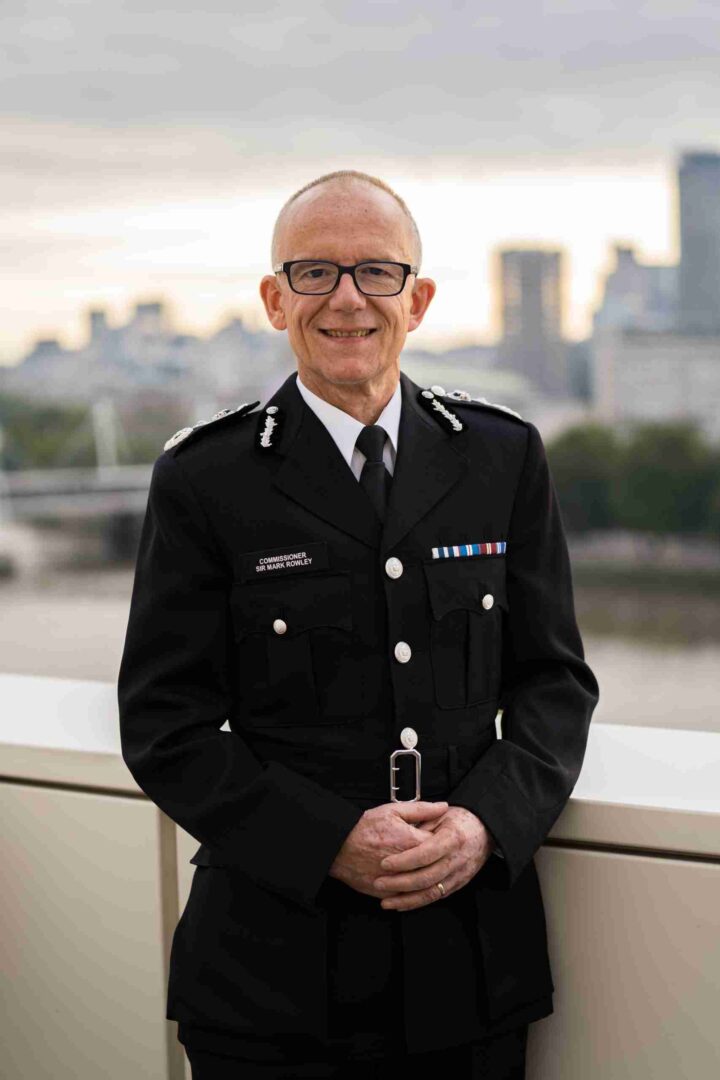
By Tony O’Reilly-
The Metropolitan Police commissioner promised to root out misogyny, racism and officers unfit to serve. A major clear-out and new reporting channels suggest progress, but continuing evidence of toxic behaviour raises a harder question: can officers challenge wrongdoing without fearing the consequences?
When Sir Mark Rowley took charge of the Metropolitan Police in September 2022, he inherited a force facing a crisis of public confidence. The murder of Sarah Everard by serving officer Wayne Couzens, the David Carrick scandal and a succession of misconduct revelations had exposed profound weaknesses in vetting, supervision and professional standards.

AD: Capeesh Restaurant
The subsequent Casey review did not describe a handful of isolated incidents. Its 2023 findings identified entrenched cultural problems, including institutional misogyny, racism, homophobia and a defensive attitude towards criticism. It also warned that officers who spoke out could face adverse consequences for themselves, their careers and their teams.
Rowley promised to change that culture. The question now is whether the reforms introduced under his leadership have altered the behaviour of the organisation, particularly when misconduct involves colleagues or senior officers. There is evidence of progress, and also evidence that the job remains unfinished.
The Met has undertaken a substantial programme of vetting and integrity reforms, while Rowley has made removing unsuitable officers a central part of his leadership agenda. In December 2025, the Mayor of London and the commissioner announced an independent follow-up assessment of the Casey review, with the aim of testing how far the force had progressed against its recommendations.

AD: Oysterian Sea Food Restaurant And Bar
The Met reported that approximately 1,500 officers had been removed through its anti-corruption and standards work. It also said reports of internal misconduct had risen from around 400 in 2021–22 to 1,400 in 2024–25, while the force had increased the number of officers proactively focused on uncovering wrongdoing.
These figures matter, but they require careful interpretation. More reports may indicate that officers are becoming more willing to speak up, that wrongdoing is being detected more effectively, or both. Equally, the figures alone cannot establish whether misconduct has become less common or whether those who report it are protected from retaliation.
The test is not simply how many officers leave the force. It is whether inappropriate behaviour is identified early, whether complaints are investigated impartially and whether officers who raise concerns can continue their careers without being marginalised.
The Independent Office for Police Conduct’s investigations into the handling of allegations against David Carrick illustrate why that distinction matters. In July 2023, the watchdog said its review had identified potential conduct issues involving eight Met officers and one member of staff.
The original force review had not identified conduct matters, prompting the IOPC to intervene. In September 2024, the watchdog announced that four officers and a member of staff would face misconduct proceedings over alleged failures to progress investigations.
The sequence raises questions about the effectiveness of internal scrutiny before external intervention. A force can improve its procedures, but those procedures mean little if warning signs are not recognised, information is not joined up or colleagues fail to challenge decisions that deserve further examination.
One of the most important tests of Rowley’s reforms is whether officers can report misconduct without putting their careers at risk. The Met now has several routes through which officers and staff can raise concerns, including line managers, professional standards units, internal reporting systems and anonymous channels.
The government has also confirmed that the force has a specialist whistleblowing unit, while the IOPC operates a separate reporting line for police personnel. These are meaningful mechanisms. But the existence of a telephone line or online form does not prove that the culture surrounding it has changed. An officer who reports a colleague for misogynistic behaviour may worry about being labelled disloyal.
Someone who raises concerns about a senior officer may fear that confidential information will circulate through the chain of command. A victim who reports a fellow officer may fear being isolated from colleagues or losing opportunities for promotion. Those risks must be tested against evidence, not dismissed because formal procedures exist.
In April 2026, the IOPC published a recommendation following an investigation into racist and misogynistic language in a WhatsApp group involving 34 serving officers. The matter came to light after one member reported the content.
The watchdog found confusion among officers about when unacceptable behaviour must be reported through formal channels, even where someone had already challenged it within the group.
The case demonstrates both sides of the picture. An officer did speak up, showing that reporting mechanisms can work. But the wider confusion about reporting responsibilities suggests that the expectation to challenge and escalate misconduct is not yet consistently understood.
The Met accepted the IOPC’s recommendation to review and update its policies and training on WhatsApp groups and social media. That is a necessary response, but the more difficult task is ensuring that the obligation to report wrongdoing is supported by a culture in which silence is not rewarded and those who speak out are not punished informally.
Linda Williams exposes the question that a policy cannot answer
The case of Linda Williams, a Met officer raped by Carrick in 2004, brings the issue of institutional trust into sharp focus.
Williams says she did not report the attack at the time because she feared the professional and personal consequences of accusing a fellow officer. She reported it in 2021, after Carrick became the subject of wider public scrutiny. She has since said that her experience of the force’s response and her subsequent civil claim has left her unwilling to report a rape to the Met today.
Her account is not, by itself, proof that every whistleblowing route under Rowley has failed. Nor does it establish that every officer who reports misconduct will suffer adverse consequences. But it is a serious warning from someone who worked as a sexual offences officer and understood the system from the inside. The central question is whether the Met can demonstrate that a serving officer who reports a colleague today will be treated differently from someone who feared doing so in 2004.
That requires evidence of what happens after a report is made. Are concerns acknowledged promptly? Are investigations conducted independently when senior personnel are implicated? Are complainants given clear updates and access to confidential support? Are alleged reprisals investigated as seriously as the original complaint? And can the force show that whistleblowers have not been quietly sidelined?
Without transparent answers, the Met risks asking officers to trust a system whose effectiveness it has not adequately demonstrated to them.
What should change next?
The next phase of reform should focus less on the number of policies introduced and more on the outcomes experienced by people who use them.
First, the Met should publish regular, anonymised data showing how many internal misconduct reports are received, how quickly they are assessed, how many are referred for independent investigation and what action follows.
The figures should distinguish between reports that are substantiated, unsubstantiated and unresolved, rather than treating every complaint as proof of wrongdoing or every unproven allegation as evidence that a complaint was unjustified.
Second, reports involving senior officers, sexual misconduct or potential retaliation should trigger clearly defined independent oversight. A complainant should not have to rely on the goodwill of the same management structure they are challenging.
Third, whistleblowers should receive a named contact outside their immediate chain of command, access to confidential advice and regular updates on their case. Alleged retaliation, including workplace exclusion, detrimental changes to duties or unexplained career setbacks, should be assessed and recorded rather than left to informal management discretion.
Fourth, the force should commission confidential surveys of officers and staff to measure whether people feel safe reporting misconduct. The results should be published by rank and department where this can be done without identifying individuals, with independent scrutiny of teams where fear of speaking out remains high.
Finally, the Met should make clear that challenging wrongdoing is a professional responsibility, not an act of disloyalty. Managers should be held accountable not only for misconduct within their teams but also for how they respond when someone raises a legitimate concern.
The verdict must come from evidence
Rowley can point to a substantial reform programme, strengthened vetting and a rise in internal reporting. Those developments should not be dismissed. But neither should they be mistaken for conclusive proof that the Met’s culture has been transformed.
The Casey review identified a force in which speaking up could carry a personal cost. Subsequent cases have continued to expose problems with reporting, accountability and the handling of inappropriate behaviour. The independent follow-up review provides an opportunity to test whether the reforms have reached the parts of the organisation where change is most difficult.
The ultimate measure of success will not be the number of officers dismissed or the strength of the commissioner’s public statements. It will be whether a junior constable can report a senior colleague, whether a woman can report sexual misconduct without fearing professional isolation, and whether a whistleblower can trust that the system will investigate the allegation rather than turn its attention against the person who raised it.
Rowley has changed the machinery of the Met. The unresolved question is whether he has changed the instincts of the people operating it.

AD: Heritage And Restaurant Lounge Bar